
Patent application describes a novel way to use domain names as a currency.
The Revolutionary Concept of Domain Names as Digital Currency
In the rapidly evolving landscape of digital finance and online commerce, innovation is the driving force behind new paradigms. While we’ve witnessed significant advancements in how new top-level domain names are bought, sold, and managed, there has been a noticeable absence of truly transformative ideas regarding their fundamental utility. Domain names, primarily serving as digital addresses, have largely remained static in their function. However, a recent development from Minds + Machines, a prominent player in the domain name industry, proposes a radical shift: transforming domain names themselves into a form of digital currency.
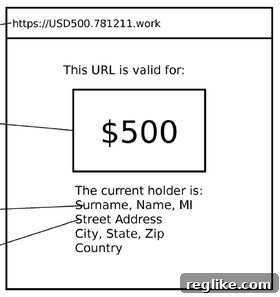 This bold concept, outlined in a patent application filed last year and recently published by the U.S. Patent and Trademark Office, introduces an ingenious mechanism for embedding monetary value directly within domain names. This isn’t merely about using domain names to facilitate payment gateways; it’s about making the domain name itself the bearer of value, presenting a fresh perspective on the future of online transactions and digital assets.
Unpacking the ‘Stored Value Domain Name’ System
The core of Minds + Machines’ innovation revolves around the concept of a “stored value domain name.” Imagine a system where you can acquire a domain name from your registrar that intrinsically holds a specific monetary value, a value facilitated and guaranteed by the underlying registry. This moves beyond traditional domain name registration and into the realm of financial instruments.
How It Works: A Step-by-Step Breakdown
- Acquisition of Value-Stored Domain: A user wishing to engage with this system would approach their domain registrar (e.g., GoDaddy, Namecheap) and request a domain name imbued with a particular monetary value. For instance, one might ask for a domain name representing $500.
- Issuance by Registrar: The registrar, in conjunction with the registry, would then issue a unique domain name designed to reflect this value. A hypothetical example provided in the patent application is “USD500-781211.work.” This specific domain name would be inextricably linked to a $500 value within the registry’s system.
- Value Verification: A crucial aspect of trust and transparency in any currency system is the ability to verify its value. With these stored value domains, a user could simply type the domain name into their browser. The system, presumably through a dedicated portal or DNS resolution mechanism, would then display the associated monetary value, making the worth of the digital asset immediately apparent and verifiable by anyone. This direct visibility of value within the domain name itself is a significant differentiator.
- Value Transfer: The patent envisions a seamless process for transferring this digital currency. Just as a conventional domain name can be transferred from one owner to another today, a stored value domain name could be transferred, thereby transferring its embedded monetary value. This leverages existing, well-understood domain transfer protocols, simplifying the process for users familiar with domain management.
- Redemption Mechanism: For the currency to be practical, there must be a way to convert its digital value back into traditional fiat currency or other assets. The patent suggests that users could redeem the value stored within the domain from the central registry, likely facilitated through their domain name registrar. This establishes a clear off-ramp for the digital asset.
- “Making Change” on Transactions: One of the more innovative features described is the ability to “make change.” If a transaction requires a value different from a single stored value domain, the system could potentially issue another domain name representing the difference. For example, if you pay for a $200 item with a $500 domain, the system could generate a new $300 domain name as change.
The Critical Role of a Trusted Guarantor
For such a system to gain widespread acceptance and function reliably, the patent application wisely notes the indispensable need for a “trusted guarantor.” This entity would underpin the entire financial infrastructure, ensuring the stability and credibility of the stored value domains. The most robust form of guarantor suggested is a governmental body or a central financial institution, similar to how central banks back traditional fiat currencies. Without such a trusted authority, the system’s integrity and the confidence of its users would be significantly undermined, much like any currency without a reliable issuer.
Advantages of DNS-Based Digital Currency Over Alternatives
The Minds + Machines patent highlights several compelling advantages that a DNS-based digital currency system could offer, particularly when compared to existing electronic currencies and emerging cryptocurrencies:
- Verifiable Ownership: The Domain Name System (DNS) inherently provides robust mechanisms for verifying ownership. Unlike some anonymous digital transactions, domain ownership is typically recorded and can be verified through WHOIS databases (though privacy measures exist). This built-in transparency and auditability could foster trust.
- Direct Value Visibility: The ability to see the specific monetary value directly embedded within the domain name (e.g., “USD500-781211.work”) offers unparalleled clarity and ease of understanding for users. This stands in contrast to complex crypto wallet addresses or opaque transaction IDs.
- Existing Infrastructure Leverage: The system cleverly utilizes the established global DNS infrastructure, along with existing registrar and registry networks. This minimizes the need for entirely new, complex technological ecosystems, potentially accelerating adoption and reducing initial setup costs compared to entirely novel blockchain solutions.
- Enhanced Security Measures: Domain names can be locked from transfer, a feature that could be adapted to prevent unauthorized movement of value. Furthermore, the reliance on registrars, who typically offer robust account security features like two-factor authentication (2FA), adds a layer of protection against theft and unauthorized access. The patent’s subtle reminder to “Just be sure your registrar offers two-factor authentication…” underscores this critical security aspect.
- Global Accessibility and Reach: Domain names are universally understood and accessible across the globe. A domain-based currency could potentially offer a globally consistent and standardized method of digital payment, transcending national borders and local payment systems with relative ease.
- Potential for Simplified User Experience: While the underlying technology is sophisticated, the user experience could be streamlined for general users. Interacting with a domain name might be perceived as less daunting than managing cryptocurrency wallets, private keys, or complex blockchain transactions, making digital currency more accessible to a broader demographic.
Challenges and Considerations for Adoption
While the vision of domain names as currency is intriguing, its path to widespread adoption is fraught with significant challenges that need meticulous consideration:
- Regulatory Hurdles: Operating a currency system, even a digital one, places it firmly within the purview of financial regulators worldwide. Compliance with Anti-Money Laundering (AML), Know Your Customer (KYC) regulations, and various financial licensing requirements would be monumental. Each country’s distinct legal framework could pose substantial obstacles.
- Trust and Guarantor Stability: The reliance on a “trusted guarantor” is a double-edged sword. While it provides stability, it also centralizes control. The stability and trustworthiness of this guarantor—especially if it’s a private entity rather than a government—would be under constant scrutiny. Any perceived instability or lack of transparency could quickly erode public confidence.
- Scalability and Performance: The global DNS infrastructure is incredibly robust for resolving addresses, but its capacity for managing billions of real-time financial transactions, including “making change” through new domain issuances, would be an unprecedented stress test. Latency, transaction speed, and overall system performance at scale would be critical concerns.
- Security Risks: While domains offer locking mechanisms, the entire system would still be vulnerable to sophisticated cyber-attacks targeting registrars, registries, or the central guarantor. Domain hijacking or account compromise could lead to direct monetary loss, necessitating extremely high levels of cybersecurity. The emphasis on 2FA highlights this inherent risk.
- User Education and Adoption: Convincing the general public to accept and use domain names as a medium of exchange would require significant education and marketing efforts. Overcoming inertia and established habits regarding traditional currencies and even existing digital payment methods would be a long-term endeavor.
- Cost of Transactions and Maintenance: Domain name registrations and transfers often incur fees. If every transaction or “change” operation involves creating a new domain, the accumulation of these fees could make small-value transactions impractical or expensive, potentially limiting its utility as an everyday currency. Domain renewals would also imply ongoing costs for holding value.
- Valuation Volatility and Redemption: If the currency is tied to a volatile asset, its utility diminishes. The patent implies a fiat-backed system, but even then, the logistics and liquidity of redemption into diverse national currencies across various jurisdictions would be complex.
- Governance and Standardization: Establishing global standards for such a system, involving various registries, registrars, and potentially governments, would be an immense challenge requiring international cooperation and agreement.
Comparison with Existing Digital Currency Paradigms
To fully appreciate the potential and unique positioning of domain names as currency, it’s helpful to compare it with other digital money systems:
Cryptocurrencies (e.g., Bitcoin, Ethereum):
Cryptocurrencies are fundamentally decentralized, relying on blockchain technology and cryptographic proof rather than a central guarantor. This offers censorship resistance and transparency (on the blockchain), but often comes with significant price volatility, higher technical barriers for average users, and scalability issues for micro-transactions. Minds + Machines’ proposal is centralized and fiat-backed, offering stability and user-friendliness but sacrificing decentralization.
Stablecoins (e.g., USDT, USDC):
Stablecoins aim to mitigate crypto volatility by pegging their value to fiat currencies like the US dollar. They are often blockchain-based but rely on reserves held by a central issuer. The domain-based currency shares the fiat-backed stability concept with stablecoins but uses the DNS infrastructure instead of a blockchain, potentially offering a different set of advantages in terms of existing network leverage and simplified user interaction.
Central Bank Digital Currencies (CBDCs):
CBDCs are digital forms of a country’s fiat currency, issued and backed by its central bank. They represent a highly centralized, government-backed digital currency. The Minds + Machines concept, particularly with a government as a guarantor, aligns closely with the trust model of CBDCs, but critically, it proposes using the DNS as the underlying “ledger” or identifier system, offering a unique blend of existing internet infrastructure with governmental financial backing.
The Future Landscape: A Glimpse Ahead
The Minds + Machines patent application represents a significant leap in conceptualizing the future utility of domain names. If successfully implemented and widely adopted, a domain-based currency could profoundly impact several sectors:
- Fintech Innovation: It could spur a new wave of financial technology, integrating digital payment solutions more deeply into the very fabric of the internet’s addressing system.
- Global Digital Payments: By leveraging the universality of domain names, it could simplify cross-border transactions, making them more transparent and potentially more cost-effective than traditional banking rails.
- Role of Registries and Registrars: These entities, traditionally focused on domain registration and management, could evolve into key players in the global financial infrastructure, taking on roles akin to digital banks or payment service providers.
- Democratization of Digital Currency: By potentially offering a simpler, more accessible entry point than complex blockchain technologies, it could help democratize the use of digital currency for everyday consumers and small businesses.
While the technical, regulatory, and adoption challenges are substantial, Minds + Machines’ innovative approach opens up a fascinating dialogue about the untapped potential of domain names. It challenges us to rethink not just how we navigate the internet, but also how we perceive and transact value within the digital realm. This patent application is more than just an idea; it’s a blueprint for a potentially transformative financial instrument, poised at the intersection of internet infrastructure and digital finance, waiting for its moment to redefine the future of money.
You can read the full patent application below:
Domains as Currency Patent Application