
The High-Stakes Battle for Jackass.com: Viacom Challenges Future Media Architects in Domain Dispute
In the dynamic realm of digital branding and intellectual property, the ownership of premium domain names frequently ignites fierce legal battles. A recent high-profile dispute has emerged with media giant Viacom, the parent company of MTV, setting its sights on acquiring the highly coveted domain name Jackass.com. However, this ambition is poised for a significant challenge, as the domain is currently held by Future Media Architects (FMA), a renowned domain investment firm with a formidable reputation for defending its digital assets. This impending arbitration, initiated by Viacom (NYSE: VIA.b) at WIPO on December 5, underscores the intricate balance between trademark rights, generic terms, and established principles of domain ownership.
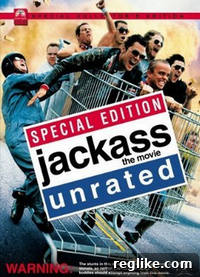
Viacom’s pursuit of Jackass.com is strategically sound, given the immense cultural impact and commercial success of the Jackass franchise. What began as a groundbreaking television show on MTV from 2000 to 2002, featuring audacious stunts and irreverent humor, quickly captivated a global audience. The show’s popularity transcended television, leading to the release of multiple highly successful feature films that firmly established “Jackass” as a globally recognized brand synonymous with boundary-pushing entertainment. Despite this widespread recognition, the official online hub for the franchise currently operates under JackassWorld.com. While functional, this URL lacks the immediate recall, authoritative presence, and significant SEO advantages inherent in owning the concise, exact-match Jackass.com. For a brand of this magnitude, securing the definitive .com domain is not merely about prestige; it’s a strategic imperative for optimizing audience engagement, enhancing online visibility, and reinforcing brand identity in the digital landscape.
Understanding the UDRP: Viacom’s Chosen Battleground
Viacom’s chosen method for acquiring Jackass.com is through a Uniform Domain-Name Dispute-Resolution Policy (UDRP) arbitration, administered by the World Intellectual Property Organization (WIPO). The UDRP framework was established to offer an efficient and streamlined mechanism for resolving disputes between trademark owners and domain name registrants, primarily targeting instances of cybersquatting. To prevail in a UDRP complaint, the complainant—in this scenario, Viacom—must convincingly demonstrate three cumulative elements:
- The disputed domain name is identical or confusingly similar to a trademark or service mark in which the complainant possesses rights.
- The domain name registrant (Future Media Architects) has no rights or legitimate interests in the domain name.
- The domain name has been registered and is being used in bad faith.
Each of these elements presents considerable hurdles for Viacom, particularly when challenging an entity as experienced and legally prepared as Future Media Architects.
The Dual Challenges: Generic Term and a Seasoned Defender
The Generic Nature of “Jackass”
A significant initial obstacle for Viacom’s claim to Jackass.com stems from the inherent nature of the term itself. “Jackass” is a common English word, broadly understood to mean a donkey or, colloquially, a foolish person. Unlike unique coined terms or highly distinctive brand names, generic words introduce unique complexities in both trademark law and domain disputes. While Viacom undeniably holds valid trademark rights for “Jackass” in connection with its specific entertainment offerings, proving that FMA registered the domain primarily to capitalize on their particular brand—rather than for its generic meaning—can be exceptionally difficult. Domain investors frequently acquire generic terms for their intrinsic value and broad appeal, often utilizing them for various non-infringing purposes, such as parking pages featuring pay-per-click links related to the generic meaning, or developing content portals. Unless Viacom can definitively establish that FMA specifically targeted the “Jackass” entertainment brand during registration, or that FMA’s usage directly infringes upon their specific trademark, the generic nature of the term substantially weakens Viacom’s critical “bad faith” argument.
Future Media Architects: A Formidable Adversary in Domain Disputes
Viacom’s second, and arguably more formidable, challenge arises from the domain’s current owner, Future Media Architects (FMA). FMA is far from a typical cybersquatter attempting to illicitly profit from another entity’s trademark. Instead, it stands as a highly respected and established leader within the domain investing community, celebrated for its extensive portfolio of premium domain names. This impressive portfolio encompasses a vast collection of two-letter and three-letter domains, which represent some of the most valuable digital assets globally due to their inherent scarcity, memorability, and broad utility. FMA’s business strategy centers on the strategic acquisition and long-term retention of valuable generic and short domains, often developing them into content sites or monetizing them through advertising revenue generated from generic search traffic. Critically, FMA has cultivated a strong reputation for its unwavering refusal to sell its domains, even when confronted with substantial financial offers or considerable legal pressure. This unyielding stance underscores their deep commitment to their digital assets and signals a resolute fight for any corporation attempting to wrest a domain from their control.
FMA’s Established Track Record: Key Precedents
FMA’s history is rich with examples that underscore its resilience and legal acumen in high-stakes domain disputes. A notable triumph for FMA involved the financial services behemoth Equifax (NYSE: EFX), which sought to acquire the highly desirable domain efx.com through arbitration. Despite Equifax’s powerful brand identity directly associated with “EFX,” FMA successfully defended its ownership, effectively illustrating the significant difficulty even major corporations face when challenging FMA’s legitimate interests in generic or acronymic domains. This landmark case served as a crucial precedent, solidifying FMA’s standing as a legitimate domain holder, rather than a cybersquatter attempting to exploit others’ trademarks.
However, FMA’s record, while strong, is not entirely without setbacks. They recently encountered an adverse ruling in a UDRP case concerning LH.com, where the arbitrator sided with the German airline Lufthansa. While this particular outcome might initially appear to offer a sliver of hope for Viacom, the narrative of LH.com carries a critical distinction. FMA, demonstrating its unwavering commitment to its assets, immediately filed a lawsuit in court to block the transfer of the domain. This decisive action effectively challenged the UDRP panel’s decision, showcasing FMA’s willingness to exhaust every available legal avenue to protect its property. This approach means escalating disputes beyond the comparatively swift UDRP administrative process into the more protracted and costly realm of national court litigation. This steadfast commitment strongly suggests that even if an arbitrator were to rule in Viacom’s favor for Jackass.com, FMA would almost certainly initiate a similar lawsuit, transforming what Viacom might hope to be a quick arbitration into a prolonged and potentially expensive legal confrontation.
The Significant Prospect of Reverse Domain Name Hijacking (RDNH)
Given FMA’s robust position, the generic nature of the term “Jackass,” and the apparent absence of any direct connection to the MTV franchise on the disputed domain, the likelihood of the UDRP panel finding Reverse Domain Name Hijacking (RDNH) is substantial. RDNH occurs when a complainant utilizes the UDRP process in bad faith to unfairly obtain a domain name from a legitimate registrant. Indicators of RDNH often include a complainant’s clear awareness that they possess no reasonable grounds for their complaint, or that the registrant has an undeniable right or legitimate interest in the domain name. In this specific context, if Viacom is found to have pursued this case without sufficient, compelling evidence of FMA’s bad faith registration and use—especially considering the domain’s generic nature and FMA’s established business model—the panel could very well issue a finding of RDNH. Such a finding would not only result in Viacom losing the case but also carry a degree of reputational damage, signaling an attempt to leverage its corporate power unfairly.
A pivotal piece of evidence that will significantly influence the WIPO panel’s decision is the content displayed on Jackass.com. A thorough review of the parked page reveals no links, advertisements, or content directly related to the “Jackass” television show or movies. This critical absence strongly supports FMA’s claim of legitimate interest in the generic term, rather than an intent to exploit Viacom’s specific trademark. Unless compelling, undisclosed evidence emerges to the contrary, the factual circumstances strongly favor FMA’s position, suggesting this case could be a relatively straightforward resolution for WIPO.
Broader Implications for Domain Ownership and Trademark Law
The outcome of the Jackass.com dispute carries significant broader implications for domain investors, trademark holders, and the interpretation of UDRP policy worldwide. It vividly underscores the ongoing tension between trademark rights, which protect specific brands within defined categories, and the legitimate rights of domain registrants who own generic or descriptive terms. These cases frequently push the boundaries of what constitutes “bad faith” and “legitimate interest,” particularly when a valuable, short, or generic domain is at the center of the dispute. A ruling in FMA’s favor would powerfully reaffirm the principles of legitimate domain investment and emphasize the necessity of specific, robust evidence for proving bad faith. Conversely, a ruling for Viacom could potentially establish a precedent that might empower powerful trademark holders to more easily claim generic domains, sending ripple effects throughout the entire domain aftermarket and potentially altering the landscape of digital property rights.
In conclusion, MTV’s parent company, Viacom, is undoubtedly embarking on an exceptionally arduous journey in its attempt to acquire Jackass.com. While the allure of owning the definitive domain for a massively popular franchise is undeniable, the formidable challenges presented by both the generic nature of the term “Jackass” and the profound legal and strategic prowess of Future Media Architects appear largely insurmountable under the standard UDRP criteria. FMA’s extensive track record of fiercely defending its premium assets, coupled with the apparent lack of bad faith on their part, strongly indicates that Viacom faces an uphill battle that is highly likely to culminate in either a loss at arbitration or a protracted and costly legal saga. The WIPO panel, adhering to its established precedents and principles, is expected to carefully weigh the generic usage of the term and FMA’s legitimate business model, making a finding of Reverse Domain Name Hijacking a distinct and probable possibility. This case will undoubtedly serve as another compelling reminder of the intricate, often fiercely contested, and ever-evolving landscape of online identity and digital property rights.