
The Persistent Problem of Deadbeat Bidders in Expired Domain Auctions
Expired domain auctions represent a vibrant and often fiercely competitive marketplace, offering unique opportunities for businesses and individuals to acquire valuable digital assets. However, beneath the surface of this exciting arena lies a persistent and frustrating challenge: the prevalence of “deadbeat bidders.” These individuals participate in auctions, drive up prices, win bids, and then inexplicably fail to complete their payments. This behavior doesn’t just create a ripple effect; it causes significant disruption, wasting valuable time for all involved, artificially inflating domain prices for legitimate buyers, and ultimately eroding trust in the auction system itself.
The impact of deadbeat bidders extends far beyond a simple inconvenience. When a winning bidder defaults, the domain must often be re-auctioned, leading to delays and additional administrative overhead. More critically, the initial bids from these non-paying participants can significantly skew the final price, forcing sincere buyers to overpay or lose out entirely. The question at the heart of this issue is whether the leading expired domain auction services are implementing sufficiently robust measures to deter and penalize such detrimental conduct, thereby protecting the integrity of their platforms and the interests of their genuine customers.
Understanding the Detrimental Impact of Non-Payment Defaults
The consequences of winning bidders defaulting on their payments are multifaceted and harmful to the entire ecosystem of expired domain auctions. Firstly, there’s a tangible financial burden. When a domain goes back to auction, the original legitimate underbidder, who might have been prepared to pay a fair market price, is either forced to re-enter a potentially more expensive second round or, more commonly, loses the opportunity altogether. Furthermore, the final price paid by the eventual successful bidder can be artificially inflated by the phantom bids of the deadbeat, meaning legitimate buyers are often saddled with higher costs than necessary.
Beyond the monetary implications, significant time and effort are wasted. Auction platforms spend resources re-listing domains, notifying participants, and processing payments, only for a default to send them back to square one. For serious domain investors and businesses, the repeated cycle of bidding, waiting, and then seeing a domain re-listed due to non-payment is profoundly frustrating. It delays their strategic acquisitions, disrupts planning, and saps their enthusiasm for participating in future auctions. This inefficiency not only harms individual buyers but also contributes to a general sense of distrust and disillusionment within the expired domain community, questioning the fairness and reliability of the auction process.
Consider the recent case highlighted by Domain Name Wire, involving a NameJet bidder identified as “jerry.” This individual amassed over $13,000 in defaulted domain purchases, yet was reportedly still permitted to participate in subsequent auctions. Astonishingly, in at least one instance, “jerry” was the second-highest bidder, directly contributing to an inflated final price for the legitimate winner. This specific example vividly illustrates how a single deadbeat bidder can wreak havoc, not just by defaulting on their own wins but by actively manipulating prices for others, fundamentally undermining the competitive fairness that auction platforms are supposed to guarantee.
Here’s one of the domain names he bid on and didn’t pay for:
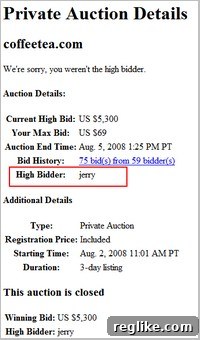
This image serves as a stark reminder of the financial commitments often involved and the consequences when those commitments are ignored. For those seeking further evidence of this bidder’s extensive history of non-payment, a link to more domains jerry defaulted on at the beginning of August is available, painting a clear picture of a recurring pattern rather than an isolated incident.
Examining NameJet’s Policy on Non-Payment
To address issues of non-payment, auction platforms typically implement a set of policies designed to deter defaults and manage the fallout when they occur. NameJet, a prominent player in the expired domain auction space, outlines its approach in its F.A.Q. section. Understanding these rules is crucial to evaluating their effectiveness in tackling the problem of deadbeat bidders.
According to NameJet’s official policy:
We will attempt to debit the winner’s NameJet account or bill the credit card on file for up to 7 days. If the winner has insufficient funds to pay for the domain, then the name may go into a public auction where the previous winner will not be allowed to enter. We charge a $10 non-payment processing fee if the combined balance of your NameJet account and credit card are insufficient to pay for your purchases. You will receive daily email reminders listing domains that have been awarded but are still pending payment. In addition, you can view your Reports online to see which domains are pending payment. Accounts with excessive non-payments may be disabled by NameJet.
On the surface, this policy outlines a process for payment collection, a penalty fee, and a final consequence for repeat offenders. However, a closer look reveals potential weaknesses. The primary immediate deterrent for a default is a mere $10 non-payment processing fee. For domains that can command hundreds or even thousands of dollars, a $10 penalty appears woefully inadequate. It barely covers administrative costs, let alone acts as a significant disincentive for someone who might be intentionally disrupting the auction process or simply lacks the commitment to follow through on high bids.
The policy also states that “Accounts with excessive non-payments may be disabled by NameJet.” The ambiguity of “excessive” is a critical point. How many defaults constitute “excessive”? Is it five, ten, or more? The lack of a clear threshold allows deadbeat bidders to operate for an extended period, inflicting repeated damage before any decisive action is taken. In essence, the current framework seems to suggest that bidders can default on purchases relatively freely until the platform unilaterally decides that their activity has crossed an undefined line. This permissive stance raises serious questions about the fairness of the system for diligent buyers.
The Perverse Incentive: Do Deadbeats Secretly Benefit Platforms?
One controversial perspective suggests that expired domain companies might have a limited short-term incentive to aggressively crack down on deadbeat bidders. This seemingly counterintuitive idea stems from the fact that non-paying bidders, like “jerry,” often inflate auction prices. Even if the domain ultimately goes unpaid, the higher initial bids might make the auction appear more active and the domain more valuable, potentially driving up the price for the eventual legitimate winner in subsequent re-runs.
While this could provide a temporary boost to auction revenue or perceived activity, it’s a shortsighted view that ignores the long-term health of the marketplace. Repeated instances of non-payment and inflated prices can deter serious bidders, who may grow tired of participating in auctions where their efforts are constantly undermined by bad actors. Over time, a decline in legitimate bidder confidence could lead to fewer participants, lower overall bid values, and a less liquid market. As the original article noted, a domain initially bid to $5,000 at SnapNames once returned to auction and was acquired for $1,250 in its re-run, demonstrating that inflated prices by deadbeats don’t always translate into higher final revenue for the platform.
The case of “jerry” provides another compelling example of this pattern. A couple of weeks after his initial defaults, “jerry” was again observed running up prices in a domain auction. The specific domain, booksworld.com, was won by “jerry” on August 24, only for him to default on that purchase as well. This consistent behavior underscores the need for a more proactive and decisive enforcement mechanism, rather than a system that allows such disruptive patterns to persist.
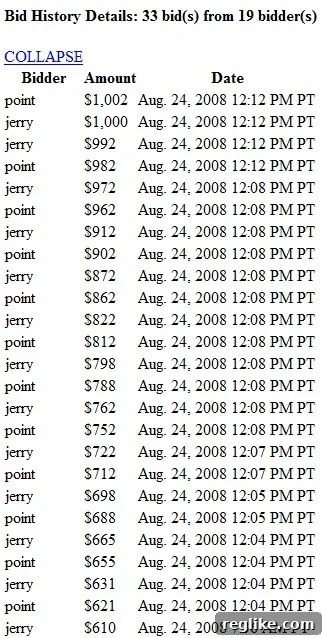
The image above highlights yet another instance where the actions of a single non-paying bidder created unnecessary turbulence and potential financial strain for others involved in the auction for booksworld.com. This recurring issue significantly impacts the perceived fairness and reliability of the auction process.
The Ineffectiveness of Current Reporting Mechanisms
Recognizing that problematic bidders exist, auction platforms often provide mechanisms for users to report suspicious or fraudulent activity. NameJet, for instance, offers a customer service interface where users can submit complaints about particular individuals. A phone representative confirmed that these complaints can be submitted with a degree of anonymity through an external support tool, though an email address is required for follow-up.
However, the effectiveness of these reporting systems is questionable if the reported behavior persists without consequence. In “jerry’s” case, the individual who brought this issue to Domain Name Wire’s attention did indeed report the bidder to NameJet. Despite this explicit alert to the platform, “jerry” reportedly continued to bid in subsequent auctions. This suggests a significant disconnect between user reports and actionable enforcement. If even direct complaints about systematic defaulting fail to trigger immediate and meaningful repercussions, then the reporting mechanism itself becomes largely symbolic, doing little to protect the auction community.
The lack of prompt action on reported incidents sends a discouraging message to legitimate users. It implies that their concerns are not being prioritized, and that the platform may be more tolerant of disruptive behavior than it lets on. For a healthy auction environment, trust and transparency are paramount. When users feel their reports are ignored, and bad actors are allowed to continue operating with impunity, it erodes that trust and diminishes their willingness to invest time and money in the platform.
Towards a More Robust Solution: Enhancing Auction Integrity
To truly combat the issue of deadbeat bidders and foster a more equitable and efficient expired domain market, auction platforms must consider implementing more stringent and transparent policies. Simply charging a minimal fee or waiting for an undefined threshold of “excessive non-payments” is clearly insufficient to address the problem effectively.
Proposed Strategies for Deterrence and Enforcement:
- Implement Stiffer Penalties: Instead of a flat $10 fee, penalties could be a percentage of the defaulted bid amount, with a reasonable minimum. This would align the penalty with the actual value of the transaction and provide a more significant deterrent.
- Graduated Suspension System: A clear, progressive system for account suspension is essential. For instance, a first default could result in a temporary bidding ban (e.g., 30 days) and a higher fee. A second default might lead to a longer suspension (e.g., 90 days), and a third could trigger a permanent ban. This transparent system empowers users and provides clear expectations.
- Mandatory Deposits for High Bids: For bids exceeding a certain threshold (e.g., $1,000), platforms could require a small, non-refundable deposit that is applied to the final payment or forfeited upon default. This ensures a higher level of commitment from serious bidders.
- Enhanced User Verification: Implementing stronger identity verification processes for bidders, especially those participating in high-value auctions, could make it more difficult for individuals to create multiple accounts or repeatedly default under different guises.
- Proactive Account Monitoring: Platforms should utilize analytics to proactively identify patterns of suspicious bidding and defaulting behavior, rather than solely relying on user complaints. Automated flags for high default rates or sudden spikes in bids followed by non-payment could trigger investigations.
- Transparency in Enforcement: While protecting user privacy, platforms could provide aggregate data or general updates on their efforts to combat deadbeat bidders. This would reassure the community that action is being taken and foster greater trust.
- Community Feedback Loop: A more responsive and transparent system for handling user complaints, where reporters are informed of actions taken (without revealing personal details), could encourage more users to report issues confidently.
By adopting a combination of these strategies, expired domain auction services can shift from a reactive, minimal-penalty approach to a proactive, robust enforcement model. The goal should be to create an environment where legitimate buyers feel secure and valued, and where bad actors face swift and meaningful consequences for their disruptive behavior.
Conclusion: Paving the Way for a Fairer Auction Landscape
The issue of deadbeat bidders in expired domain auctions is a critical challenge that demands a more assertive and comprehensive response from auction platforms. While the thrill of securing a valuable domain is undeniable, the persistent problem of non-paying winners introduces inefficiencies, drives up costs for genuine buyers, and fundamentally undermines the principles of fair competition and trust that are vital for any healthy marketplace.
The current policies, as exemplified by NameJet’s minimal $10 penalty and subjective approach to “excessive non-payments,” are demonstrably insufficient to deter sophisticated or repeat offenders. The continued presence of individuals like “jerry,” who can repeatedly default on significant purchases and still influence subsequent auctions, highlights the urgent need for reform. Auction platforms must recognize that while a deadbeat bidder might temporarily inflate auction metrics, the long-term cost to community trust and market integrity far outweighs any ephemeral short-term gains.
It is imperative that expired domain auction services evolve their strategies to prioritize the interests of their legitimate, paying customers. By implementing stronger penalties, graduated suspension systems, mandatory deposits, and enhanced verification processes, platforms can create a more predictable and trustworthy bidding environment. A clear and transparent enforcement framework, coupled with responsive action on user reports, will not only deter bad actors but also foster a sense of fairness and confidence among the serious investors who drive the market. Ultimately, a more disciplined approach to managing deadbeat bidders will pave the way for a more efficient, equitable, and thriving expired domain auction landscape for everyone involved.