
NameKing: Analyzing Domain Tasting Practices and ICANN’s Influence
NameKing, a prominent domain registrar, has historically been a significant player in domain tasting. While their activity has decreased, they remain a key figure in this area.

Domain tasting, a practice where registrars register domain names for a short period to assess their potential profitability based on generated traffic, has been a subject of much debate and policy changes within the domain industry. NameKing.com, a well-known domain registrar, has been closely associated with this practice.
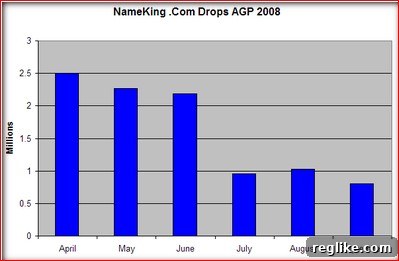
NameKing, operating as a subsidiary of Oversee.net, was observed to drop nearly a million .com domains monthly during the add grace period. This period allows registrars to return domain names within a specified timeframe without incurring the full registration fee. In the past, domain tasters exploited this grace period to test the viability of numerous domain names.
ICANN (the Internet Corporation for Assigned Names and Numbers), the governing body for domain name systems, implemented budget measures aimed at curbing domain tasting. While these measures have indeed reduced the scale of domain tasting, they have not entirely eliminated the practice. As anticipated, resourceful players within the domain industry have adapted and found alternative methods to continue domain tasting, albeit on a smaller scale.
To illustrate the trend, consider the volume of .com domains dropped by NameKing during the add grace period from April to September 2008. The available data from ICANN reveals a significant decline. Initially, NameKing dropped approximately 2.5 million .com domains per month. This figure has since decreased to around 1 million domains. This decline reflects the impact of ICANN’s policies on domain tasting.
According to RegistrarStats, a website that tracks domain registration statistics, NameKing currently has around 737,197 active domain registrations. This figure provides context for the scale of their domain tasting activities in relation to their overall domain portfolio.
A History of Domain Tasting and Policy Changes
The history of domain tasting is marked by periods of intense activity and subsequent attempts to regulate the practice. In 2007, NameKing temporarily suspended domain tasting following a lawsuit filed by Microsoft against one of their customers for trademark infringement and cybersquatting. This legal action highlighted the potential risks associated with domain tasting, particularly the possibility of inadvertently registering domain names that infringe on existing trademarks.
The legal landscape surrounding domain names and trademark protection is complex. Companies must actively monitor domain registrations to identify and address potential instances of cybersquatting, where individuals register domain names that are similar to existing trademarks with the intention of profiting from the brand’s reputation.
The Impact of ICANN’s New Policies on Domain Tasting
By April 2009, a new ICANN policy was set to significantly restrict NameKing’s ability to engage in domain tasting. This policy stipulated that registrars would not receive refunds for more than 10% of domains returned during the add grace period. This measure aimed to make domain tasting less financially attractive and further discourage the practice.
However, this policy did not signify the complete end of domain tasting. The domain industry is known for its adaptability, and companies have found ways to circumvent the restrictions and continue domain tasting profitably. These strategies are particularly effective for registrars with retail customers, who can leverage their existing customer base to offset the costs associated with domain tasting.
Alternative Strategies for Domain Tasting
The new ICANN policy prompted domain registrars to explore alternative strategies for domain tasting. One approach involves carefully selecting domain names with a higher likelihood of generating traffic and revenue. This requires a more sophisticated understanding of search engine optimization (SEO) and online advertising.
Another strategy involves partnering with retail customers to test domain names. Registrars can offer incentives to customers to register and test domain names, sharing the potential profits generated from the domains. This approach allows registrars to distribute the risk and cost of domain tasting while leveraging the expertise of their retail customers.
The Role of eNom in Domain Tasting
Demand Media’s eNom, another prominent domain registrar, has also been identified as a significant domain taster. In September, eNom’s numerous registrars dropped over 100,000 .com domains during the add grace period, according to VeriSign reports submitted to ICANN. However, the company registered approximately 150,000 new .com domains during the same period.
This means that eNom can return up to 15,000 domains without incurring penalties under the new ICANN policy. While this will necessitate a reduction in their domain tasting operations, it does not eliminate the practice entirely. ENom’s ability to continue domain tasting highlights the challenges in completely eliminating the practice, even with stricter regulations.
The Future of Domain Tasting
The future of domain tasting remains uncertain. While ICANN’s policies have significantly reduced the scale of the practice, it is unlikely to disappear completely. The domain industry is constantly evolving, and companies will continue to find ways to adapt and innovate.
As technology advances and online advertising models change, the dynamics of domain tasting may also evolve. New methods of generating revenue from domain names may emerge, leading to new forms of domain tasting. It is essential for ICANN to remain vigilant and adapt its policies to address these emerging trends.
Conclusion: The Ongoing Saga of Domain Tasting
The story of NameKing and domain tasting illustrates the ongoing tension between innovation and regulation in the domain industry. While domain tasting can be used to identify potentially valuable domain names, it can also lead to abuses, such as cybersquatting and trademark infringement.
ICANN’s efforts to regulate domain tasting have had a significant impact, reducing the scale of the practice. However, the domain industry’s adaptability ensures that domain tasting will likely persist in some form. The future of domain tasting will depend on the ongoing evolution of technology, online advertising, and ICANN’s regulatory policies.
Ultimately, a balance must be struck between allowing legitimate innovation in the domain industry and protecting the rights of trademark holders and consumers. This requires a collaborative effort between ICANN, domain registrars, and other stakeholders to develop and enforce policies that promote a fair and sustainable domain ecosystem. Understanding the nuances of domain tasting, its history, and its future implications is crucial for anyone involved in the domain name industry, from investors to businesses seeking to protect their online presence.