
The Unexpected Intersection: Whale Hunting, Tourism, and Domain Name Disputes in the Faroe Islands
At first glance, the ancient practice of whale hunting and the modern world of domain names seem like two entirely disparate concepts. Yet, a fascinating and highly publicized case from the Faroe Islands vividly illustrates how these seemingly unrelated elements can collide, sparking a crucial debate about free speech, commercial interests, and the internet’s power to shape narratives. This complex scenario brought a remote archipelago into the global spotlight, highlighting the profound implications of digital real estate.
The Faroe Islands: A Unique Culture and Economy
Nestled in the North Atlantic, the Faroe Islands are an autonomous territory within the Kingdom of Denmark, known for their breathtaking natural beauty, dramatic landscapes, and a rich, distinct culture. With a population of just over 50,000, these islands rely significantly on tourism as a vital component of their economy. The official tourism board, understanding the importance of a strong online presence, effectively promotes the islands’ allure through its primary digital gateway, VisitFaroeIslands.com. This website serves as the quintessential resource for potential visitors, showcasing pristine fjords, charming villages, and unique cultural experiences, all designed to entice and inform. It is a carefully curated window into a destination striving to attract global travelers, providing essential information on accommodation, activities, and local customs.
However, the Faroe Islands are also home to a centuries-old tradition known as the “Grindadráp,” or pilot whale hunt. This practice, deeply embedded in Faroese cultural identity and a historical means of sustenance, involves the communal herding and slaughter of pilot whales and other small cetaceans. While defended by islanders as a sustainable and culturally significant part of their heritage, the Grindadráp has drawn intense international criticism from animal welfare organizations and environmental activists, who condemn it as cruel and unnecessary. This deep cultural divide sets the stage for the dramatic clash witnessed in the digital realm.
A Subtle Typo, A Stark Contrast: The Domain Name Dilemma
The digital world often operates on precision, where a single character can lead you to an entirely different universe. This was precisely the case with the Faroe Islands. While VisitFaroeIslands.com meticulously paints a picture of serene beauty and welcoming hospitality, a subtle modification to the domain name dramatically alters the user’s experience. By simply adding the definite article “the” into the address, transforming it into VisitTheFaroeIslands.com, visitors are instantly transported from a promotional tourism site to a starkly different platform. This second domain houses a graphic exposé, meticulously documenting the whale butchering practices around the islands.
The content on VisitTheFaroeIslands.com is intentionally shocking, featuring vivid images and detailed accounts of the Grindadráp. Its purpose is unequivocal: to counter the positive image promoted by the tourism board and to raise global awareness about the controversial practice, often with the explicit aim of deterring tourists and pressuring the Faroese government to end the hunts. The juxtaposition between the two sites – one promoting tourism, the other protesting a cultural practice – exemplifies the power of domain names to either build a brand or to challenge it directly.
Visual Evidence: The Expose Site’s Impact
The visual content on the protest site is a critical element of its strategy. Images and videos of the Grindadráp are designed to elicit strong emotional responses and underscore the activists’ message. One such image, originally featured in a prominent industry publication, effectively conveyed the gravity and confrontational nature of the protest site:
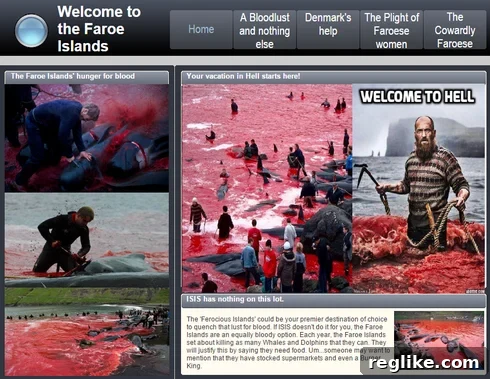
This image, and others like it, are central to the strategy of the protest site owner, directly challenging the idyllic perception presented by the official tourism channels. The strategic choice of a highly similar domain name ensures that anyone mistakenly typing or looking for related information might stumble upon the protest site, creating maximum exposure for their cause.
The UDRP Challenge: When Commercial Interests Meet Freedom of Expression
The blatant counter-messaging and the use of a confusingly similar domain name prompted the tourism board, guardians of the “Visit Faroe Islands” brand, to take legal action. They filed a complaint under the Uniform Domain-Name Dispute-Resolution Policy (UDRP). The UDRP is an administrative procedure established by the Internet Corporation for Assigned Names and Numbers (ICANN) to resolve disputes regarding the abusive registration of domain names, particularly those involving trademarks.
Understanding the UDRP Framework
For a complainant to succeed in a UDRP action, they typically must prove three elements:
- The domain name is identical or confusingly similar to a trademark or service mark in which the complainant has rights.
- The registrant (domain name owner) has no rights or legitimate interests in respect of the domain name.
- The domain name has been registered and is being used in bad faith.
In this case, the tourism board undoubtedly believed they could satisfy the first element, given the clear similarity between “VisitFaroeIslands” and “VisitTheFaroeIslands.” Their primary argument would likely revolve around the harm inflicted upon their brand, the potential for consumer confusion, and the negative economic impact on Faroese tourism, which they strive to promote.
The Panel’s Decision: A Victory for Non-Commercial Use
However, the UDRP panel’s decision ultimately favored the owner of VisitTheFaroeIslands.com. The tourism board, to their probable dismay, lost the UDRP. The core reason for this outcome was the panel’s determination that the site owner was making a legitimate non-commercial use of the domain name. This distinction is crucial in UDRP cases. While the domain name was arguably confusingly similar, the panel found no evidence of bad faith registration for commercial gain, nor any attempt to profit from the tourism board’s trademark. Instead, the site’s purpose was clearly one of protest and advocacy, a form of expression protected under various interpretations of legitimate use.
The UDRP panel recognized that the domain was used to criticize and comment on a controversial cultural practice, rather than to engage in cybersquatting or to unfairly compete with the tourism board’s commercial interests. This decision underscored the limitations of trademark protection when it conflicts with legitimate forms of non-commercial speech and activism. It served as a powerful reminder that the internet is not solely a commercial space but also a platform for dissent and public discourse.
Broader Implications: Domain Names as Tools for Activism and the Media’s Role
The outcome of this UDRP case resonated widely within the domain name industry and beyond. It highlighted several significant implications:
The Power of Digital Activism
The case demonstrated how domain names can be potent tools for activism and social commentary. By choosing a domain name that directly references and slightly alters a prominent brand’s online presence, activists can effectively intercept potential audiences and redirect their attention to critical issues. This strategy leverages brand recognition for a cause, creating a direct counter-narrative that might otherwise struggle to gain visibility. It underlines the internet’s democratic potential, allowing individuals and groups to challenge powerful entities.
Navigating Trademark Law and Free Speech
The decision also illuminated the delicate balance between trademark law, designed to protect commercial brands, and the fundamental right to freedom of speech. The UDRP, while a tool for brand protection, must also consider legitimate non-commercial uses, especially when those uses involve criticism or protest. This case serves as a precedent, suggesting that merely being “confusingly similar” might not be enough to win a UDRP if the registrant’s intent is clearly non-commercial and expressive.
The Viral Impact of the Story
The story itself garnered significant attention, particularly within the domain name community. An article detailing this UDRP on Domain Name Wire, a respected industry publication, went viral. It was shared nearly 4,000 times on Facebook, generating a substantial amount of traffic and positioning it as one of the top three most-read posts for the year on the platform. This widespread sharing indicates the public’s fascination with such clashes, where technology, culture, and ethical debates intertwine. The virality amplified the conversation, bringing the specifics of the UDRP, the whale hunting controversy, and the Faroe Islands to a much broader audience than would typically engage with domain name disputes.
Conclusion: A Complex Digital Landscape
The saga of VisitFaroeIslands.com and VisitTheFaroeIslands.com is a compelling narrative that transcends a simple domain name dispute. It’s a microcosm of the larger tensions in our interconnected world: the clash between traditional cultures and global ethical standards, the struggle between commercial interests and free expression, and the potent role of the internet as a battleground for ideas. The UDRP panel’s decision to uphold the legitimate non-commercial use of the protest domain was a victory for digital activism, reminding us that domain names are not just commercial assets but also vital platforms for public discourse. As our world becomes increasingly digital, such cases will continue to shape our understanding of online rights, responsibilities, and the ever-evolving intersection of technology and human values.