
True Value’s UDRP Claim Against TrueValueWeb.com: A Case of Trademark Overreach?
Trademark disputes in the digital age are common, but the case of True Value, the hardware cooperative, against TrueValueWeb.com, a web hosting company, stands out. This analysis delves into the details of the UDRP (Uniform Domain-Name Dispute-Resolution Policy) proceeding, highlighting the weaknesses in True Value’s arguments and the ultimate decision in favor of TrueValueWeb.com.
To illustrate the core issue, let’s begin with visual representations of both entities:
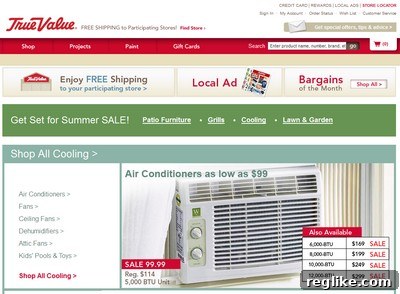
A snapshot of True Value’s official website, showcasing its hardware-focused offerings.
Now, consider the website of TrueValueWeb.com:

A screenshot of TrueValueWeb.com, a company providing web hosting and related internet technology services.
The Head-Scratching Assertions of True Value
True Value initiated a UDRP proceeding against TrueValueWeb.com, alleging that the domain name infringed on its trademark. However, the grounds for this claim were, to put it mildly, questionable. The central argument revolved around the potential for consumer confusion. True Value asserted that TrueValueWeb.com’s services were similar to those offered by the hardware cooperative, leading to the likelihood of customers mistaking one for the other.
This is where the logic begins to unravel. True Value’s primary business is selling hardware, tools, and home improvement supplies. To suggest that this is similar to providing web hosting and internet technology services requires a significant leap of imagination. While True Value does offer some services to its cooperative members (the individual store owners who operate under the True Value banner), these services are ancillary to its core business and do not constitute a direct competition with web hosting providers.
Furthermore, True Value claimed that TrueValueWeb.com utilized a similar color scheme (red, black, and white) to that used in its own branding. After carefully examining screenshots of both websites, including archived versions predating the complaint, this claim appears unfounded. The visual similarity, if any, is negligible and certainly not strong enough to suggest intentional mimicry or brand confusion.
The Case of the Misdirected Cease and Desist Letter
Adding another layer of complexity, it appears that True Value may have committed a common blunder in the world of cease and desist letters: sending the wrong letter to the wrong party. According to TrueValueWeb.com, they received a cease and desist letter from True Value, but the letter pertained to a completely different domain name, unrelated to TrueValueWeb.com. This suggests a lack of due diligence on True Value’s part and further weakens their claim of trademark infringement.
The UDRP Panel’s Decision: A Victory for Common Sense
The UDRP panel, after reviewing the evidence and arguments presented by both sides, ruled in favor of TrueValueWeb.com. The panel found that True Value failed to demonstrate that TrueValueWeb.com lacked legitimate rights or interests in the disputed domain name. This is a crucial element in UDRP proceedings, and True Value’s inability to prove this point was a major factor in its defeat.
While the panel explicitly stated that it was not issuing an opinion on the legal doctrine of laches (unreasonable delay in asserting a legal right), it did acknowledge the significant time lapse between the registration of the TrueValueWeb.com domain name and the filing of the UDRP complaint. The panel noted that this seven-and-a-half-year delay “bolstered Respondent’s contention that he operates the name in connection with a bona fide offering of services.”
The doctrine of laches is often invoked in cases where a trademark owner unreasonably delays taking action against an alleged infringer, allowing the infringer to build a business and reputation around the disputed mark. In such situations, courts may rule that the trademark owner has forfeited its right to enforce the mark, particularly if doing so would cause significant harm to the infringer.
In the True Value vs. TrueValueWeb.com case, the extended period during which TrueValueWeb.com operated its business without objection from True Value strengthened the argument that the web hosting company had established legitimate rights and interests in the domain name. Shutting down TrueValueWeb.com after so many years would have been a significant blow to the business, a fact that likely weighed heavily on the panel’s decision.
The Implications of the Ruling
This UDRP decision serves as a reminder to trademark owners that they cannot assert their rights indiscriminately. Trademark law is designed to protect legitimate brands and prevent consumer confusion, not to stifle competition or prevent others from using descriptive or generic terms in their domain names. In this case, the panel correctly recognized that True Value’s claim was based on a tenuous connection between its business and the services offered by TrueValueWeb.com.
Furthermore, the case highlights the importance of due diligence in trademark enforcement. Sending the wrong cease and desist letter not only undermines the credibility of the trademark owner’s claim but also exposes them to potential legal repercussions. A well-researched and carefully crafted cease and desist letter is essential for asserting trademark rights effectively.
Lessons Learned for Domain Name Owners and Trademark Holders
The True Value vs. TrueValueWeb.com case provides valuable lessons for both domain name owners and trademark holders:
- Domain Name Owners: Conduct thorough trademark searches before registering a domain name. Even if you believe your domain name is descriptive or generic, it’s crucial to ensure that it doesn’t infringe on an existing trademark, especially in your specific industry. Document your business activities and build a legitimate online presence to demonstrate your rights and interests in the domain name.
- Trademark Holders: Monitor the internet for potential trademark infringement and take prompt action when you discover a violation. However, be sure to conduct thorough research before sending a cease and desist letter and carefully consider the potential impact of your actions on the alleged infringer. Avoid making broad or unsubstantiated claims of trademark infringement and focus on protecting your core brand identity.
Conclusion: A Victory for Reason and Fair Play
The UDRP decision in favor of TrueValueWeb.com was a victory for reason and fair play. True Value’s attempt to claim trademark infringement based on weak arguments and a misdirected cease and desist letter was ultimately unsuccessful. The panel’s decision reinforces the principle that trademark law should be applied judiciously and that domain name owners should not be subjected to frivolous or unsubstantiated claims of infringement.
True Value was represented by Merchant & Gould P.C., while the respondent, TrueValueWeb.com, was represented by Bret S. Moore. This case underscores the importance of skilled legal representation in resolving domain name disputes and protecting the rights of both trademark holders and domain name owners.