
E-Reader Giant PocketBook Ventures into U.S. Courts After UDRP Loss for Coveted Pocketbook.com Domain
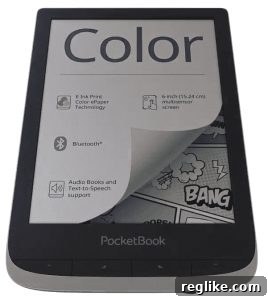
In a renewed effort to secure the highly desirable domain name Pocketbook.com, PocketBook International SA, a leading manufacturer and vendor of electronic book readers, has initiated a lawsuit in the United States. This legal maneuver marks the company’s second attempt to claim ownership of the domain, following an unsuccessful Uniform Domain-Name Dispute-Resolution Policy (UDRP) proceeding just last year.
The core of PocketBook’s argument centers on the alleged confusion experienced by its customers and partners. The company posits that, given its brand name, individuals seeking information about its popular e-readers naturally expect to find it at Pocketbook.com, a generic-sounding domain that, paradoxically, does not host its official content. This perceived misdirection forms a significant part of their claim for ownership.
The Battle for Pocketbook.com: From UDRP Defeat to U.S. Litigation
The current legal action in U.S. courts represents a strategic pivot for PocketBook International SA. Previously, the company challenged the domain’s ownership through a UDRP, an administrative procedure designed to resolve disputes over domain names, particularly those involving alleged cybersquatting or trademark infringement. However, as reported, PocketBook’s UDRP claim for Pocketbook.com was ultimately denied, allowing the current registrant, SiteTools, Inc., to retain control of the domain.
The UDRP process is often favored for its speed and cost-effectiveness compared to traditional litigation. However, it operates under specific, strict criteria, primarily focusing on whether a domain name was registered in “bad faith” and is identical or confusingly similar to a trademark. The loss in the UDRP suggests that PocketBook was unable to sufficiently demonstrate these elements to the panel’s satisfaction. Undeterred, the e-reader company is now escalating its efforts, seeking a more robust legal avenue to assert its rights and finally acquire the domain it believes is rightfully theirs.
Allegations of Consumer Confusion and Brand Impact
PocketBook’s lawsuit in the U.S. courts meticulously details instances where, it claims, the current ownership of Pocketbook.com leads to significant customer confusion and adversely affects its business. The company highlights several key examples to bolster its case:
Increased Traffic to Pocketbook.com During Product Launches
One compelling example cited in the lawsuit is the observed surge in traffic to the Pocketbook.com domain whenever PocketBook International SA releases a new product or updates an existing one. The company interprets this as direct evidence that consumers, when seeking information about new PocketBook e-readers, instinctively navigate to the most intuitive domain name associated with the brand. This behavior, they argue, demonstrates a clear association in the public’s mind between “PocketBook” and the e-reader products, and an expectation to find relevant information at the .com counterpart.
Reseller Misdirection and Advertising Errors
Further illustrating the confusion, PocketBook presents an instance where one of its authorized resellers inadvertently linked to Pocketbook.com instead of the correct regional domain, Pocketbook.es, in an advertising campaign. The lawsuit includes evidence, such as a video, demonstrating that while the e-magazine advertisement visually displayed Pocketbook.es as the intended URL, clicking the link would erroneously redirect users to Pocketbook.com. Such incidents, according to PocketBook, not only frustrate potential customers but also divert valuable traffic and potential sales away from their official channels, causing tangible harm to their business and brand reputation.
These examples collectively underscore PocketBook’s central argument: that the current use of Pocketbook.com by SiteTools, Inc., regardless of intent, actively interferes with PocketBook’s legitimate business operations and creates a misleading environment for its global customer base. The company believes that securing this domain is crucial for maintaining brand consistency, preventing consumer confusion, and effectively reaching its target audience.
The Dual Meaning Dilemma: “Pocketbook” as a Generic Term vs. Trademark
The dispute over Pocketbook.com is complicated by the inherent nature of the word “pocketbook” itself. Unlike a coined or fanciful term, “pocketbook” is a common dictionary term with established meanings, primarily referring to a purse, handbag, or a person’s financial resources. This duality presents a significant challenge for PocketBook International SA in asserting its trademark rights and proving cybersquatting.
The established legal principle dictates that generic terms, by their very nature, are difficult to monopolize as trademarks for certain goods or services. While PocketBook International SA has undoubtedly invested in building brand recognition around “PocketBook” for e-readers, the domain Pocketbook.com existed long before the e-reader company’s prominence. The defendant, SiteTools, Inc., could argue that they registered a generic term for its intrinsic value or for purposes unrelated to e-readers, rather than with a specific intent to profit from PocketBook’s trademark.
As the author of this article has previously demonstrated, the term “pocketbook” is frequently used in general parlance to denote financial capacity or expenditure. For instance, I’ve utilized the term several times on Domain Name Wire to discuss financial matters, separate from any association with e-reader products. This highlights the inherent difficulty in proving that SiteTools, Inc.’s registration and use of Pocketbook.com constitutes “bad faith” cybersquatting, especially when the domain itself carries a common, non-infringing meaning.
The success of PocketBook’s lawsuit will largely hinge on its ability to convince the court that, despite the generic nature of the term, the specific context of the domain’s use and the demonstrated consumer confusion warrant a transfer of ownership, establishing a stronger secondary meaning for “PocketBook” in the digital realm specifically tied to its products.
The “Refusal to Come to an Agreement” Allegation: A Closer Look
In its lawsuit, PocketBook International SA makes a rather peculiar accusation against SiteTools, Inc., asserting that the domain owner has “refused to come to an agreement” regarding the sale of Pocketbook.com. The specific language used in the lawsuit is striking:
Defendants are well aware that they infringe Pocketbook’s intellectual property rights and are causing significant harm to Pocketbook. Defendants, however, have not resolved or addressed these issues, despite having knowledge, opportunity and means to do so. For example, Pocketbook has offered to purchase the Domain Name from the Defendants, but Defendants refused to come to an agreement by callously offering to sell the Domain Name for “six figures” despite the Domain Name being used only for infringing and illicit purposes.
This statement, while intended to portray SiteTools, Inc. as uncooperative, appears to inadvertently reveal a different scenario. The accusation that the defendants “refused to come to an agreement by callously offering to sell the Domain Name for ‘six figures'” suggests that SiteTools, Inc. did, in fact, engage in discussions and provided a clear asking price. A “six-figure” sum for a highly sought-after, generic .com domain like Pocketbook.com is not an unreasonable market valuation for a premium asset, especially one with a dual meaning and potential for various commercial applications.
From this perspective, it seems more probable that PocketBook International SA refused to meet SiteTools, Inc.’s asking price, rather than the defendants outright refusing to negotiate. The use of terms like “callously” and “infringing and illicit purposes” in the lawsuit’s description of the offer may be an attempt by PocketBook to frame the negotiation as an act of bad faith on the part of SiteTools, Inc., and to justify their unwillingness to pay the requested sum. However, in the context of domain name transactions, offering a domain for a substantial price is a common practice, not necessarily an indication of illicit activity or infringement.
This particular allegation could backfire in court, as it might demonstrate that SiteTools, Inc. was open to a sale at a market rate, thereby weakening PocketBook’s claim of uncooperative or infringing behavior. The onus would then shift to PocketBook to prove why the “six-figure” asking price was unreasonable or indicative of bad faith, particularly when compared to the legal costs of a protracted lawsuit.
PocketBook’s Regional Strategy and U.S. Market Presence
Adding another layer of complexity to PocketBook’s pursuit of Pocketbook.com is the company’s current domain name strategy and its presence in the U.S. market. PocketBook International SA predominantly utilizes country-code top-level domains (ccTLDs) for its operations in various regions where its products are sold. Examples include Pocketbook.es for Spain, and similar localized domains for other countries. This strategy is common for international brands aiming to tailor their online presence to specific geographic markets.
However, notably absent from the list of countries prominently featured on PocketBook’s official website where it offers its products is the United States. This raises questions about the extent of PocketBook’s established brand presence and market penetration in the U.S. A company attempting to claim a generic .com domain name on the grounds of consumer confusion and trademark infringement typically needs to demonstrate a strong, established connection to the U.S. market, where “pocketbook” as a term for a purse is arguably more prevalent than in some other English-speaking regions.
The lack of a direct U.S. presence listed on their website could weaken PocketBook’s arguments regarding U.S. consumer confusion or the extent of harm caused by not owning Pocketbook.com in this specific territory. It may be challenging for PocketBook to argue that U.S. consumers are being significantly misled if the company itself does not actively market or sell its e-readers under the “PocketBook” brand directly to U.S. customers via its own localized channels. This aspect of their operational strategy will likely be a point of scrutiny in the court proceedings, as it impacts the perceived strength of their U.S. trademark rights relative to the generic meaning of the domain.
Navigating the Legal Landscape: UDRP vs. Federal Court
The decision by PocketBook International SA to pursue its claim in U.S. federal court, after losing a UDRP, highlights the fundamental differences between these two avenues for domain dispute resolution. While UDRP is a relatively swift, administrative process handled by panels of experts, federal court litigation is a full-fledged legal battle with broader scope, more extensive discovery, and the potential for greater remedies.
In a UDRP, the complainant must prove three elements: (1) the domain name is identical or confusingly similar to a trademark in which the complainant has rights; (2) the registrant has no rights or legitimate interests in respect of the domain name; and (3) the domain name has been registered and is being used in bad faith. The bar for proving “bad faith” can be particularly high when the domain name in question is a generic term.
In federal court, PocketBook will likely pursue claims of trademark infringement, cybersquatting under the Anticybersquatting Consumer Protection Act (ACPA), and potentially unfair competition. Proving cybersquatting under ACPA often requires demonstrating a “bad faith intent to profit” from the trademark. This involves considering several factors, including the registrant’s trademark rights, the extent to which the domain consists of the legal name of the registrant, the registrant’s prior use of the domain, and the offering for sale of the domain. The generic nature of “pocketbook” works against PocketBook on several of these factors.
The judicial process allows for more extensive evidence presentation, expert testimony, and the full range of legal arguments, which could provide PocketBook a better chance to articulate the nuances of its brand’s secondary meaning and the specific harm it alleges. However, it also opens the company to counterclaims and a lengthy, costly legal battle. The outcome will depend heavily on how the court weighs the generic meaning of “pocketbook” against PocketBook’s efforts to establish it as a distinctive mark for e-readers, particularly in the context of its U.S. market presence and the alleged instances of consumer confusion.
Conclusion: An Uphill Battle for a Generic Domain
PocketBook International SA’s renewed quest for Pocketbook.com in the U.S. courts is an ambitious undertaking. While the company clearly faces genuine instances of customer confusion and has a strong desire to consolidate its brand presence under a globally recognized .com domain, the path ahead is fraught with legal complexities. The inherent generic nature of the word “pocketbook,” coupled with the domain holder’s potential for legitimate interest and the history of a UDRP loss, presents significant hurdles.
The legal team representing PocketBook will need to mount a compelling argument, demonstrating not only the pervasive nature of consumer confusion but also the specific elements of bad faith intent on the part of SiteTools, Inc., to profit from PocketBook’s trademark. Simply offering a domain for a “six-figure” sum, as the lawsuit describes, does not automatically equate to bad faith or illicit activity, especially when dealing with a premium, generic domain that could hold value for various commercial endeavors. Furthermore, the limited visible U.S. market presence of PocketBook International SA could complicate its ability to prove strong trademark rights within this specific jurisdiction for e-readers, relative to the common understanding of the term “pocketbook.”
This case serves as a poignant reminder of the challenges companies face when their brand names coincide with common dictionary terms. While the digital landscape encourages brands to claim their exact-match .com domains, the legal framework is designed to balance trademark protection with the rights of individuals to register and utilize generic terms in good faith. The outcome of this lawsuit will undoubtedly offer valuable insights into how U.S. courts interpret these competing interests in the evolving domain name ecosystem.