
Premium Domain Trademark Attempt Raises Concerns in the Domain Name Industry
The world of domain names is a dynamic and competitive landscape, constantly evolving with new trends and challenges. Recently, a development has emerged that has sparked considerable debate within the industry: a trademark application for the term “Premium Domain.” This seemingly straightforward application has the potential to create significant ripples across the domain name ecosystem, impacting domain registrars, investors, and end-users alike.
A Houston-based individual has filed a trademark application seeking exclusive rights to the term “Premium Domain.” The implications of such a trademark being granted are far-reaching and warrant careful examination.
The Trademark Application: Scope and Intent
The trademark application outlines two primary identifications of services for which the trademark is sought:
- “Brand development marketing and evaluation services in the field of trademarks, trade names, and domain names.”
- “Licensing of intellectual property, and, licensing of intellectual property rights, namely, trademarks, copyrights and domain names, leasing of internet domain names, and domain name registration services, namely, conducting domain name searches for the purpose of providing legal advice on domain name registration.”
The application asserts a first use date of May 29, 2019. However, the core issue lies in whether “Premium Domain” is truly a distinctive term capable of being exclusively associated with a single entity, or simply a descriptive term widely used within the domain name industry to denote high-value, desirable domain names.
The Descriptive Nature of “Premium Domain”
The term “Premium Domain” is commonly used across the domain name industry to describe domain names that possess certain desirable characteristics. These characteristics often include:
- Short Length: Shorter domain names are generally considered more valuable due to their ease of memorization and typing.
- Relevance: Domain names that directly relate to a specific industry, product, or service tend to be more sought after.
- Memorability: Easy-to-remember and pronounceable domain names are crucial for brand recognition and marketing.
- Search Engine Optimization (SEO) Potential: Domain names containing relevant keywords can contribute to improved search engine rankings.
- Brandability: Domain names that are suitable for building a strong and recognizable brand are highly valued.
Given these factors, “Premium Domain” has evolved into a general descriptor used by domain registrars, marketplaces, and brokers to identify and market domain names possessing these qualities. Granting a trademark for such a widely used descriptive term could stifle competition and limit the ability of industry participants to accurately describe the value of their domain name offerings.
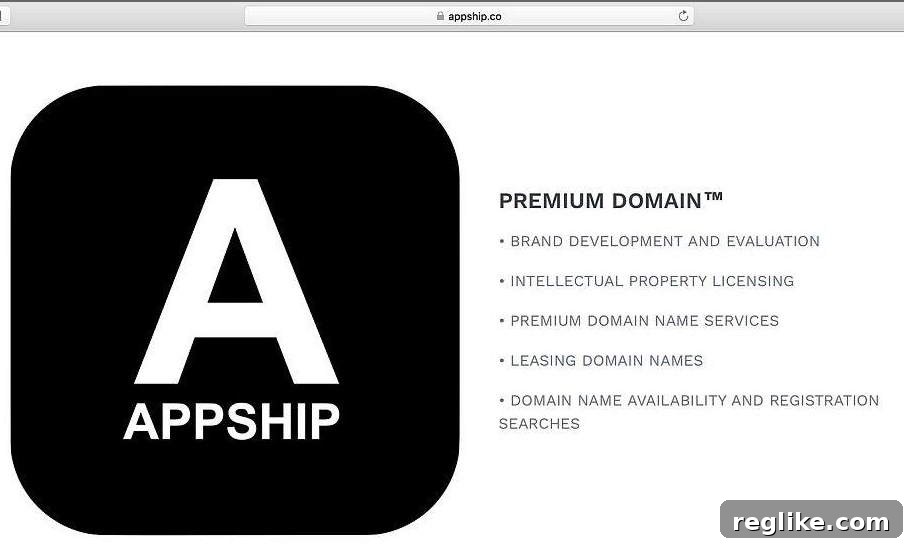
The applicant’s website, appship.co, is presented as evidence in the trademark application, paradoxically demonstrates the descriptive nature of the term. Screenshots from the site showcase the domain name AppShip.co listed on various platforms, described as a “Premium Domain” due to its listing for sale through Afternic. This use of “Premium Domain” reinforces its role as a descriptive term indicating a domain’s potential value and desirability, rather than a unique brand identifier.
GoDaddy Example: Further Evidence of Common Usage
The widespread use of “Premium Domain” as a descriptive term is further illustrated by its presence on major domain registration platforms. For instance, GoDaddy, a leading domain registrar, uses the term “Premium Domain” to categorize and highlight high-value domain names available for purchase.
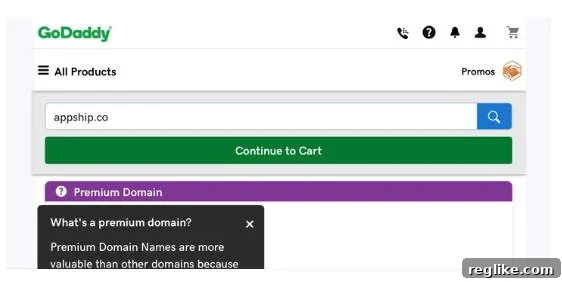
This practice underscores the industry’s collective understanding of “Premium Domain” as a common descriptor, not a brand name. Restricting the use of this term through a trademark would create confusion and hinder the ability of businesses and individuals to effectively navigate the domain name market.
Potential Impact on the Domain Name Industry
If the trademark application for “Premium Domain” is successful, the potential consequences for the domain name industry are significant:
- Restrictions on Marketing: Domain registrars and marketplaces could be restricted from using the term “Premium Domain” to describe their high-value domain name offerings, potentially hindering their marketing efforts.
- Legal Challenges: Businesses using the term “Premium Domain” in their marketing materials or domain name sales could face legal challenges from the trademark holder.
- Reduced Competition: The trademark could grant the applicant an unfair competitive advantage by allowing them to control a widely used descriptive term.
- Consumer Confusion: Restricting the use of “Premium Domain” could create confusion among consumers trying to understand the value and characteristics of different domain names.
Arguments Against the Trademark
The trademark application for “Premium Domain” faces several significant challenges, primarily based on the descriptive nature of the term. Legal arguments against the trademark could include:
- Descriptiveness: The term “Premium Domain” is primarily descriptive and does not function as a unique brand identifier. It directly describes the characteristics and qualities of certain domain names.
- Lack of Distinctiveness: The term has not acquired secondary meaning, meaning that consumers do not associate “Premium Domain” exclusively with a particular brand or source.
- Generic Use: The term is widely used throughout the domain name industry as a generic descriptor, further weakening any claim to trademark protection.
The Importance of Protecting Common Industry Terms
The domain name industry relies on clear and consistent terminology to facilitate communication and commerce. Protecting common industry terms like “Premium Domain” is crucial for maintaining a level playing field and ensuring that businesses and individuals can effectively participate in the market.
Allowing the trademarking of such a term would set a dangerous precedent, potentially leading to the monopolization of other common industry descriptors and ultimately stifling innovation and competition.
Conclusion: A Need for Scrutiny
The trademark application for “Premium Domain” warrants close scrutiny from the United States Patent and Trademark Office (USPTO). Granting a trademark for this descriptive term could have significant negative consequences for the domain name industry, restricting competition, hindering marketing efforts, and creating confusion among consumers. It is essential that the USPTO carefully consider the arguments against the trademark and uphold the principle that common industry terms should remain freely available for use by all.
The future of the domain name landscape depends on protecting the integrity of its language and ensuring that descriptive terms like “Premium Domain” remain accessible to all participants in the market. The outcome of this trademark application will undoubtedly set a significant precedent for future intellectual property considerations within the domain name industry.
This situation highlights the ongoing need for vigilance and advocacy within the domain name community to protect the integrity of the industry and prevent the monopolization of essential descriptive terms. By working together, industry stakeholders can ensure a fair and competitive environment for all participants.