
Mark Davis: The Unforeseen Digital Universe of the Las Vegas Raiders Owner
The momentous announcement that the Oakland Raiders would officially relocate to the electrifying city of Las Vegas reverberated across the sports world. This pivotal decision, the culmination of years of negotiations and strategic planning, marked a significant turning point for one of the National Football League’s most storied franchises. Amidst the excitement and discussions surrounding the team’s new era, a remarkable detail emerged that captured widespread attention: the domain name LasVegasRaiders.com was not only registered but had been secured for nearly two decades by none other than Mark Davis, the very owner of the team.
This revelation immediately sparked curiosity. The domain, it was discovered, had been registered in 1998, a full 19 years before the relocation was finalized. The registrant’s name—Mark Davis—coincided perfectly with that of the owner of the Raiders. While such a foresight might appear almost prescient, the initial investigation into this digital breadcrumb trail unearthed a more complex and intriguing story, prompting questions about whether this was indeed the same high-profile individual responsible for steering the Raiders franchise.
Initial Skepticism and the Trail of Digital Clues
When the news first surfaced, the notion that a prominent NFL owner would personally register a domain name for a city his team might relocate to almost two decades later seemed extraordinary, bordering on implausible. The initial journey into understanding this digital footprint began with a closer examination of the public WHOIS record for LasVegasRaiders.com. This publicly accessible database exposed a registration tied to a residential address in Alamo, California. The property, described by real estate platforms like Zillow as a “modest house,” presented a stark contrast to the luxurious estates typically associated with owners of major professional sports teams, fueling early doubts about the identity of the registrant.
Further investigation into the phone number associated with the WHOIS record yielded listings for various small businesses. This suggested a profile more akin to a local entrepreneur with diverse interests rather than an individual singularly focused on managing a multi-million dollar sports empire. The plot thickened considerably with data from DomainIQ, which linked the registrant’s email address to an astonishing portfolio exceeding 3,000 domain names. This sheer volume hinted at a professional domain investor or a dedicated enthusiast, making the direct connection to the Raiders’ owner seem increasingly improbable to initial observers.
Within this vast collection, several domains bore the “Raiders” name, including Raiders.org. However, visiting Raiders.org at the time of the inquiry led not to an official team website, but to a seemingly unofficial fan-run site. The content, featuring fan-generated discussions and images, further complicated the narrative:
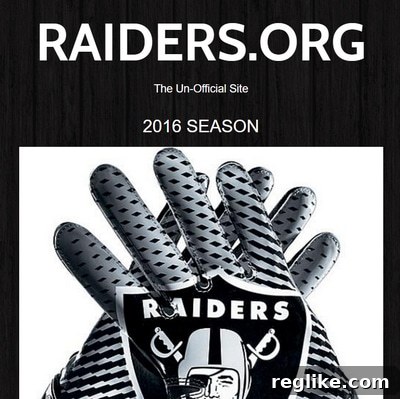
It was difficult to reconcile the image of a busy NFL owner, deeply entrenched in the high-stakes world of professional football, with the idea of him personally curating such an eclectic mix of domain names, let alone maintaining an unofficial fan portal in his spare moments. The pieces of the puzzle, at this stage, simply did not align with the conventional perception of an NFL franchise owner.
The Confirmation: Unmasking Mark Davis, the Domain Enthusiast
Despite the initial skepticism, subsequent media reports and direct confirmations began to coalesce, gradually resolving the mystery. High-profile media outlets, including TMZ, eventually secured direct confirmation from Mark Davis himself—the undisputed owner of the soon-to-be Las Vegas Raiders—affirming that he was indeed the individual behind the registration of LasVegasRaiders.com and its accompanying digital trove. This pivotal confirmation transformed what was once a perplexing coincidence into a profound insight into his character and unconventional approach.
Further journalistic efforts brought more clarity to the situation. An article highlighted by domain expert Elliot Silver specifically noted that Davis “bought the Las Vegas Raiders website in 1999,” validating the surprisingly early registration date. Crucially, multiple reports corroborated that Davis is known for working from his residence in Alamo, California, which directly explained the address found within the WHOIS records. This detail, often considered unusual for someone of his stature, began to paint a more comprehensive portrait of a man who inherited the iconic Raiders franchise from his legendary father, Al Davis, and whose substantial net worth remains predominantly tied to the team’s success.
Adding another layer to his distinctive public persona, photographs captured via Google Street View revealed his widely recognized vehicle, an “infamous Caravan,” parked in the driveway of the Alamo residence. This peculiar yet undeniable piece of visual evidence further solidified the connection:
Using street view on Google maps, the address given for Mark Davis shows his infamous Caravan in the driveway. pic.twitter.com/0LQXmQgaYI
— Michael Abromowitz (@FootballExpert) March 28, 2017
For those unfamiliar, images of his beloved minivan have frequently circulated in the media, reinforcing his reputation for an understated lifestyle that often diverges from typical billionaire norms. The convergence of these facts dispelled the initial doubts, establishing unequivocally that Mark Davis, the prominent NFL owner, is indeed the enigmatic domain name enthusiast.
Beyond LasVegasRaiders.com: A Digital Treasure Trove of the Unexpected
With Mark Davis’s identity firmly established, attention naturally pivoted to the astounding volume and diverse nature of the other domain names associated with him. The discovery of over 3,000 domains under his digital stewardship offers a captivating glimpse into his past interests and potential entrepreneurial endeavors, revealing a multifaceted aspect of the Raiders owner rarely presented to the public eye.
The Intriguing Adult-Themed Domains: A Puzzling Collection
Perhaps the most unexpected revelation within Davis’s extensive digital portfolio was the presence of several adult-themed domain names. Titles such as 411Escort.com, 800Playmates.org, JustBlowMe.org, 1800f*ckfilms.com (presented here with the original author’s censoring to maintain contextual accuracy), and SexualityOn.org stand in stark contrast to the public image of an NFL franchise owner. This particular segment of his collection prompts numerous lines of inquiry:
- Early Domain Speculation: During the nascent and largely unregulated era of the internet in the late 1990s and early 2000s, domain speculation was a widespread phenomenon. Many individuals registered suggestive or generic terms, anticipating their potential future value as online industries, including adult entertainment, grew. It is plausible that Davis, like many others, viewed these as potential digital assets for future resale.
- Passive Income Ventures: Some of these domains might have been intended as platforms for adult entertainment directories, affiliate marketing, or lead generation, aiming to capitalize on the burgeoning online market.
- Personal Interest or Unconventional Side Project: While seemingly incongruous for a public figure of his standing, it is not entirely outside the realm of possibility that these represented a past personal interest or a fleeting entrepreneurial venture into a less conventional market before his responsibilities as an NFL owner became all-consuming.
Regardless of the precise motivation, this collection offers a peculiar and often humorous insight into the diverse and sometimes unpredictable landscape of early internet commerce, highlighting Davis’s surprising engagement with its various facets.
NFL Team-Related Domains: Strategic Foresight or Opportunistic Registrations?
Beyond securing his own team’s future digital address, Davis also registered domain names pertaining to other NFL franchises. Examples include MyPatriots.us, MyRedSkins.us, and MyFalcons.us. The ownership of domains related to rival or unrelated teams introduces another layer of intrigue and speculation:
- Defensive Registrations: In the realm of branding and intellectual property, it is a common practice for organizations and individuals to register variations of names or related terms to prevent competitors, squatters, or malicious actors from acquiring them. Could Davis have been preemptively safeguarding the broader NFL brand, or perhaps anticipating future interests within the league’s digital landscape?
- Market Research or Fan Engagement Initiatives: These domains might have been acquired as part of an exploration into fan-based community sites, alternative digital engagement platforms, or even as tools for market intelligence related to the wider NFL audience.
- General Interest in the League’s Digital Footprint: As an owner deeply invested in the league’s success and future, it’s conceivable that he maintained a broad interest in the digital ecosystem surrounding other teams and the league as a whole.
These specific registrations suggest a potentially sophisticated awareness of the digital environment surrounding professional sports, extending well beyond the mere ownership of his own team’s primary web address.
The Generic Domains: A Legacy of Early Internet Speculation
Finally, a substantial portion of Davis’s domain portfolio comprises hundreds of generic, often numerical or alphanumeric, domains. These include patterns such as EZ###.com, I###.com/.net, and GO###. This category strongly points to a classic domain speculation strategy that was widely prevalent during the late 1990s and early 2000s, often referred to as “domaining.”
- Historical Context of Domaining: In the nascent days of the internet, countless individuals and entities engaged in registering short, memorable, or keyword-rich domains with the anticipation that they would appreciate significantly in value. The prevailing strategy was to acquire a large volume of generic or desirable names, hoping that future businesses or ventures would eventually seek to purchase them for branding or operational purposes.
- Investment in Digital Real Estate: These domains were widely viewed as a form of digital real estate, representing an investment opportunity in an rapidly emerging and evolving market. Prefixes such as “EZ,” “I,” and “GO” often implied ease of use, a personal connection, or a call to action, making them potentially attractive for a diverse range of future applications and industries.
The vast majority of this eclectic mix of domains—encompassing adult content, names related to various NFL teams, and numerous generic patterns—were reportedly registered between the late 1990s and 2002. This specific timeframe firmly positions Mark Davis as an active participant in this particular digital gold rush, offering a rare glimpse into his entrepreneurial spirit during the formative years of the internet.
Lingering Questions and the Unique Legacy of Mark Davis
Despite the confirmations and the careful piecing together of various details, the fundamental question persists: what were Mark Davis’s precise motivations and overarching intentions behind accumulating such an expansive and remarkably varied digital portfolio? Initial attempts to contact him for direct clarification via the WHOIS information did not yield a response, leaving much open to speculation, interpretation, and ongoing fascination.
Mark Davis embodies a captivating dichotomy: a powerful NFL owner, central to one of the league’s most historically significant franchise relocations, yet simultaneously an individual known for his unassuming personal style and a surprisingly extensive, often quirky, digital footprint that stretches back to the very infancy of the internet. His early ownership of LasVegasRaiders.com, registered so far in advance, stands as a testament to either an extraordinary foresight or an intriguing preparedness for a destiny that ultimately unfolded. The broader collection of his domain names, however, adds a rich layer of unexpected complexity to his public persona, revealing a past engagement with the internet’s evolving landscape that few would have ever anticipated.
As the Las Vegas Raiders embark upon their exhilarating new chapter, establishing their indelible presence in a city renowned for innovation, entertainment, and bold ventures, the historical digital assets of their owner serve as a unique and enduring footnote. They illuminate not merely the strategic maneuvering of a franchise owner, but also the personal interests and distinctive entrepreneurial spirit of a man who, long before the monumental move became a tangible reality, had already staked a significant claim in the digital future of his beloved team.