
A Critical Oversight: The Curious Case of Rex Tillerson’s Digital Identity
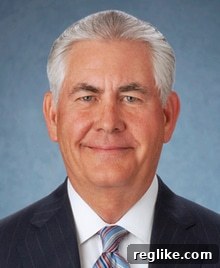
The digital footprint of public figures has become as crucial as their physical presence, especially in an era defined by instant information and constant scrutiny. When Donald Trump announced Rex Tillerson, the seasoned CEO of ExxonMobil, as his nominee for Secretary of State, the world took notice. Tillerson’s extensive career in the oil industry, leading one of the world’s largest corporations, positioned him as a powerful and influential figure. However, a significant oversight regarding his personal digital identity soon came to light, underscoring the vital importance of proactive domain name management for high-profile individuals entering the public spotlight.
The Nomination and a Critical Digital Glitch
In the whirlwind of a presidential transition, every aspect of a nominee’s past and present comes under intense examination. For a role as pivotal as Secretary of State, which involves international diplomacy and representing the United States on the global stage, a nominee’s public image and digital presence are paramount. As the focus sharpened on Rex Tillerson’s suitability for this esteemed position, a surprising revelation emerged concerning his personal online identity. While his team, or perhaps a third party acting on his behalf, moved to secure various permutations of his name, a critical piece of his digital puzzle had already slipped through their fingers.
Records indicate that several common typos and variations of Rex Tillerson’s name were indeed registered. Examples include domain names like RexTilerson.com (missing an ‘l’) and RexTilllerson.com (with an extra ‘l’), along with RexWTillerson.net. This proactive measure demonstrates an awareness of the need to protect against common misspellings and potential cybersquatting. However, the most vital asset – the exact match domain name, RexTillerson.com – was conspicuously absent from this protective sweep, having been previously owned by another party and subsequently allowed to expire. This oversight would soon prove to be a significant challenge for the incoming administration’s public relations efforts.
The Peril of Expired Domains: A High-Profile Case Study
The story of RexTillerson.com serves as a cautionary tale in the often-complex world of domain name management. It highlights how even the most prominent individuals and their supporting organizations can overlook critical details with potentially far-reaching consequences. According to publicly available domain registration records, RexTillerson.com was not in the possession of Tillerson or his associated entities when his nomination was announced. Instead, it had been owned by an unrelated individual or entity and, critically, was allowed to expire due to a lapse in renewal. This lapse created an immediate opportunity that was quickly seized by others, illustrating the highly competitive nature of domain acquisition.
On December 11, a customer of DropCatch, a specialized service designed to “catch” expiring domain names the very moment they become available, successfully acquired RexTillerson.com. This acquisition occurred just days before the official public announcement of Tillerson’s nomination, or perhaps in the immediate aftermath, creating an immediate and stark problem for his public relations and digital strategy. Furthermore, another domain, RexWTillerson.com, was registered by a GoDaddy customer on December 13. These swift actions vividly demonstrate the rapid pace at which valuable domain names are snapped up once they enter the public pool, often by individuals or entities with no direct affiliation to the name holder, but rather with an eye for potential future use or resale.
Why Exact Match Domains are Indispensable for Public Figures
For high-profile individuals, particularly those entering the intensely scrutinized arena of public service, owning their exact match domain name is not merely a matter of convenience; it is a fundamental pillar of reputation management, digital security, and personal branding. An exact match domain, such as RexTillerson.com, serves as the authoritative online portal for information about the individual. It allows them to control their narrative, disseminate official statements, and present their professional profile without distortion, interference, or the risk of misrepresentation.
Controlling the Narrative and Preventing Misinformation
Without ownership of RexTillerson.com, the nominee loses a significant degree of control over his online narrative. The individual or group who now owns this domain possesses the power to create content that could range from supportive fan pages to scathing critiques, satirical commentary, or even platforms for disseminating misinformation. This vulnerability is particularly acute for a Secretary of State nominee, whose every move, past association, and policy stance will be dissected by various stakeholders, including political adversaries, advocacy groups, and the international press. The absence of a controlled, official platform can lead to a vacuum quickly filled by potentially damaging content.
Protecting Against Parody, Criticism, and Brand Dilution
The internet thrives on parody and criticism, and public figures are frequent targets. While freedom of speech is a fundamental right, having a critical or satirical website operating under one’s exact name can be incredibly damaging to a professional image and public perception. In Tillerson’s case, given his extensive background as an oil executive and the environmental concerns often associated with the industry, a website like RexTillerson.com could easily become a hub for environmental activists or political opponents to voice strong criticisms, raise questions about his past decisions at Exxon, or even launch targeted campaigns against his nomination. This is not just a theoretical risk; it is a common and effective tactic in modern political discourse and activism that can dilute a public figure’s brand and message.
Establishing Credibility and an Official Presence
Conversely, possessing the exact match domain name lends an indispensable air of officialdom and credibility. It signals to the public and media that they are accessing verified information directly from or about the individual. When this domain is absent, it creates confusion and dilutes the nominee’s official online presence, potentially forcing legitimate inquiries to less authoritative sources or, worse, to platforms designed to undermine their standing. This can erode public trust and make it harder for the individual to communicate effectively with their constituents and the world at large.
The Responsibility for Domain Protection: Who Dropped the Ball?
The failure to secure RexTillerson.com raises important questions about responsibility. In high-stakes situations involving public figures, domain name management is typically a collaborative effort involving several parties, each with a vested interest in protecting the individual’s brand, reputation, and digital assets.
The Individual’s Role in Personal Branding
While the individual themselves might not be deeply involved in the technicalities of domain registration, they bear ultimate responsibility for their personal brand and public image. Awareness of their digital footprint and the importance of securing key online assets is crucial. However, for busy executives and public figures, this vital task is often delegated to dedicated teams.
Corporate and Campaign Teams: The Frontline Defenders
For someone like Rex Tillerson, who has led a global corporation like ExxonMobil for many years, the expectation is that a sophisticated corporate communications, legal, and IT team would be in place to manage his public image, including digital assets. ExxonMobil, with its vast resources and extensive experience in protecting corporate brands, should ideally have extended this robust protection to its CEO, especially when he was a prominent public face of the company. The initial fault, as many observers suggested, likely lies with Exxon’s internal processes for executive brand protection, which evidently had a lapse in monitoring this crucial asset.
Similarly, once nominated for a high-profile government position, a presidential transition team or campaign apparatus typically steps in to manage all aspects of the nominee’s public profile, including a thorough audit and securing of relevant domain names and social media handles. The fact that RexTillerson.com was registered by an unrelated third party indicates a significant lapse either before the transition team took full control of his digital assets or a critical oversight during their initial assessment of his digital vulnerabilities. This points to a failure in strategic planning for digital reputation management during a period of intense media scrutiny.
Essential Best Practices for Digital Reputation Management
The Tillerson case serves as a powerful and practical reminder of best practices that public figures and their supporting teams should meticulously implement to safeguard their digital identities and maintain control over their online presence:
- Proactive Registration of Exact Match Domains: The golden rule is to register your exact name as a .com domain (and other relevant top-level domains like .org, .net, .info, .gov if applicable) as early as possible. This should be a foundational and non-negotiable step for any public figure or aspiring one, long before they enter a high-profile nomination process.
- Securing Typos and Variations: As Tillerson’s team partially did with RexTilerson.com, securing common misspellings, alternative spellings, and variations of a name prevents others from using these subtly altered names to impersonate, misinform, or criticize. This creates a defensive perimeter around the primary digital asset.
- Vigilant Monitoring of Domain Expirations: Domains do not last forever; they must be renewed periodically. Implementing automated renewal services, coupled with vigilant manual monitoring and multiple contact points for renewal notifications, is absolutely essential to prevent domains from lapsing and becoming available to the public again, as tragically happened with RexTillerson.com.
- Strategic Trademark Protection: For well-known names, trademarking can offer robust legal recourse against unauthorized use of a name in a domain. While this process can be lengthy and costly, it provides a powerful legal shield against cybersquatting and brand infringement.
- Broad TLD (Top-Level Domain) Protection: While .com is often considered the most important TLD, registering a name across multiple popular TLDs (.net, .org, .info, .biz, .co, and relevant country-code TLDs like .us, .uk) can further bolster protection against unauthorized use, ensuring a comprehensive digital blockade.
- Comprehensive Cybersecurity and Brand Monitoring: Beyond simple registration, continuous monitoring of the internet for mentions of the name, new domain registrations containing the name, and potential threats is vital. This includes advanced social media monitoring, search engine alerts, and even dark web surveillance if the profile is extremely high, to detect and respond to any emerging digital threats.
The Elevated Stakes for a Secretary of State Nominee
The role of Secretary of State demands an unimpeachable public image and flawlessly managed communications. The individual holding this office is the chief diplomat of the United States, representing the nation’s values and interests globally. Every word, every action, and indeed, every aspect of their public persona is subject to intense international and domestic scrutiny. In this context, the implications of a compromised digital identity are magnified exponentially.
Having a personal exact match domain name controlled by an unknown third party presents a unique and particularly dangerous set of challenges. It can be exploited to create diplomatic embarrassments, spread disinformation that could impact foreign policy, or simply serve as a constant source of negative press and distraction. The potential for such a domain to be used for political attacks or to simply host critical content about the nominee’s past corporate dealings (e.g., environmental policies of ExxonMobil) is not just a nuisance; it is a significant strategic vulnerability that could severely complicate their ability to effectively perform their duties and maintain credibility on the international stage.
Conclusion: A Digital Age Imperative for Public Figures
The case of Rex Tillerson and his missing RexTillerson.com domain stands as a stark and compelling testament to the evolving landscape of public relations and personal branding in the digital age. It underscores that for anyone in the public eye, especially those stepping into high-level government positions, a comprehensive digital strategy must be as robust and meticulously planned as any other aspect of their public profile or security detail.
The failure to secure such a fundamental piece of one’s online identity is more than a minor administrative error; it represents a significant vulnerability that can be exploited by adversaries, critics, opportunistic individuals, or even automated systems that monitor expiring domains. As the world becomes increasingly digital and interconnected, the imperative for public figures and the organizations that support them to proactively manage and protect their online identities has never been greater. It is not just about owning a domain; it is fundamentally about owning one’s narrative, controlling one’s message, and safeguarding one’s reputation in an interconnected world where digital perception often becomes undeniable reality.