
Sedo Domain Listings Integrated with 1&1: A Broken System?
The collaboration between Sedo, a leading domain marketplace, and 1&1 Internet (now known as IONOS), a prominent domain registrar, promised a seamless experience for users seeking to acquire premium domain names. The idea was simple: integrate Sedo’s extensive domain listings directly into the 1&1 domain registration process, making it easier for customers to discover and purchase valuable domains. While the intention was sound, the execution appears to have fallen short, leaving many users frustrated and questioning the functionality of the integration.
The partnership leverages the fact that Sedo and 1&1 are both under the umbrella of the same parent company. This synergy should, in theory, facilitate a smoother transaction process for customers interested in domains listed on the Sedo marketplace. However, the current implementation seems to be plagued with issues, particularly when users attempt to request pricing or purchase domains without a fixed “buy now” price.
The Integration in Practice: A Frustrating User Experience
When a user searches for a domain on 1&1 that is already registered, the system presents a list of related domains available for sale on Sedo. This feature is designed to offer alternative options to users who couldn’t secure their initial choice. For instance, searching for a common term like “bamboo.com” (which is already registered) will display a selection of Sedo-listed domains containing the keyword “bamboo.”
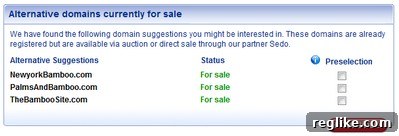
Example: Sedo domain suggestions displayed after searching for an already registered domain on 1&1.
The process seems straightforward enough. Users can select a domain from the list of Sedo suggestions and proceed to the next step. The expectation is that clicking “continue” would lead to a checkout process or a means to request a price for the selected domain. Unfortunately, this is where the system breaks down.
After selecting a Sedo domain, users are directed to a page indicating that they will receive a “non-binding offer” from Sedo. This suggests that the system is designed to facilitate price negotiations or provide users with an initial price quote. However, the crucial element – the ability to actually “check out” or submit a request – is missing. There is no clear path to initiate the offer process or finalize the transaction.

The “non-binding offer” message displayed on 1&1, lacking a clear call to action.
The only workaround appears to involve adding an actual, available domain name to the shopping cart. This means searching for and selecting an unregistered domain that is available for immediate purchase. However, even after adding a valid domain to the cart, clicking “continue” simply redirects users back to the domain selection page, effectively trapping them in a loop. The desired Sedo domain remains unpurchased, and the non-binding offer remains elusive.
The Root of the Problem: Missing Functionality and Potential Solutions
The primary issue seems to stem from a lack of integration for domains listed without a “buy now” price. It’s plausible that the system is designed to handle domains with fixed prices, allowing for a straightforward purchase process. However, for domains requiring price negotiation or those with undisclosed pricing, the system falls apart.
This raises questions about the thoroughness of the quality assurance process. It’s surprising that such a fundamental flaw wasn’t detected prior to the integration’s launch. While technical glitches are inevitable, the inability to purchase or even request pricing for a significant portion of Sedo’s domain listings renders the integration largely unusable for many potential buyers.
To rectify the situation, 1&1 and Sedo need to address several key areas:
- Implement a clear and functional “request price” mechanism: Users should be able to easily submit a request for pricing on Sedo domains without a fixed price. This should involve a straightforward form or process that captures the user’s contact information and the domain they are interested in.
- Streamline the checkout process: The checkout process should be seamless and intuitive, allowing users to finalize the purchase of Sedo domains without encountering endless redirects or technical roadblocks.
- Improve communication and transparency: Users should be clearly informed about the pricing process for Sedo domains and the expected timeframe for receiving a response.
- Conduct thorough testing: Rigorous testing should be conducted to ensure that the integration functions flawlessly for all types of Sedo domain listings, including those with and without “buy now” prices.
The Potential Benefits of a Functional Integration
Despite the current challenges, the integration of Sedo domain listings into 1&1 holds significant potential benefits for both companies and their customers. By providing 1&1 users with direct access to Sedo’s vast inventory of premium domains, the integration can:
- Increase domain sales for Sedo: Exposure to 1&1’s large customer base can drive increased traffic and sales for Sedo-listed domains.
- Enhance 1&1’s value proposition: Offering access to premium domains can attract new customers and differentiate 1&1 from its competitors.
- Simplify the domain acquisition process for users: A seamless integration can make it easier for users to find and purchase the perfect domain name for their business or project.
However, these benefits can only be realized if the integration is fully functional and user-friendly. Until the issues outlined above are addressed, the partnership risks frustrating potential buyers and damaging the reputation of both Sedo and 1&1.
Looking Ahead: Hope for a Fix
Hopefully, 1&1 and Sedo will recognize the shortcomings of the current integration and prioritize fixing the broken system. The potential for a successful partnership is evident, and with the right improvements, the integration can become a valuable asset for both companies and their customers. In the meantime, users seeking to acquire Sedo domains through 1&1 may need to exercise patience or explore alternative avenues for purchasing their desired domain names. Keep an eye on updates from both companies as they work towards a resolution. The domaining community is watching, hoping for a truly integrated and functional experience.
The current state serves as a reminder that even well-intentioned integrations require thorough planning, rigorous testing, and a commitment to providing a seamless user experience. The domain name industry thrives on efficiency and ease of access, and any obstacle to these principles can hinder growth and frustrate potential investors and end-users alike.