
Sedo Unveils Game-Changing Traffic Filter: Revolutionizing Domain Search for Savvy Investors
In a significant enhancement to its platform, leading domain marketplace Sedo has introduced a powerful new filter, allowing users to effortlessly discover domains based on their traffic volume. This strategic addition is poised to transform how domain investors and businesses identify and acquire valuable digital assets, making the search for high-potential domains more efficient and data-driven than ever before.
The ability to filter domains by traffic marks a pivotal moment for an industry increasingly focused on performance metrics. For years, buyers have sought indicators beyond keywords and TLDs to gauge a domain’s true worth. Traffic, representing the actual flow of visitors to a domain, has always been a coveted metric, but until now, incorporating it into initial search parameters on major marketplaces remained a challenge. Sedo’s innovation directly addresses this need, empowering buyers with a crucial tool to refine their investment strategies.
The Strategic Advantage of Filtering Domains by Traffic
Understanding a domain’s traffic profile is paramount for both immediate monetization and long-term development. A domain that already attracts visitors holds inherent value, distinct from a brand-new or undeveloped name. This existing visitor base can translate into immediate revenue streams or provide a head start for a new online venture.
The domain aftermarket thrives on identifying assets with untapped potential. While keyword relevance and brandability remain fundamental, the presence of organic or direct traffic elevates a domain’s status considerably. It suggests an established online presence, a history of user engagement, or a natural draw that can be leveraged. Sedo’s new filter allows investors to cut through the noise and quickly pinpoint domains that are not just catchy names, but active digital properties.
Unlocking Direct Monetization: Domain Parking and RPM
One of the most straightforward ways to monetize an idle domain is through domain parking, where a placeholder page displaying advertisements generates revenue based on clicks or impressions. The effectiveness of domain parking is directly tied to the volume and quality of traffic a domain receives. In recent years, the Revenue per Thousand (RPM) for domain parking has seen a notable increase, making it an attractive passive income stream for domain holders.
However, to truly capitalize on improved RPM rates, one needs domains that consistently attract visitors. Historically, finding these traffic-rich parking domains required extensive manual research, often involving third-party analytics tools or educated guesswork. Sedo’s new traffic filter eliminates much of this arduous process. Now, buyers specifically looking for domains with strong parking potential can filter their searches to immediately identify candidates with verified traffic counts, streamlining their acquisition process and enhancing their chances of achieving a quicker return on investment from parking revenues.
Beyond Parking: Developing High-Traffic Domains
While parking offers immediate passive income, the true potential of a high-traffic domain often lies in its development. A domain that already receives a steady stream of visitors is a goldmine for anyone looking to build a website, blog, e-commerce store, or content platform. Instead of starting from scratch and spending significant resources on SEO and marketing to attract an audience, developers can leverage existing traffic to kickstart their projects.
- Instant Audience: Launching a new site on a domain with pre-existing traffic means you instantly have an audience to engage, convert, or inform.
- Enhanced SEO: Domains with historical traffic often come with established search engine authority and backlinks, giving new content a significant SEO advantage.
- Brand Building: Consistent traffic indicates a degree of recognition or relevance, which can be invaluable for building a brand quickly and effectively.
- Reduced Marketing Costs: A portion of your marketing budget can be saved as the domain itself is already drawing visitors, allowing you to focus on content creation and conversion optimization.
This filter opens doors for entrepreneurs and businesses seeking an accelerated path to online presence and profitability, allowing them to pinpoint assets ready for immediate development and scaling.
Navigating the Nuances: Cautions and Due Diligence with Traffic Data
While the traffic filter is an incredibly valuable addition, domain buyers must always exercise a degree of caution and apply robust due diligence when evaluating traffic numbers. Not all traffic is created equal, and raw visitor counts can sometimes be misleading.
The primary concern revolves around distinguishing between genuine human visitors and automated bot traffic. A domain showing high traffic figures might be heavily frequented by bots, which generate no revenue, conversions, or legitimate engagement. Similarly, traffic could originate from irrelevant sources, such as typosquatting or accidental redirects, leading to high bounce rates and zero value.
Furthermore, even legitimate human traffic needs scrutiny. Buyers should consider:
- Relevance: Does the traffic align with the domain’s name or its potential use? High traffic for a gaming domain is irrelevant if you plan to launch a financial blog.
- Geographic Origin: Is the traffic coming from target markets? A domain with high traffic from a non-target country might offer limited value for a localized business.
- User Intent: What are visitors looking for? Are they actively searching for products/services, or are they landing accidentally?
- Historical Trends: Is the traffic consistent, growing, or declining? A sudden spike might be temporary or artificial.
These factors underscore the “quality over quantity” mantra in domain investing. A domain with lower, but highly targeted and engaged, human traffic from relevant demographics is far more valuable than one with massive but irrelevant or bot-driven traffic.
Essential Steps for Buyer Verification
The initial traffic filter on Sedo serves as an excellent starting point, helping buyers narrow down thousands of options to a manageable shortlist. However, for serious acquisition decisions, further investigation is crucial. Buyers should:
- Engage with Sellers: Initiate discussions with the domain seller to request detailed traffic reports. Reputable sellers should be able to provide verifiable data from analytics platforms (e.g., Google Analytics, server logs) that show visitor demographics, traffic sources, bounce rates, and session durations.
- Utilize Independent Tools: Employ third-party traffic analysis platforms to get an external, unbiased perspective on a domain’s traffic estimates. While these tools offer estimates, they can help corroborate seller data or flag discrepancies.
- Assess Domain History: Research the domain’s past usage, if possible. A domain that has consistently hosted a legitimate website is more likely to have authentic traffic than one that has been parked or misused for an extended period.
- Consider the “Why”: Understand why a domain might be attracting traffic. Is it due to strong keywords, direct navigation, brand recognition, or perhaps a legacy website that once existed there?
By combining Sedo’s new filter with these verification steps, buyers can make more informed decisions, mitigating risks and maximizing the potential for successful domain investments.
How Sedo’s New Filter Works: A Closer Look
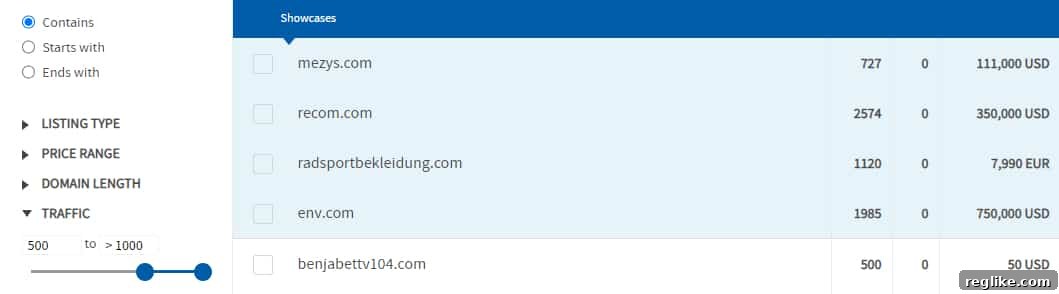
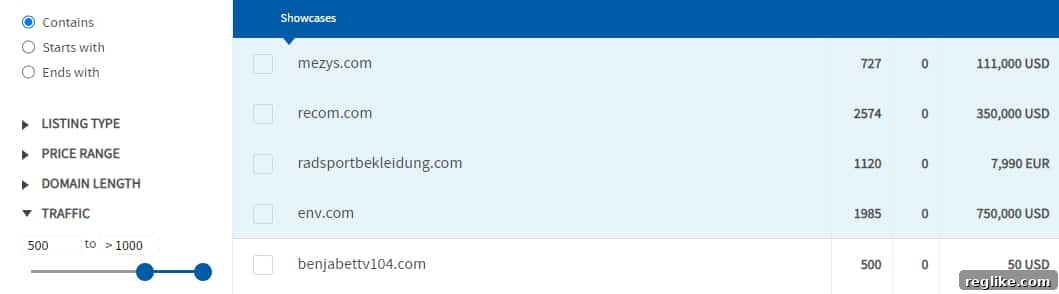
The new traffic filter integrated into Sedo’s search functionality is designed for seamless user experience. Buyers can now specify minimum and maximum traffic thresholds, allowing them to precisely define the scope of their search. It’s important to note, as Sedo clarifies, that this filter primarily applies to domains that are pointed to or managed by Sedo. This means Sedo is leveraging its own robust analytics data collected from domains utilizing its parking services or those listed directly on its platform where traffic data is accessible.
This specificity ensures that the traffic data presented through the filter is generally reliable, as it comes from Sedo’s direct observation or through trusted seller submissions. The filter acts as an initial qualification gate, empowering buyers to quickly identify domains that meet their minimum traffic requirements without having to click into individual listings or conduct external research for every potential domain.
Maximizing Your Search: Strategies for Leveraging the Traffic Filter
To truly harness the power of Sedo’s new traffic filter, buyers should integrate it strategically with other existing search parameters. This multi-faceted approach allows for highly targeted and effective domain discovery:
- Combine with Keyword Searches: First, use keywords relevant to your niche (e.g., “tech,” “finance,” “health”). Then, apply the traffic filter to find keyword-rich domains that already have an audience in those specific areas.
- Filter by TLD and Price: Pair traffic requirements with preferred TLDs (e.g., .com, .org, country codes) and your budget. This helps in identifying premium, traffic-rich domains within your financial comfort zone.
- Explore Niche Markets: Look for domains with moderate, but highly targeted, traffic within specific niche industries. Sometimes, a smaller, highly engaged audience is more valuable than a large, broad one.
- Prioritize Development Potential: For those planning to build, focus on domains with traffic that aligns with a clear content or product strategy. Assess if the existing traffic provides a strong foundation for your vision.
- Identify Underpriced Assets: The filter can potentially help uncover domains with surprisingly high traffic that might be undervalued if sellers haven’t fully recognized their traffic potential.
By employing these strategies, buyers can transform their domain acquisition process from a broad hunt into a precise, data-informed operation, significantly increasing the likelihood of finding valuable digital assets.
The Broader Impact on the Domain Aftermarket
Sedo’s introduction of a traffic filter is more than just a new feature; it represents a significant step forward for the entire domain aftermarket. It sets a new standard for data transparency and buyer empowerment.
- Elevated Industry Standards: This move pushes other marketplaces and sellers to provide more verifiable and transparent data, fostering a more mature and professional market.
- Empowered Buyers: Investors, from seasoned professionals to newcomers, are now equipped with a powerful tool to make more informed decisions, reducing speculative purchases and increasing the focus on tangible value.
- Shift in Valuation Paradigms: While brandability and keywords remain crucial, traffic is increasingly becoming a core component of domain valuation, potentially leading to higher prices for genuinely high-traffic domains.
- Encouraging Data Provision: Sellers will be more incentivized to provide accurate traffic data to maximize their domain’s appeal and listing performance on platforms that prioritize such metrics.
Ultimately, this development contributes to a more efficient and trustworthy domain ecosystem, benefiting both buyers and sellers by aligning expectations with verifiable data points.
Conclusion: A New Era for Domain Investing
Sedo’s new traffic filter is a monumental upgrade for anyone serious about domain investing. By allowing users to filter domains based on traffic counts, it addresses a long-standing need in the market, making it significantly easier to identify assets with immediate monetization potential through parking or long-term development opportunities.
This feature simplifies the initial discovery phase, acting as an excellent starting point for domain buyers interested in acquiring high-traffic domains. However, its true value is unlocked when paired with careful due diligence and a nuanced understanding of traffic quality. Buyers must remain vigilant, asking probing questions and verifying data, but there is no doubt that Sedo has provided a powerful tool that empowers investors to navigate the complex domain aftermarket with greater confidence and precision. This marks the beginning of a new era where data-driven insights play an even more central role in successful domain acquisitions.