
Pioneering new top-level domains, especially those embracing internationalized scripts, face a unique array of challenges. The journey of the Arabic TLD, .shabaka, illustrates this pioneering spirit and the hurdles that come with it, requiring not just initial registration but also widespread technological and registrar support.
The dawn of new top-level domains (gTLDs) has been a period of immense innovation, pushing the boundaries of internet naming. However, for the very first gTLDs emerging from this process, every step is a learning curve, fraught with unprecedented challenges. Among these trailblazers, شبكة. (shabaka) stands out, navigating a particularly intricate path.
Its pioneering status is multifaceted: it was the inaugural top-level domain to finalize its contract with ICANN, marking the commencement of its operational phase, and subsequently, the first to enter its Sunrise period. More critically, .shabaka holds the distinction of being the first IDN.IDN gTLD – an Internationalized Domain Name existing within an Internationalized Domain Name framework. The layer of complexity deepens further given that it is in Arabic script, a language with unique characteristics that interact with internet naming conventions and existing technology in ways that traditional ASCII domains do not. This positions dotShabaka, which translates roughly to “web” or “network” in English, as a true pioneer, a role that inherently brings both significant obstacles and extraordinary opportunities.
Despite these complexities, .shabaka has made initial strides in registrations. Following its landrush phase, the domain name garnered approximately 1,200 registrations. Its Sunrise period saw fewer than 10 registrations, a figure that was somewhat anticipated given the limited number of Arabic strings currently listed in the Trademark Clearinghouse (TMCH), a critical component for early registration protection. The subsequent landrush phase, open to the general public, brought in an additional 250 domain registrations, demonstrating a nascent but growing interest.
Yasmin Omer, General Manager of dotShabaka Registry, expressed cautious optimism to Domain Name Wire, stating she was “quite happy” with the landrush outcome. However, it’s widely acknowledged that these numbers could have been substantially higher were it not for the inherent and significant challenges associated with operating an Arabic Internationalized Domain Name in the current internet ecosystem. These challenges span technological integration, registrar readiness, and broader universal acceptance across the digital landscape, painting a picture of an exciting but demanding journey ahead.
The Critical Role of Registrar Capabilities
One of the most immediate and impactful challenges for .shabaka lies in the capabilities of domain registrars. Yasmin Omer highlighted that 101domain.com has emerged as their leading registrar to date, a fact that is hardly surprising after a brief examination of current registrar offerings. The reality is that many established registrars are still grappling with the technical demands of supporting such a unique gTLD.
For instance, eNom, despite having signed a registry-registrar agreement with .shabaka, continues to face difficulties in properly handling the Arabic script. The issue extends beyond merely recognizing new characters; Arabic is a right-to-left language, which introduces fundamental changes to how domain names are displayed and processed, especially when the top-level domain is on the left and the second-level domain is on the right. A search for “شبكة.” on eNom, for example, might yield confusing or incorrectly formatted results, hindering the user experience and undermining trust.
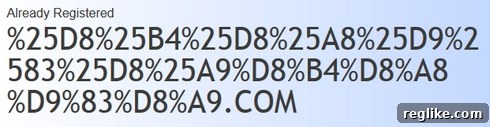
Even major players like GoDaddy, who showed early interest, have yet to fully enable the domain for registration, though they indicate it is on their “short list” for implementation. This widespread hesitation among registrars stems from the profound complexities involved. Integrating an Arabic gTLD often necessitates significant overhauls of existing systems, which were primarily built to handle ASCII (English) characters and left-to-right scripts. This technical debt, coupled with the investment required, is a major factor slowing down the broad rollout and accessibility of .shabaka. Indeed, when the domain initially entered its Sunrise phase, there were literally no registrars offering registrations for the domain, a stark illustration of the initial unpreparedness of the ecosystem.
The Local Registrar Gap in the Middle East
The challenges are further compounded by a critical gap in the market: the absence of robust, ICANN-accredited domain name registrars in the Middle East that genuinely focus on the local Arabic-speaking market with localized services. Yasmin Omer pointed out this significant void, explaining that users in the region are often forced to navigate English-language websites to register Arabic domain names.
Several factors contribute to this dearth of local registrars. These range from the demanding contractual requirements imposed by ICANN, which can be challenging for emerging businesses in the region to meet, to a historical lack of Arabic language domain options until recently. This latter point created a chicken-and-egg scenario: without widespread Arabic domain availability, the incentive for local registrars to invest in the necessary infrastructure and accreditation was limited. This critical issue was a key focus for Omer during her participation in events like the Middle East DNS Forum and ICANN’s Middle East Working Group Strategy meeting, highlighting its strategic importance for regional digital growth.
The practical implication for end-users is often frustrating and costly. When individuals wishing to register a domain in Arabic are compelled to use an English language website, they often encounter confusing user interfaces. This confusion can lead to accidental purchases of expensive add-ons or services they neither need nor understand, inflating the perceived cost of a domain name. For example, a user might unknowingly pay $100 for a domain that intrinsically costs much less, simply because they cannot fully comprehend the checkout process or distinguish between essential and optional services. This not only deters registrations but also creates a negative user experience, hindering the adoption of new Arabic gTLDs.
The Broader Challenge of Universal Acceptance
The technical hurdles facing .shabaka are not confined to domain name registrars; they extend to the fundamental “universal acceptance” of IDN.IDN domain names across the entire internet ecosystem. This is a far-reaching issue where a significant portion of software programs and applications worldwide still struggle to recognize, process, and properly display domain names that deviate from traditional ASCII characters.
Email functionality, in particular, presents an arduous challenge. Unlike web browsing, where a browser typically handles the display, email delivery is dependent on every single “hop” or server that an email traverses from sender to receiver. If any intermediate server, mail client, or even firewall along this path does not fully understand or correctly process an IDN.IDN domain name in the email address, the message delivery will inevitably fail. This fragility means that even if a sender and receiver’s systems are compatible, a single incompatible link in the chain can break communication. The consequences are significant: lost emails mean lost business opportunities, missed communications, and a hampered ability for organizations using IDN.IDN domains to fully integrate into the global digital economy. This pervasive issue is so critical that, ironically, even dotShabaka itself sometimes has to resort to including an English email address on its business cards to ensure reliable communication.
Impact on Digital Identity and Navigation
Beyond email, the lack of universal acceptance impacts other crucial aspects of online presence and user interaction. Social media platforms, which are vital for modern communication and brand building, also present barriers. While a company like dotShabaka can tweet in Arabic, platforms like Twitter traditionally have not allowed Arabic script usernames, limiting the ability for businesses and individuals to establish a fully localized and culturally resonant digital identity. This fragmentation forces compromises that diminish the potential of IDN.IDNs to truly empower non-Latin script communities.
Cumulatively, these technical and compatibility issues contribute to a significant behavioral trend among internet users in regions where IDN.IDNs are prevalent. Many users in the Middle East and other non-Latin script markets tend to rely heavily on search engines rather than directly typing domain names into their browsers when navigating the web. They often know the name of the website they intend to visit but opt to input it into a search engine, trusting that the correct site will appear as a top result. This reliance creates a dynamic where access to information and services is intermediated by search algorithms, often controlled by major global technology companies. As one can imagine, many individuals and organizations in the Middle East express a preference not to depend solely on an external, often American-based, company to dictate which websites appear first in their search results, raising questions of digital sovereignty and cultural relevance in online navigation.
Victories, Hope, and a Vision for a Truly Global Internet
Despite the formidable challenges, the journey of .shabaka is not without its victories and a strong sense of hope for the future. It’s important to differentiate .shabaka, as a generic top-level domain (gTLD), from existing Arabic IDN country code TLDs (ccTLDs). While some Arabic IDN ccTLDs have been operational for a while, they are typically run by governments or national entities, whose incentives and operational models differ significantly from a commercial gTLD registry. For a gTLD like .shabaka, the primary driver for its registry is commercial viability, which is intrinsically linked to market adoption and robust technological support.
As Yasmin Omer astutely points out, if her organization cannot effectively convince individuals and businesses to register domains under .shabaka and, critically, if they fail to achieve widespread universal acceptance across the internet, then “my organization will fail.” This direct link between success and survival underscores the intense commitment and proactive approach required from IDN gTLD applicants. It means dotShabaka is not merely offering a domain; it is actively working to build an ecosystem around it.
In line with this commitment, dotShabaka is preparing to launch a multi-million dollar marketing campaign. This significant investment aims to build awareness, educate potential registrants about the benefits and accessibility of Arabic domain names, and lobby for greater universal acceptance across the internet’s various technical components. Such a campaign is vital not just for increasing registrations but for fostering a broader understanding of why IDN.IDNs are essential for a truly inclusive global internet.
The registry has already secured a notable triumph with Etisalat, one of the largest and most influential telecommunications operators in the Middle East and North Africa (MENA) region. Etisalat has not only registered a domain under .shabaka but is actively hosting a live website at that address. This endorsement from such a prominent regional player is a powerful signal. It serves as a “lighthouse” example, demonstrating practical implementation and usability, which can encourage other major corporations, institutions, and businesses to follow suit. Omer expresses optimism that this is just the first of many significant entities to recognize the value and potential of Arabic IDN.IDNs and join the bandwagon, progressively building a robust and thriving digital space for Arabic content and users.
The journey of .shabaka embodies the pioneering spirit of a new era of internet naming. Its successes and struggles are a microcosm of the broader effort to make the internet genuinely global and multilingual. By addressing the technical complexities, fostering registrar readiness, and relentlessly advocating for universal acceptance, .shabaka is not just building a domain; it’s laying crucial groundwork for digital inclusion, empowering millions of Arabic speakers to navigate and express themselves online in their native language, and ultimately shaping the future of a more diverse and accessible internet.