
Mastering the Art of Upselling and Cross-Selling: Insights from Six Flags and GoDaddy
Every business, regardless of its size or industry, strives to maximize the value derived from each customer interaction. The journey from a small initial purchase to a significantly larger transaction is a testament to effective sales strategies, particularly upselling and cross-selling. These aren’t just buzzwords; they are powerful tools, rooted in behavioral economics, that can transform a company’s bottom line. Let’s delve into how industry leaders like Six Flags and GoDaddy masterfully employ these tactics to encourage customers to expand their initial investment, often with seemingly irresistible offers.

The Amusement Park Masterclass: Six Flags’ Strategy for Maximizing Customer Value
My recent visit to Six Flags in San Antonio with my three-year-old daughter perfectly illustrated the subtle yet potent power of these sales techniques. My daughter, an avid fan of amusement rides, fearlessly embraces even the most thrilling attractions, perhaps more so than many adults. Six Flags, an entertainment giant, has perfected the art of presenting “no-brainer” upgrades, making it incredibly easy for visitors to spend more.
From Day Ticket to Season Pass: The Gateway Upsell
The first encounter with their ingenious strategy often begins at the ticket counter. Consider this common scenario:
- Buying a one-day ticket for $35? The immediate offer is a season pass for only $15 more. This framing is crucial. It’s not presented as a $50 season pass, but rather as a minimal additional cost to unlock a full season of fun. This minor incremental cost, juxtaposed with the perceived immense value of unlimited visits, is a classic upsell tactic.
- Already opted for the season pass? Six Flags often presents another tier: for an additional $10, you can upgrade to a deluxe season pass. This enhanced pass might include $300 in coupons, free tickets for friends, priority access, or other exclusive perks. For a mere $10, the perceived value skyrockets, making the upgrade seem almost foolish to pass up.
This tiered approach leverages the psychological principle of anchoring, where the initial price (the day ticket) makes subsequent, higher-priced options (season pass, deluxe pass) seem more reasonable and appealing when framed as small additions.
Beyond Tickets: Boosting In-Park Spending with Smart Cross-Sells
Six Flags’ genius extends far beyond just ticket sales. They expertly integrate cross-selling opportunities throughout the park experience:
- The All-You-Can-Drink Cup: Imagine purchasing a specialty cup for $9.99 that allows unlimited refills for the day. A fantastic deal for a hot Texas day! But then comes the brilliant upsell: for just a few dollars more, that cup grants you unlimited refills for the entire season. This not only encourages the purchase of the more expensive season-long option but also drives repeat visits, during which customers will inevitably spend more on food, games, and merchandise. It’s a long-term investment in customer retention and increased lifetime value.
- Carnival Games: At the ball toss, the initial offer might be three balls for $2. A fair price. But then, a bucket containing approximately 15 balls is offered for $5. Who wouldn’t take that deal? The perceived value of getting five times the fun for only 2.5 times the price is irresistible. It encourages players to commit more upfront, knowing they’re getting a “better deal” per ball.
- Ride Photos: Emerging from a thrilling roller coaster, you’re presented with a hilarious, freaked-out photo of yourself for $15. A perfect souvenir! But wait, for just $5 more, you can get twice as many copies, perhaps a digital download, or even a small photo album. This leverages emotional attachment to memories, making the slight additional cost seem insignificant compared to the added value of preserving the experience more comprehensively.
In each of these scenarios, the incremental cost to Six Flags for these add-ons is nominal. They’ve already acquired the customer and incurred the fixed costs. The strategy is to “squeeze more” value out of that existing customer by offering compelling, low-cost (to the business) enhancements that significantly increase the average transaction value.
The Digital Domain Master: GoDaddy’s Strategic Play in Online Services
The “beautiful model” of upselling and cross-selling isn’t confined to physical spaces; it thrives in the digital realm too. GoDaddy, a dominant force in domain name registration and web hosting, exemplifies this perfectly. Their entire business model is built around turning a single, often inexpensive, domain registration into a comprehensive suite of high-value services.
The Domain Registration Funnel: A Web of Opportunities
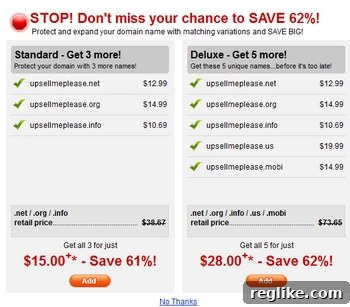
When you attempt to register a simple .com domain with GoDaddy, the process quickly expands into a carefully orchestrated display of cross-selling. You’re not just offered your desired domain; you’re presented with an array of alternative Top-Level Domains (TLDs) – .net, .org, .info, .biz, and many more – often at heavily discounted rates for the first year.
- Why the “Extra” TLDs? GoDaddy makes very little profit, if any, on selling these alternate TLDs at introductory prices. However, the probability of someone else buying these specific, highly targeted domain variations is low once a customer has expressed interest in the primary name. By offering them, GoDaddy secures more digital real estate for their existing customer. Even if the immediate profit is minimal, the hope is that these domains will be renewed at full price in subsequent years, creating recurring revenue.
- The Bundled Services: Beyond alternative domains, GoDaddy bombards you with a plethora of essential add-ons: privacy protection, web hosting plans, professional email services, website builders, SSL certificates, SEO tools, and more. Each of these services is presented as a necessary or highly beneficial complement to your primary domain. They expertly create a sense of urgency and necessity, making it seem like you *need* these extras to truly succeed online.
This strategy transforms a simple domain registration into a comprehensive solution, capturing a higher share of the customer’s wallet. Once a customer has committed to their primary domain, they are a captive audience, much more likely to purchase related services from the same convenient, trusted provider, rather than seeking them out elsewhere.
The Underlying Principles: Behavioral Economics in Action
The success of Six Flags and GoDaddy isn’t accidental; it’s deeply rooted in understanding human psychology and decision-making. These businesses leverage key principles of behavioral economics to make their upsells and cross-sells so effective:
- Framing: How an offer is presented significantly impacts its perception. “Only $15 more for a season pass” sounds far more appealing than “$50 for a season pass” if the initial anchor was $35. It minimizes the perceived cost while maximizing the perceived gain.
- Anchoring: The first piece of information offered (e.g., the $35 day ticket or the single .com domain price) acts as an anchor. Subsequent offers, even if higher in absolute terms, seem more reasonable when compared to that initial anchor, especially if they represent a small incremental increase.
- Perceived Value: The add-ons are designed to offer disproportionately high perceived value for a relatively low additional cost. A deluxe season pass for $10 extra, or a bucket of balls for $3 more than three balls, feels like a steal.
- Sunk Cost Fallacy: Once a customer has committed to an initial purchase (the day ticket, the .com domain), they are more likely to spend a little more to enhance that initial investment, rather than letting the initial “sunk cost” go to waste or remain unoptimized.
- Convenience and Bundling: Offering related products and services at the point of sale, especially when bundled, reduces friction and decision fatigue. It’s easier to say “yes” to an add-on presented at checkout than to seek it out separately later.
- Fear of Missing Out (FOMO): In GoDaddy’s case, the suggestion that someone else might snatch up those alternate TLDs can create a sense of urgency, prompting customers to secure them immediately.
Ultimately, these strategies are geared towards increasing Customer Lifetime Value (CLV). By encouraging customers to spend a little more on each transaction and to return more frequently, businesses secure long-term revenue streams and build stronger customer relationships.
Applying These Strategies to Your Own Business
The examples of Six Flags and GoDaddy are not just for giants; the underlying principles can be adapted to almost any business. Don’t knock the model—it works, and it can work for you. Here’s how you can consider applying this logic:
- Identify Your Core Product/Service: What is the initial, foundational offering that brings customers through your door? This is your “day ticket” or your “.com domain.”
- Map Potential Upsells: What are natural, higher-value versions or premium tiers of your core offering? Can you offer a “deluxe” package, an enhanced version, or a subscription model that provides greater benefits for a small incremental cost? Frame it as an upgrade, not a completely new purchase.
- Identify Cross-Sells: What complementary products or services naturally enhance the customer’s experience with your core offering? Think about accessories, training, maintenance plans, related software, or additional modules. Present these as logical additions that complete their solution.
- Bundle Strategically: Create packages that combine several products or services at a slightly reduced overall price compared to buying them individually. This provides perceived extra value and simplifies the purchasing decision.
- Utilize Tiered Pricing: Offer different levels of your service (basic, standard, premium) that cater to varying needs and budgets. This gives customers options and often leads them to choose a mid-tier option that offers a good balance of features and cost.
- Emphasize Incremental Value: When proposing an upsell or cross-sell, focus on the added benefits and the relatively small additional cost compared to the overall value already being invested. Highlight what they gain by spending “just a little more.”
- Focus on Convenience: Make it effortless for customers to add to their purchase. Integrated checkout flows, personalized recommendations, and clear, simple options are key.
- Know Your Customer: Understand their pain points, goals, and buying habits. This knowledge allows you to offer truly relevant upsells and cross-sells that genuinely enhance their experience, rather than just pushing more products.
For those eager to dive deeper into the science and art of driving customer behavior and maximizing sales, resources like this book can provide invaluable insights and practical frameworks.
Conclusion
The ability to turn a small initial purchase into a bigger one is not about tricking customers; it’s about strategically offering enhanced value and complementary solutions that meet their evolving needs. By understanding the psychological triggers and employing thoughtful upselling and cross-selling techniques, businesses can not only increase their profitability but also foster deeper, more satisfying relationships with their customers. Embrace these strategies, and watch your average transaction value and customer lifetime value soar.