
Southwest Airlines Loses Cybersquatting Claim: Panel Rules “SouthWoke.com” Is Legitimate Criticism
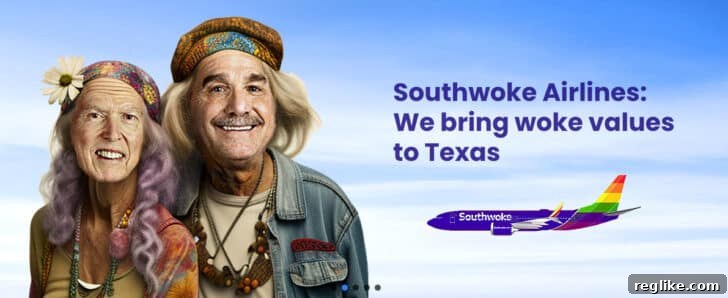
In a significant decision affirming the principles of online free speech and legitimate criticism, Southwest Airlines has reportedly lost a cybersquatting complaint filed against the creator of SouthWoke.com. The domain, which serves as a satirical and critical platform targeting Southwest Airlines’ alleged embrace of “woke” corporate policies, was deemed by the Uniform Domain-Name Dispute-Resolution Policy (UDRP) panelist not to be a case of cybersquatting, but rather a protected form of online commentary.
This ruling underscores the careful balance UDRP panels must strike between protecting established trademarks and upholding the right to free expression, particularly in the context of non-commercial criticism and parody websites. Southwest Airlines had sought to have the domain name transferred to its ownership, arguing that SouthWoke.com infringed upon its brand identity. However, the panel found compelling reasons to deny the airline’s request, highlighting key aspects of domain name dispute resolution that often favor legitimate criticism over claims of trademark misuse.
Understanding the Core of the Dispute: SouthWoke.com’s Stance
SouthWoke.com positions itself as a critical voice against Southwest Airlines, specifically targeting the company’s initiatives and public stances on various social and political issues. The website explicitly criticizes the airline for its policies and perceived alignment with concepts such as Diversity, Equity, and Inclusion (DEI), Environmental, Social, and Governance (ESG) criteria, and support for LGTBQ+ and Black Lives Matter (BLM) movements, among others. By using the term “Woke,” which has evolved into a pejorative often used to criticize progressive social agendas, the site immediately signals its critical intent.
The anonymity of SouthWoke.com’s operator adds another layer to the narrative. The domain is registered through Flokinet, a hosting service that proudly advertises itself as “a safe harbor for freedom of speech, free press and whistleblower projects.” This choice of registrar further emphasizes the operator’s commitment to maintaining their anonymity and leveraging platforms that champion free expression, often in opposition to corporate or governmental pressures. This setup suggests a deliberate effort to create a space for robust, unfiltered commentary without fear of direct reprisal, a common practice for criticism sites.
The UDRP Framework: Why Cybersquatting Claims Fail
To successfully bring a UDRP complaint, a complainant like Southwest Airlines must typically prove three critical elements regarding the disputed domain name:
- Identical or Confusingly Similar: The domain name must be identical or confusingly similar to a trademark or service mark in which the complainant has rights.
- No Rights or Legitimate Interests: The registrant of the domain name must have no rights or legitimate interests in respect of the domain name.
- Registered and Used in Bad Faith: The domain name must have been registered and is being used in bad faith.
In the case of SouthWoke.com, while the domain clearly incorporates the “Southwest” element, making it arguably “confusingly similar” at face value, the subsequent elements proved challenging for the airline. The panelist likely focused heavily on the latter two points, recognizing that the domain’s overt critical nature fundamentally altered its context. The addition of “Woke” transforms the name from a mere imitation into a clear indicator of parody or criticism, thus undermining the claims of a lack of legitimate interest and bad faith registration.
The Importance of Non-Commercial Criticism
A crucial factor in the UDRP panel’s decision would have been the non-commercial nature of SouthWoke.com. UDRP panels have consistently carved out exceptions for websites that primarily engage in non-commercial criticism, parody, or consumer advocacy. These sites, by their very nature, are not attempting to pass themselves off as the trademark holder or to unfairly profit from the trademark’s goodwill. Instead, they aim to comment on, critique, or satirize the brand or its practices.
If SouthWoke.com were selling merchandise related to Southwest Airlines, offering competing airline services, or attempting to deceive consumers into believing it was an official Southwest portal, the outcome would undoubtedly have been different. However, by maintaining a clear focus on criticism without commercial exploitation, the site’s operator established a strong defense under the “legitimate interests” clause of the UDRP.
Lack of Consumer Confusion: A Decisive Factor
A central argument against Southwest Airlines’ complaint, and one that resonates strongly with the spirit of trademark law, is the absolute lack of likelihood of consumer confusion. The very term “SouthWoke” combined with the site’s overtly critical content and imagery (as depicted in the referenced image, which explicitly mocks the airline) makes it highly improbable that any reasonable internet user would mistake SouthWoke.com for an official Southwest Airlines website or one endorsed by the airline.
The inclusion of “woke” – a term often used pejoratively to denote perceived excesses of progressive social justice – immediately signals that the site is not a neutral or official source. It positions itself as an antagonist, a critic, or a satirist. Trademark law is fundamentally designed to prevent consumer confusion regarding the source or affiliation of goods and services. When confusion is demonstrably absent, particularly due to the critical or parodic nature of the domain, trademark infringement claims, including those under UDRP, typically face an uphill battle.
Implications for Brand Management and Online Expression
This decision offers several key takeaways for both corporations and individuals navigating the digital landscape:
- For Corporations: Companies like Southwest Airlines must exercise discretion when filing UDRP complaints. While protecting intellectual property is vital, ill-conceived complaints against legitimate criticism sites can backfire, drawing more attention to the criticism (the “Streisand effect”) and potentially damaging public perception. It highlights the limits of trademark protection when confronted with robust free speech.
- For Domain Registrants: Operators of criticism or parody sites can take solace in this ruling. It reinforces the notion that as long as their sites are clearly non-commercial, do not deceive consumers, and are genuinely intended for commentary or satire, they stand a strong chance of defending their domain names against corporate challenges. Utilizing “safe harbor” registrars also provides an additional layer of protection.
- Balancing Act: The internet remains a powerful platform for both commerce and commentary. UDRP decisions like this reinforce the importance of maintaining a balance, ensuring that trademark rights do not unduly stifle legitimate online expression, even if that expression is critical or controversial.
The fact that the domain owner did not even respond to the dispute yet still prevailed speaks volumes. It suggests that the case was indeed “dead on arrival,” as some legal observers might have predicted. The merits of Southwest Airlines’ claim simply could not overcome the well-established principles protecting non-commercial criticism under UDRP policy.
Conclusion: A Win for Free Speech Online
The UDRP panel’s ruling in favor of SouthWoke.com against Southwest Airlines is a clear affirmation that online criticism, even that which is pointed and uses potentially inflammatory language, generally falls outside the scope of cybersquatting when it avoids commercial exploitation and consumer deception. This case serves as a vital reminder that trademark law is not a tool to silence dissent or critique, but rather to protect consumers and brand integrity from fraudulent imitation. In the ongoing debate between corporate branding and individual expression, this decision decisively leans towards upholding the robust principles of free speech on the internet.
For more details on the case, the full decision can be reviewed here.