
Exploring Spain’s Digital Landscape: Beyond the .Com Dominance
In the vast and interconnected world of the internet, the choice of a Top-Level Domain (TLD) plays a crucial role in shaping a brand’s identity, target audience, and search engine visibility. While the .com TLD enjoys undisputed global prominence, its absolute reign often diminishes when looking at specific geographical markets. Spain presents a fascinating case study where, despite .com’s strong presence, a vibrant ecosystem of alternative TLDs thrives, reflecting local culture, language, and national identity. Understanding this dynamic is key for businesses and individuals aiming to establish a strong online footprint within the Spanish market.
The Global Standard: .Com’s Enduring Appeal in Spain
Globally, .com remains the default choice for many businesses and individuals due to its widespread recognition, perceived authority, and universal appeal. In Spain, this trend is certainly observed, with a significant majority of prominent websites and international brands opting for the .com extension. Its familiarity instills a sense of trust and professionalism, making it a safe and often effective choice for companies targeting both Spanish and international audiences. For businesses seeking a broad reach without specific geographic limitations, a .com domain can still be the optimal solution, ensuring easy recall and global accessibility. However, an exclusive focus on .com can sometimes overlook the distinct advantages offered by local domain extensions, which are increasingly critical for local SEO and building community trust.
Beyond .Com: The Rise of Local and Regional TLDs
While .com holds considerable sway, a closer look at the Spanish digital landscape reveals a more nuanced picture. Unlike some countries where .com is almost exclusively used, Spain demonstrates a notable adoption of alternative TLDs. This diversified usage is particularly evident when observing local businesses, public services, and culturally significant organizations, especially in specific regions. This trend highlights the importance of understanding the local context when planning an online strategy for the Spanish market.
The National Identifier: .es – Spain’s Country Code Top-Level Domain
The .es domain is Spain’s official country code Top-Level Domain (ccTLD), and it plays a pivotal role in the nation’s digital identity. For any entity aiming to firmly establish its presence within Spain, a .es domain offers several compelling advantages:
- Local Trust and Credibility: A .es domain immediately signals to Spanish users that a website is locally relevant, credible, and often operated by an entity within Spain. This can significantly enhance user trust and engagement.
- SEO Benefits for Local Targeting: Search engines like Google often give preference to ccTLDs for searches originating from the corresponding country. A .es domain can therefore provide a significant boost in local search rankings within Spain, making it easier for Spanish customers to find local businesses and services.
- Availability: While premium .com domains can be scarce and expensive, there’s often greater availability and more competitive pricing for .es domains, allowing businesses to secure memorable and relevant names.
- Legal and Regulatory Compliance: Holding a .es domain can sometimes streamline compliance with local regulations and consumer protection laws, reinforcing a commitment to serving the Spanish market.
Observations across cities like Madrid consistently show a strong presence of .es domains, particularly among national companies, government agencies, and businesses primarily serving a Spanish clientele. It stands as a clear signal of local dedication and a strategic choice for businesses focused on the national market.
The Cultural Beacon: .cat – Catalonia’s Linguistic and Cultural TLD
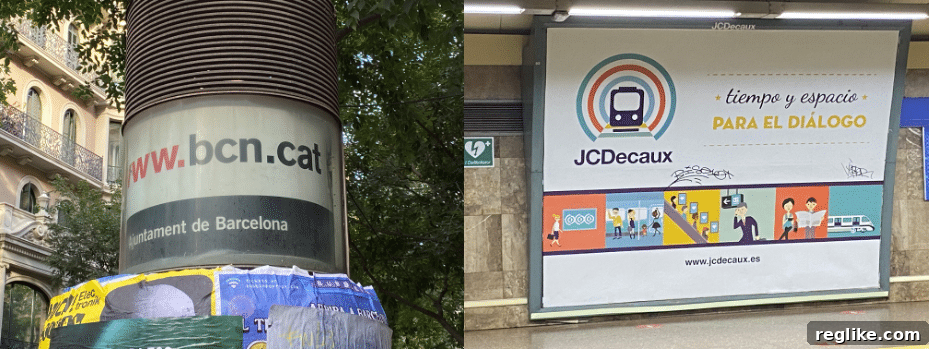
Venturing into Catalonia, particularly cities like Barcelona, unveils a truly unique aspect of Spain’s TLD diversity: the widespread adoption of the .cat domain. This is not merely a geographic TLD but a socio-linguistic one, created to serve the Catalan linguistic and cultural community. Its prevalence in Catalonia is profound and reflects a deep-seated regional identity:
- Identity and Community: The .cat domain is a powerful symbol of Catalan identity and culture. Websites using .cat often resonate more deeply with the local population, fostering a sense of belonging and community.
- Linguistic Focus: It primarily caters to websites with content in Catalan, although it’s also used by organizations promoting Catalan culture, regardless of primary language. For businesses operating in Catalonia and communicating in Catalan, .cat is an excellent choice.
- High Regional Adoption: In Barcelona, it’s common to see .cat domains used by local businesses, cultural institutions, and public services. This signifies its strong integration into the regional digital fabric.
- Targeted Reach: For businesses wanting to specifically connect with the Catalan-speaking audience or those deeply embedded in Catalan culture, .cat offers an unmatched level of specificity and local appeal.
The strategic adoption of .cat showcases how TLDs can extend beyond mere addresses to become integral parts of cultural and regional branding, offering a unique avenue for engagement within specific communities.
The City Specific: .barcelona – Branding the Metropolis
Beyond national and linguistic domains, city-specific TLDs like .barcelona offer another layer of hyper-local identity. While perhaps not as ubiquitous as .es or .cat, the .barcelona domain is increasingly visible, particularly at major tourist sites, cultural venues, and businesses that are intrinsically linked to the city itself. Its advantages include:
- Hyper-Local Branding: For businesses, events, or institutions whose identity is inseparable from Barcelona, a .barcelona domain provides direct, unmistakable branding.
- Enhanced Local Discoverability: It helps users immediately identify content and services relevant to Barcelona, potentially enhancing local search visibility for city-specific queries.
- Tourism and City Promotion: The .barcelona TLD is an excellent tool for tourism boards, local event organizers, and hospitality businesses to attract visitors and promote city-centric activities.
Observing its use in a global tourism hub like Barcelona highlights its effectiveness for very specific, geographically bound initiatives and establishments.
Strategic Considerations for TLD Selection in Spain
The diverse TLD landscape in Spain underscores the importance of a well-thought-out domain strategy. Businesses looking to enter or expand in the Spanish market should consider several factors:
- Target Audience: Is the primary audience national (Spain-wide), regional (e.g., Catalonia), or international? This will heavily influence the most effective TLD choice.
- Brand Identity: Does the brand wish to project a local image, a regional cultural connection, or a global presence?
- SEO Goals: For strong local search performance within Spain, .es is highly beneficial. For targeting Catalan speakers, .cat is advantageous. A .com might be better for broader international SEO but could require more effort for specific local rankings.
- Competition and Availability: Check the availability of desired domain names across different TLDs. Sometimes, a more localized TLD offers better opportunities for securing a strong, relevant name.
- Cost and Management: While often similar, differences in registration costs and renewal fees exist across TLDs.
The Interplay of TLDs and SEO in the Spanish Market
For businesses keen on maximizing their online visibility in Spain, the choice of TLD is more than just an address; it’s an SEO signal. Google and other search engines recognize the geo-targeting implications of ccTLDs like .es. Websites using .es inherently signal to search engines that their content is most relevant to users within Spain, often leading to improved rankings for Spain-specific searches. While generic TLDs (.com, .org, .net) can also be geo-targeted through Google Search Console settings, a ccTLD offers a more direct and often more effective signal.
Furthermore, the cultural and linguistic relevance of .cat cannot be overstated for SEO within Catalonia. A website with a .cat domain that offers content in Catalan is likely to perform exceptionally well for Catalan-language searches, connecting directly with a specific and often loyal user base. This nuanced approach to TLDs allows for highly optimized geo-targeting and audience engagement, a critical component for success in competitive online markets.
Conclusion: A Diverse and Strategic Digital Future for Spain
Spain’s digital domain landscape is a rich tapestry, where the global standard of .com coexists with powerful national, regional, and city-specific alternatives. Observations from its bustling cities clearly demonstrate that while .com maintains its stature, the discerning use of .es, .cat, and .barcelona TLDs provides significant strategic advantages for local relevance, cultural resonance, and targeted search engine optimization. For any business or individual planning an online venture in Spain, moving beyond the automatic assumption of a .com is crucial. A thoughtful selection of a TLD, aligning with specific goals for local engagement, cultural identification, or national reach, will undoubtedly lead to a more effective, credible, and visible online presence in this vibrant European nation. The future of domains in Spain promises continued diversity, reflecting its rich cultural heritage and dynamic digital evolution.