
SteelBuildings.com Domain Dispute: A Small Business Owner’s Fight for Survival
In a classic tale of David versus Goliath, a small business owner finds himself in a challenging battle to defend his domain name, SteelBuildings.com. This isn’t just about a website address; it’s about a company’s identity, online presence, and ultimately, its livelihood. The story highlights the complexities and potential pitfalls of domain name ownership, particularly when facing off against larger, more resourceful corporations.
Last month, the owner of Atlantic Building Systems, John Morgan, was shocked to discover a Uniform Domain-Name Dispute-Resolution Policy (UDRP) filing against his domain, SteelBuildings.com. What made the situation even more baffling was the fact that the domain name was actively being used by his company to promote and sell steel buildings. This initiated a stressful and potentially costly legal battle for the small business owner.
Upon learning about the UDRP filing, efforts were made to contact the Whois contact for the domain and the email address listed on the SteelBuildings.com website, seeking clarification and details about the complaint. After a period of anxious waiting, John Morgan received a phone call that shed light on the situation. Hearing John’s account of events was concerning, revealing a situation that many small business owners fear.
A Case of Corporate Bullying?
This case appears to be a clear example of a large corporation attempting to exert its dominance over a smaller player. NCI Group, Inc., a company with a market capitalization of $1.35 billion, is challenging John Morgan’s ownership of SteelBuildings.com. The crux of the matter is that NCI Group owns the singular version of the domain, SteelBuilding.com, and is now pursuing the plural version through a UDRP filing.
The implications for John Morgan and Atlantic Building Systems are significant. He faces the daunting choice of either investing substantial sums in legal representation to defend his domain name or dedicating a significant amount of time to learning the intricacies of UDRP proceedings and mounting a defense himself. This is a considerable burden for a small business owner who should be focusing on running and growing his company.
Many believe that the UDRP case against SteelBuildings.com is without merit. The essence of the dispute revolves around the use of a descriptive term, “Steel Buildings,” which accurately represents the products offered by Atlantic Building Systems. It raises questions about the extent to which a company can claim exclusive rights over generic, descriptive terms in the digital realm.
The Core of the Dispute
NCI Group’s claim centers on its ownership of the domain SteelBuilding.com and its trademark rights associated with that domain. They argue that SteelBuildings.com is confusingly similar and infringes upon their established brand. However, the argument falls apart when considering the nature of the term “steel buildings” itself.
The term “Steel Building” is a general descriptor for a type of product, not a unique brand identifier. Claiming exclusive rights to the plural form, “Steel Buildings,” seems like an overreach, similar to someone owning Car.com trying to seize Cars.com, or the owner of Computer.com going after Computers.com. Owning the singular form of a generic product name shouldn’t automatically grant rights to the plural.
Furthermore, a simple search for “Steel Building” on any search engine yields countless results, including a Wikipedia page defining what a steel building is. This underscores the generic and descriptive nature of the term. It’s used widely across the industry to describe the product itself.
While trademark rights could strengthen NCI’s case, their argument is weak without a specific trademark on the term “Steel Building.” Even with this, some UDRP panels can be unpredictable, making this aspect of the case uncertain.
Legitimate Interests and Bona Fide Use
NCI’s argument also challenges Atlantic Building Systems’ legitimate rights and interests in the SteelBuildings.com domain. They assert that there’s no evidence of a bona fide offering of services connected to the domain before the notice of the dispute.
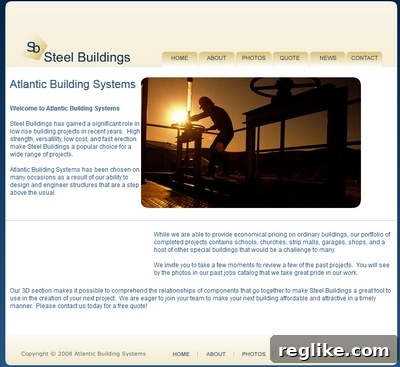
However, a simple visit to SteelBuildings.com clearly demonstrates that the website is actively used to promote and sell steel buildings. It’s evident that Atlantic Building Systems is a legitimate business operating in the steel building industry. NCI included a copy of the SteelBuildings.com website in its annex, further solidifying this.
NCI attempts to draw a parallel to previous UDRP cases where companies targeted their web design firms after the firms held the domain names hostage. However, this comparison is flawed. In this case, the web design firm manages the site for Atlantic Building Systems, a company that legitimately sells steel buildings.
Bad Faith Registration?
NCI struggles to provide concrete evidence of bad faith registration. Their argument primarily focuses on alleged bad faith use, claiming that Atlantic Building Systems doesn’t exist or no longer exists. This claim is based on abandoned trademark filings.
Anyone visiting SteelBuildings.com would reasonably conclude that the site offers goods and services related to steel buildings. To assert that the business doesn’t exist seems deliberately misleading. A simple online search for “Atlantic Building Systems,” readily reveals its existence and its connection to the domain name.
For example, a quick search will reveal John Morgan’s LinkedIn profile, confirming his role and expertise in the metal building industry. This easily disproves any suggestion that Atlantic Building Systems is a phantom entity.
It’s ironic that NCI uses abandoned trademark filings as evidence that a company no longer exists, considering that NCI itself abandoned multiple trademark applications for SteelBuilding.com in the past. This inconsistency weakens their argument.
Even if Atlantic Building Systems were to no longer exist, the earlier trademark filings clearly indicate its past existence. This undermines the claim that the domain was registered in bad faith from the outset.
NCI questions whether the web developer, Bradshaw, has ever sold steel buildings, implying that the domain was registered for a non-existent or defunct entity. This argument overlooks the obvious fact that Bradshaw registered the domain on behalf of his client, Atlantic Building Systems. This fact is readily apparent through a simple examination of the website and related online information.
The Cost of Even a Victory
NCI, as a publicly traded corporation, has engaged the law firm of Bracewell & Giuliani to represent them in this case. While this demonstrates their commitment to pursuing the UDRP, it doesn’t guarantee success. Records show mixed results for this firm in previous UDRP cases, including instances of reverse domain name hijacking.
Even if John Morgan successfully defends his domain, he still faces a significant loss. The time and effort required to respond to the UDRP complaint detract from his ability to focus on his business. He is forced to divert his attention from his area of expertise to learn about domain names and legal proceedings.
Despite a potential victory, including a possible finding of reverse domain name hijacking, John Morgan won’t receive any financial compensation for the costs and time spent defending his domain. This underscores the inherent imbalance in the UDRP process, where large corporations can leverage their resources to put smaller businesses at a disadvantage.
A Call to Action
The SteelBuildings.com domain dispute highlights the importance of protecting your online presence and being prepared to defend your rights against potential challenges. It serves as a reminder that even legitimate businesses with established online presences can face costly and time-consuming legal battles.
This case also underscores the need for a fairer and more equitable UDRP process that takes into account the realities of small business ownership. The current system often favors larger corporations with greater resources, potentially stifling innovation and competition in the online marketplace. The story of SteelBuildings.com is not just about a domain name; it’s about the right of small businesses to compete and thrive in the digital age.