
Judge questions trademark rights in stolen domain lawsuit.
The digital landscape is a vast and valuable frontier, and for businesses and individuals alike, domain names represent crucial online real estate. Unfortunately, this digital value also makes domain names attractive targets for malicious actors. Domain name theft, a serious form of cybercrime, can cause significant disruption, financial loss, and damage to reputation. Victims of such theft often find themselves navigating complex legal pathways to reclaim their rightful online identities. In the United States, Virginia courts have historically played a pivotal role in these recovery efforts, largely due to the presence of key internet infrastructure like Verisign, the authoritative registry for .com and .net domain names.
Understanding Domain Name Theft and the Road to Recovery
When a domain name is stolen, the original owner loses control, and the domain might be redirected, sold, or used for illicit purposes. The process of recovering a stolen domain can be arduous, but a well-established legal strategy has frequently offered a path to success. This strategy typically involves leveraging federal law, specifically the Anticybersquatting Consumer Protection Act (ACPA), and the unique legal concept of in rem jurisdiction.
The ACPA, enacted in 1999, was designed to protect trademark holders from those who register, traffic in, or use domain names in bad faith with the intent to profit from the goodwill of someone else’s trademark. While primarily aimed at preventing cybersquatting—the practice of registering domain names that are confusingly similar to trademarks with the intent to profit—it has also been adapted by victims of domain theft as a means to regain control.
The typical approach adopted by victims seeking to recover stolen domain names through Virginia courts often follows these steps:
-
Filing an ACPA Lawsuit Against Cybersquatting: The victim initiates a lawsuit under the Anticybersquatting Consumer Protection Act. The core assertion is that the individual or entity who stole the domain is now effectively “cybersquatting” on it. Even if the thief is unknown, the act of holding and potentially monetizing a stolen domain is presented as an act of bad-faith registration and use, infringing on the rightful owner’s presumed trademark rights.
-
Asserting Common Law Trademark Rights: A critical component of this strategy involves asserting common law trademark rights in the domain names themselves. Unlike registered trademarks, common law trademark rights are acquired through the actual use of a mark in commerce to identify goods or services. In these cases, plaintiffs often argue that they established common law rights by demonstrating activities such as showing pay-per-click (PPC) advertisements related to the domain’s topics or simply by consistently using the domain for a specific purpose, even if rudimentary.
-
Proceeding as an in rem Case Against the Domains: Since the identity of domain thieves is often unknown, making it impossible to sue them directly (in personam), the lawsuit is filed as an in rem action. This means the legal action is directed “against the thing” – in this instance, the domain names themselves – rather than against a specific person. This approach is permissible because the domain name registry (like Verisign for .com and .net) is located within Virginia, providing the court with jurisdiction over the “property” (the domain name record).
-
Obtaining a Default Judgment and Domain Transfer: Typically, because the anonymous thief cannot be located or served, they fail to appear in court. This absence leads to the judge issuing a default judgment in favor of the plaintiff. Based on this judgment, the court then orders Verisign, which maintains the authoritative database of .com and .net registrations from its Virginia offices, to transfer the disputed domain names back to the rightful plaintiff.
This streamlined approach has proven effective, contributing to the successful return of dozens of domains to their rightful owners, providing a crucial legal avenue for victims who might otherwise have been without recourse.
A Shifting Legal Landscape: Judge Questions Established Practice
Despite the success of this established method, a recent development in the U.S. District Court for the Eastern District of Virginia suggests that the legal landscape for domain recovery might be undergoing significant scrutiny. U.S. Magistrate Judge Theresa Carroll Buchanan has begun to question fundamental aspects of this strategy in a recent case involving several domain names, including NNN.com and, notably, Tang.com.
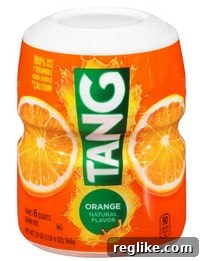
Judge Buchanan has repeatedly challenged the plaintiff’s attorneys to definitively demonstrate the basis for their client’s common law trademark rights in the terms associated with the stolen domains. Her particular focus on Tang.com appears to be a critical trigger for these questions. “Tang” is a widely recognized trademark, famous for a sugary drink product, and is undeniably owned by a separate, well-established corporate entity. This raises a profound question for the court: If the plaintiff’s only claim to “Tang.com” is based on minor commercial use (like PPC ads) after it was stolen, could the plaintiff, despite being a victim of theft, inadvertently be engaging in a form of cybersquatting or trademark infringement themselves by seeking to claim rights to a domain that embodies a well-known third-party trademark?
This concern points to a potential irony within the ACPA’s application. The Act was designed to prevent individuals from profiting off others’ trademarks by registering confusingly similar domain names in bad faith. If a plaintiff reclaims a domain that is essentially a famous trademark belonging to someone else, and their sole intention is “domain monetization” through generic advertising, the court must consider whether this use aligns with the spirit of trademark law and the ACPA itself.
In a recent order, Judge Buchanan explicitly articulated her concerns:
…the Court is especially concerned about the prospect of granting relief when Plaintiff’s only use for domain names such as tang.com, wtv.com, and nnn.com is domain monetization. Names such as “tang” arouse the Court’s suspicion that Plaintiff may be engaged in the type of activity that ACPA was intended to remedy.
This statement is highly significant. It implies that the court views “domain monetization”—the practice of generating revenue from a domain by hosting generic ads, often unrelated to a specific brand or service—with suspicion, especially when applied to domains that are identical or highly similar to established trademarks. The judge’s concern is that simply holding a stolen domain and placing ads on it, even by the victim, might mimic the very “bad faith” practices that the ACPA was enacted to combat, if those actions infringe upon valid third-party trademark rights.
The Nuance of Common Law Trademark Rights and Domain Monetization
Establishing common law trademark rights requires a demonstration of actual use of a mark in commerce to identify goods or services, leading to consumer recognition and goodwill. The mere act of placing pay-per-click ads on a parked domain, particularly one that might be a descriptive term (like “wtv.com” for “what’s TV”) or a famous third-party brand (like “tang.com”), presents several legal challenges to establishing such rights:
-
Lack of Distinctiveness: For a mark to be protected, it must be distinctive. Generic or highly descriptive terms generally do not acquire common law rights unless they achieve “secondary meaning”—meaning consumers associate the term specifically with the plaintiff’s goods or services over time. For domains like NNN.com or WTV.com, proving this can be difficult if the domain was primarily used for generic ad placement.
-
Intent to Use vs. Actual Use in Commerce: Simply owning a domain or placing ads on it, without offering specific goods or services under that name, may not meet the threshold for “use in commerce” required for trademark protection. The use must be genuinely source-identifying.
-
Third-Party Rights: In the case of Tang.com, the dominant issue is the strong, pre-existing trademark rights held by the owner of the Tang beverage brand. Even if a victim of theft, attempting to establish common law rights in a domain name that directly uses a famous trademark could lead to claims of infringement against the victim, rather than facilitating recovery.
The judge’s skepticism highlights a crucial distinction: while domain theft is unequivocally wrong, the legal mechanism chosen for recovery must still adhere to broader principles of intellectual property law. Claiming common law trademark rights in a domain that is either generic, descriptive, or already a famous trademark owned by another entity, based solely on passive monetization through PPC ads, may be an insufficient basis for relief under the ACPA.
Implications for Domain Owners and Future Recovery Efforts
This judicial scrutiny represents a significant moment for domain name owners and intellectual property law practitioners. While the plaintiff in this particular case certainly appears to be a victim of domain theft, Judge Buchanan’s questions suggest that the established pathway for recovery might not be universally applicable, especially when the plaintiff’s post-theft use (or intended use) of the domain raises trademark concerns.
If the reliance on common law trademark rights derived from general domain monetization proves untenable for domains that overlap with strong third-party trademarks or are highly generic, victims of domain theft may need to explore alternative strategies:
-
Stronger Proof of Prior Use: Plaintiffs might need to demonstrate more robust evidence of prior, legitimate use of the domain name as a source identifier for specific goods or services, going beyond simple ad placement.
-
Uniform Domain-Name Dispute-Resolution Policy (UDRP): For registered trademark holders, the UDRP offers a quicker and less expensive alternative to court litigation. However, it typically requires the complainant to hold a registered trademark, which might not always be the case for victims relying on common law rights.
-
Criminal Investigations: In some severe cases of domain theft, pursuing criminal charges against the thieves (if identifiable) might be an option, though this often focuses on prosecuting the perpetrators rather than simply returning the domain.
-
Focus on Bad Faith Registration/Use by Thief: The ACPA also requires demonstrating that the thief registered or used the domain in “bad faith.” While the act of theft itself strongly implies bad faith, the plaintiff’s *own* subsequent claim to the domain must also be legally sound.
This case serves as a critical reminder of the complexities inherent in the digital legal landscape. While the initial theft is clearly an injustice, the method of recovery must withstand rigorous legal examination. Domain owners are encouraged to prioritize strong security measures to prevent theft in the first place, and where possible, to register their trademarks to provide clearer legal standing in any future disputes. The outcome of cases like NNN.com and Tang.com will undoubtedly shape how domain theft victims approach justice in the future, potentially leading to a more nuanced application of trademark law in the pursuit of domain recovery.