
Taylor Swift and the Domain Name Dilemma: Exploring the Latest Controversy
The internet, a vast and ever-evolving digital landscape, has once again become the battleground for a high-profile dispute involving Taylor Swift and her digital presence. In a story that has captured the attention of fans and legal experts alike, the pop icon is embroiled in a controversy surrounding domain name registrations, raising questions about brand protection, digital rights, and the lengths to which celebrities will go to safeguard their online reputation.
The Initial Spark: ITaughtTaylorSwift.com
The saga began with a report from the New York Daily News, detailing Taylor Swift’s efforts to acquire the domain name ITaughtTaylorSwift.com from her former guitar teacher. According to the report, Swift’s management company sent a demand letter to the teacher, asserting that the domain name infringed upon her “famous Taylor Swift trademark.” This initial move set the stage for a series of events that would further complicate the situation and draw even more attention to the issue of domain name ownership and brand protection.
The core of the issue lies in the potential for brand dilution and the risk of unauthorized use of a celebrity’s name. While the guitar teacher may have had legitimate reasons for registering the domain name, Swift’s team likely perceived it as a threat to her brand and a potential avenue for negative publicity or even commercial exploitation. This proactive approach to brand protection is common among celebrities and corporations alike, who recognize the importance of controlling their online narrative.
Defensive Registrations: A Common Tactic
In the wake of the ITaughtTaylorSwift.com controversy, it appears that someone associated with Taylor Swift’s management team took a defensive approach, registering additional domain names to protect the singer’s brand. This is a common tactic employed by companies and individuals who want to prevent others from registering domain names that could be used to damage their reputation or confuse their audience. By proactively securing related domain names, they can maintain control over their online presence and mitigate potential risks.
The strategy behind defensive domain registration is multifaceted. It can involve registering variations of a brand name, common misspellings, or even domain names that include negative keywords. The goal is to create a digital barrier that prevents others from exploiting the brand’s identity or spreading misinformation. In the case of Taylor Swift, this defensive approach appears to have taken an unexpected and controversial turn.
The Controversial Domain: itaughttaylorswifthowtogivehead.com
Among the newly registered domain names, one in particular has sparked widespread outrage and debate: itaughttaylorswifthowtogivehead.com. The registration of this domain name, which contains highly offensive and sexually suggestive language, has raised serious questions about the ethics and responsibility of brand management. The domain name’s existence was verified through a WHOIS record, confirming its recent registration.
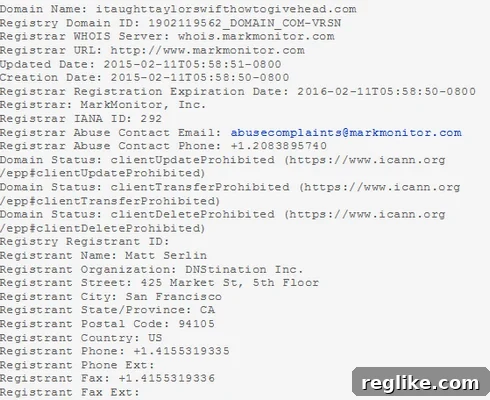
The implications of this domain name registration are far-reaching. Not only does it potentially damage Taylor Swift’s reputation, but it also raises concerns about the use of offensive language in domain names and the role of domain registrars in policing such content. The registration of this domain name has been widely condemned by fans and critics alike, who view it as a reprehensible act of online harassment.
MarkMonitor’s Role: Brand Protection and Responsibility
The domain name was registered through MarkMonitor, a brand protection domain name registrar that works with Swift’s management company. MarkMonitor specializes in helping companies protect their brands online by registering domain names, monitoring for trademark infringement, and taking action against cybersquatters. However, the registration of itaughttaylorswifthowtogivehead.com has raised questions about the extent to which MarkMonitor vets the domain names it registers on behalf of its clients.
MarkMonitor’s privacy service, DNStination, further complicates the issue. While it protects the registrant’s identity, it also makes it difficult to determine who ultimately authorized the registration of the offensive domain name. It remains unclear whether Swift’s management team directly registered the domain name or whether it was done on their behalf. However, the fact that it was registered through a brand protection service raises serious concerns about accountability and oversight.
The controversy surrounding itaughttaylorswifthowtogivehead.com highlights the complex ethical considerations involved in brand protection. While companies have a legitimate interest in safeguarding their brands online, they must also be mindful of the potential for abuse and the need to act responsibly. The registration of offensive domain names can not only damage a brand’s reputation but also contribute to a hostile online environment.
Additional Registrations: ITaughttSwift.com and iHateTaylorSwift.com
In addition to the controversial domain name, the typo ITaughttSwift.com was also registered at MarkMonitor. The second “t” in “Taught” is intentional, standing for “Taylor.” This domain name, while less offensive, still raises questions about the motives behind its registration and its potential use.
Interestingly, the domain name iHateTaylorSwift.com was registered by an unrelated party prior to the recent controversy. This domain name, registered on February 9th, demonstrates the challenges that celebrities face in controlling their online narrative. While Swift’s team can take action against domain names that infringe on her trademark, they cannot prevent individuals from expressing their opinions or registering domain names that simply contain negative sentiments.
The Broader Implications: Digital Rights and Brand Reputation
The Taylor Swift domain name controversy underscores the ongoing tension between digital rights and brand reputation. While individuals have the right to express their opinions and register domain names, celebrities and corporations also have a legitimate interest in protecting their brands from misuse and defamation. Finding the right balance between these competing interests is a complex and ongoing challenge.
The case also highlights the importance of proactive brand protection strategies. By registering domain names that are similar to their brand name, companies can prevent others from using them to damage their reputation or confuse their customers. However, it is crucial that these strategies are implemented responsibly and ethically, with due consideration for the rights of others.
The controversy surrounding Taylor Swift and domain names serves as a cautionary tale for celebrities, corporations, and anyone who wants to protect their online presence. It demonstrates the importance of careful planning, responsible action, and a commitment to ethical behavior. In the digital age, brand reputation is more fragile than ever, and a single misstep can have far-reaching consequences. The key takeaway is that while brand protection is essential, it must be pursued in a way that respects the rights of others and avoids contributing to a toxic online environment.