
Unlocking Value: A Comprehensive Guide to New TLD Pricing and Choosing Your Domain Registrar
In the rapidly evolving digital landscape, a domain name serves as more than just an address; it is your digital identity, your brand’s cornerstone, and often, your first impression. With the proliferation of new Top-Level Domains (TLDs) beyond the traditional .com, .org, and .net, businesses, investors, and individuals now have unprecedented opportunities to find unique and memorable web addresses. However, this exciting expansion comes with its own set of complexities, most notably concerning pricing. Navigating the varied costs of new TLDs across different registrars can be a daunting task, and making an informed decision is crucial for both immediate savings and long-term financial planning.
For those actively investing in or building with these innovative new TLDs, price is undeniably a key determinant when selecting a domain name registrar. Unlike their legacy counterparts, many new TLDs aren’t what one would call ‘cheap’. In numerous instances, the cost of registering a single new TLD can equate to registering two to four .com domains. This difference in price can accumulate rapidly, especially for portfolios or multiple projects, making a detailed price comparison not just helpful, but essential.
Navigating the Nuances of New TLD Pricing
The introduction of hundreds of new TLDs, ranging from industry-specific options like .tech, .app, and .store, to more general and creative choices such as .online, .xyz, and .site, has fundamentally changed the domain market. These extensions offer greater flexibility and availability, allowing brands to secure more relevant and concise domain names that were previously unavailable under older TLDs. However, this innovation often comes at a premium. The financial implications for both casual users and serious domain investors are significant, as higher initial costs combined with potentially steep renewal fees can quickly impact budgets and return on investment.
Understanding the pricing structures of various domain registrars is therefore paramount. Many registrars employ different strategies, including aggressive first-year discounts, tiered pricing for different TLD categories, and varied renewal rates. Without a clear overview, it’s easy to overspend or commit to a registrar whose long-term costs negate any initial savings. Our goal is to demystify these pricing models, providing clarity and actionable insights for anyone looking to secure new TLDs efficiently and economically.
Our Methodology: Unveiling Registrar Pricing Strategies
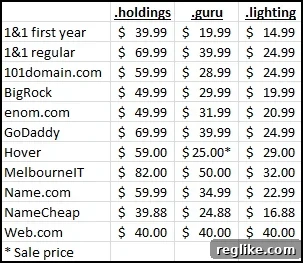
To provide a clear picture of the current market, we conducted a targeted price comparison focusing on some of the most prominent new TLDs managed by Donuts Inc., one of the largest operators of new generic top-level domains. Donuts categorizes its TLDs into different pricing tiers, which allowed us to observe how various registrars adapt their pricing across these categories. Our analysis specifically examined three of Donuts’ available domain names, representing these distinct price tiers.
Our research extended to what are generally recognized as the top 10 domain name registrars in the industry. To ensure a comprehensive review, we accounted for multi-brand conglomerates (e.g., considering Web.com as an umbrella for Network Solutions and Register.com) and, for reseller-only services, we used their primary retail brands (such as BigRock for ResellerClub and Hover for Tucows). This approach provided a broad yet focused perspective on how these major players position their pricing for new TLDs, helping to identify consistent trends and notable deviations.
Spotlight on Key Findings: Who Offers the Best Deals?
Our comparative analysis yielded several critical insights into the pricing strategies employed by leading domain registrars for new TLDs. While promotional offers can frequently skew initial perceptions, our focus was primarily on “regular pricing” to understand the true long-term cost implications.
NameCheap: The Leader in Consistent Low Pricing
Across the board, NameCheap.com consistently emerged as the most affordable option when comparing “regular pricing” for new TLDs. This consistent affordability makes NameCheap an incredibly attractive choice for a wide range of users, from individual bloggers and small businesses on a tight budget to seasoned domain investors looking to minimize their overheads. Their transparent pricing model, which often avoids the significant price hikes typically seen in renewal fees from other registrars, builds trust and predictability. For those planning to hold onto their domains for an extended period, NameCheap’s strategy translates into substantial long-term savings. Beyond just price, NameCheap is also frequently praised for its user-friendly interface, robust customer support, and value-added features such as free WHOIS privacy protection, which further enhances its appeal and overall value proposition for new TLD registrations.
1&1 (IONOS): The Allure of First-Year Discounts
1&1, now known as IONOS, employs a highly competitive strategy centered around aggressive first-year discounts. These initial price reductions are often substantial, making IONOS an enticing option for those with specific short-term goals. This model is particularly advantageous for domain flippers who intend to register and quickly resell domains, or for individuals and businesses launching temporary marketing campaigns or short-term projects that do not require long-term domain commitment. While the initial savings are attractive, it is crucial for users to be aware of the significantly higher renewal rates that typically kick in after the first year. Failing to account for these increased costs can lead to unexpected expenses down the line. Savvy users might leverage these discounts by registering a domain with IONOS and then transferring it to another registrar with lower renewal fees before the first year expires, though this strategy requires careful timing and an understanding of domain transfer policies.
Web.com and Its Unique Pricing Anomaly
Web.com presented a peculiar pricing anomaly during our comparison: it charged the same flat rate for all of Donuts’ domain names included in our study. This uniformity, while unusual, has a significant implication, particularly for certain TLDs. For instance, the pricing for a .holdings domain at Web.com was comparatively low when stacked against other registrars. Given that .holdings might typically fall into a higher-priced category due to its perceived premium status for financial and investment entities, this anomaly makes Web.com a surprisingly cost-effective choice for specific niche TLDs. This finding suggests that large registrars like Web.com, which also encompass brands like Network Solutions and Register.com, may have unique agreements or internal pricing strategies that diverge from market norms, potentially offering unexpected value for particular extensions. It highlights the importance of checking multiple registrars, especially for specific TLDs that align with higher perceived value.
Beyond the Sticker Price: Hidden Costs and Long-Term Value
While the initial registration fee is a critical consideration, it represents only one facet of the true cost of owning a domain name. A holistic approach demands an examination of several other factors that contribute to the overall value and long-term financial commitment.
The Critical Impact of Renewal Pricing
Perhaps the most significant factor beyond the first-year price is the renewal cost. Many registrars lure customers with extremely low introductory rates, only to significantly increase the price upon renewal. These renewal fees can often be two, three, or even four times higher than the initial registration cost. For businesses and investors planning to hold domains for multiple years, these escalating renewal fees can quickly erode initial savings and become a substantial recurring expense. It is imperative to always check the renewal price *before* registering a domain, making it a habit to factor in these long-term costs when comparing registrars. A domain that appears cheapest in the first year might become the most expensive over a five or ten-year period, dramatically impacting budget allocation and profitability.
Pre-Orders, Backorders, and Domain Acquisition Strategies
Our pricing comparison focused on current, hand registrations of readily available domain names. However, the process of acquiring a new TLD can be more complex, especially for domains that are highly desirable, premium, or not yet generally available. Many registrars offer pre-ordering services for TLDs in their launch phases or backorder services for domains that are currently taken but expected to expire. Each registrar has its own distinct pricing structure and refund policy if a pre-order or backorder is unsuccessful. Furthermore, registrars vary significantly in their success rates for securing domains as they become available. Some possess more efficient systems or better connections with registries, increasing the likelihood of successfully acquiring a desired domain. It’s also worth considering that some registrars might have less competition in their pre-order queues, potentially offering better odds for highly sought-after names. Researching a registrar’s track record and policies for these specialized acquisition services is crucial for anyone targeting specific, competitive domain names.
Value-Added Services and Registrar Ecosystems
The “cheapest” domain might not always equate to the “best” value. Many registrars bundle additional services that, while sometimes adding to the initial cost, can provide immense value and convenience. These include essential features such as WHOIS privacy protection, which keeps your personal contact information out of public databases; email hosting services, allowing you to create professional email addresses linked to your domain; and integrated website builders, simplifying the process of getting your site online. Other critical considerations include the quality and availability of customer support (24/7 phone, chat, or email support can be a lifesaver), the intuitiveness of the domain management interface, the ease of setting up DNS records, subdomains, and redirects, and the availability of security features like SSL certificates and DDoS protection. Evaluating these value-added services helps determine if a slightly higher upfront cost is justified by a more comprehensive, user-friendly, and secure domain management experience.
Promotional Offers and Discount Cycles
Domain registrars frequently run promotional campaigns, offering significant discounts on new registrations or transfers. These can be seasonal sales, holiday promotions, or specific deals for new customers. While these offers can provide excellent opportunities for savings, it’s important to approach them strategically. Always read the fine print to understand the terms and conditions, especially regarding renewal rates after the promotional period ends. Leveraging promotional offers can be a smart move, but relying solely on them without considering the long-term cost can lead to unexpected expenses. Smart buyers look for coupons and bundle deals, but they also prioritize registrars known for fair and transparent renewal pricing over registrars that rely heavily on bait-and-switch discount tactics.
Your Strategy for Choosing the Right Domain Registrar
Given the multitude of factors at play, selecting the “right” domain registrar is rarely a one-size-fits-all decision. Instead, it requires a personalized strategy tailored to your specific needs, budget, and long-term goals.
Consider your primary objective: Are you a domain investor looking to flip names quickly, where aggressive first-year discounts might be beneficial despite higher renewals? Or are you a business owner establishing a long-term brand presence, for whom consistent, transparent pricing and reliable service are paramount? Your budget, technical comfort level, and even the specific new TLDs you’re targeting will all influence the optimal choice. Beginners might prioritize registrars with intuitive interfaces and excellent customer support, even if it means a slightly higher cost, while experienced users might prefer more control and flexibility even with a steeper learning curve.
We strongly recommend performing your own due diligence. This includes not only comparing initial and renewal prices for your desired TLDs but also reading customer reviews to gauge service quality, ease of use, and support responsiveness. If possible, explore the registrar’s control panel or demo accounts to understand their domain management interface. By taking a comprehensive view of pricing, features, support, and long-term value, you can empower yourself to make an informed decision that aligns perfectly with your domain strategy.
The Future Landscape: Embracing New TLDs for Brand Innovation
The landscape of new TLDs is continuously expanding, offering unprecedented opportunities for brand innovation and digital identity. These modern extensions enable businesses to differentiate themselves, convey niche expertise, and create memorable web addresses that resonate with their target audience. While the direct impact of new TLDs on SEO is still a subject of ongoing debate, the branding and marketing advantages are undeniable. A relevant and concise new TLD can enhance brand recall, improve click-through rates, and contribute to a stronger online presence. Embracing new TLDs is not just about finding an available name; it’s about strategically positioning your brand for future growth in an increasingly crowded digital world.
Final Thoughts: Empowering Your Domain Choices
In conclusion, while our research clearly indicates that NameCheap often provides the cheapest overall “regular pricing” for new TLDs among major registrars, the ultimate decision of which registrar to choose is multifaceted. 1&1 (IONOS) offers compelling first-year discounts for short-term strategies, and Web.com presents unique pricing advantages for specific, higher-tiered TLDs like .holdings. Beyond these initial price points, factors such as renewal rates, the availability and effectiveness of pre-order/backorder services, and the suite of value-added features like WHOIS privacy, email hosting, and quality customer support all play a critical role in defining true value.
Empowering yourself with this knowledge means approaching domain registration with a clear strategy. By meticulously comparing prices, understanding long-term costs, and evaluating the comprehensive services offered by various registrars, you can make a savvy decision that optimizes your investment in the exciting world of new Top-Level Domains. Your domain name is a vital asset; choose its home wisely.