
Unmasking Cyber Threats: A Deep Dive into Malicious Domains and Cybersecurity Intelligence
In the ever-evolving landscape of digital threats, understanding the mechanisms and infrastructure leveraged by malicious actors is paramount for effective cybersecurity. A groundbreaking report by DomainTools sheds critical light on the dark corners of the internet, meticulously detailing the strategies behind malicious domain usage. This inaugural DomainTools Investigations Year in Review serves as an essential compass for security professionals, unveiling the patterns, registrars, and nameservers most frequently associated with cyberattacks such as phishing, spam, and malware distribution.
The digital realm is a constant battleground, with cybercriminals continuously innovating their tactics. The sheer volume of observed malicious activity underscores the pervasive nature of these threats. In 2024 alone, DomainTools identified approximately 400,000 domains actively engaged in nefarious activities. This staggering figure highlights the scale of the challenge faced by individuals, businesses, and cybersecurity firms alike. The report doesn’t just present raw numbers; it meticulously dissects the infrastructure, offering unparalleled insights into where these malicious domains are registered and hosted, providing a roadmap for defense.
The Registrars’ Role: Unveiling the Hotbeds of Malicious Domain Registration
Domain registrars are the gatekeepers of the internet, responsible for registering domain names and maintaining their records. The DomainTools report meticulously breaks down which registrars inadvertently, or sometimes through negligence, become hubs for malicious activity. Understanding this distribution is crucial for both registrars seeking to combat abuse and security teams aiming to identify potential threats at their source.
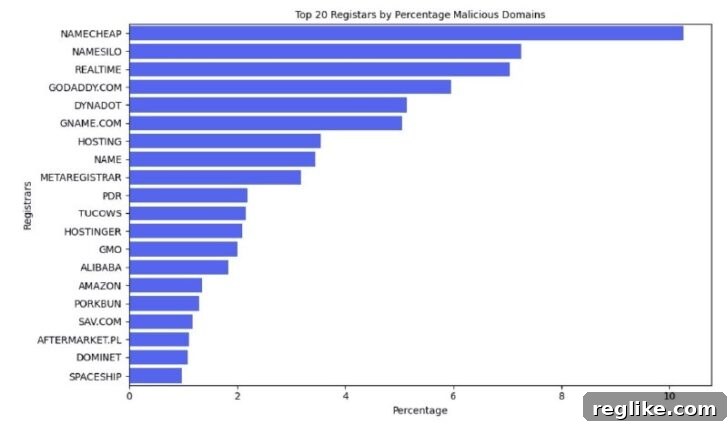
It is important to contextualize these findings. The report presents raw numbers of malicious domains associated with each registrar, rather than a percentage of their total domain portfolios. This distinction is vital: larger domain registrars, by virtue of managing millions of domains, are statistically more likely to appear higher on a list of raw counts. This doesn’t necessarily imply a higher propensity for malicious activity per domain, but rather reflects the immense scale of their operations and the challenge they face in policing abuse across their vast client bases. These larger entities often become targets for threat actors precisely because of their extensive reach and the ease with which domains can be acquired, sometimes under false pretenses.
For registrars, this data underscores the critical need for robust abuse detection and mitigation strategies. Implementing advanced analytics to identify suspicious registration patterns, enforcing stricter verification processes, and maintaining proactive abuse desks are essential steps to curb the proliferation of malicious domains. For cybersecurity professionals, knowing which registrars frequently host problematic domains can inform threat intelligence efforts, helping to anticipate and block threats originating from these sources.
Nameservers: The Digital Highway for Cybercrime
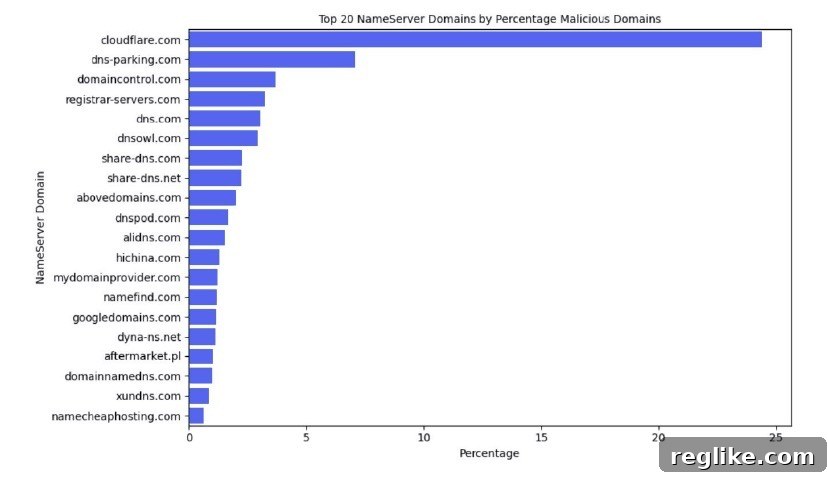
Beyond registration, a domain needs nameservers to direct internet traffic. These digital signposts translate human-readable domain names into IP addresses, making websites accessible. The DomainTools report reveals equally compelling data regarding the nameservers most frequently utilized by malicious domains, offering another layer of insight into the cybercriminal infrastructure.
The report highlights Cloudflare as having the top nameserver used by malicious domains. This finding, much like the registrar data, requires careful interpretation. Cloudflare is a colossal internet infrastructure company, providing a vast array of services, including Content Delivery Networks (CDNs), DDoS mitigation, and DNS services, often for free. Their services are used by millions of legitimate websites globally, enhancing their performance and security. However, this accessibility and scale also make them attractive to threat actors who seek to leverage widely trusted services to mask their illicit activities or benefit from the robust infrastructure provided.
The challenge for providers like Cloudflare lies in distinguishing between legitimate and malicious usage across an enormous volume of traffic and domains. While they invest heavily in security and abuse prevention, the sheer scale of the internet means that some bad actors will inevitably slip through. For cybersecurity teams, understanding the prevalence of certain nameservers in malicious campaigns allows for more targeted threat intelligence and network filtering, recognizing that even legitimate, reputable infrastructure can be co-opted for nefarious purposes.
The New Frontier of Exploitation: Leveraging Emerging TLDs
The internet’s expansion has led to the introduction of numerous new Top-Level Domains (TLDs) beyond the traditional .com, .org, or .net. While these new TLDs offer more choices and branding opportunities, they also present a fresh vector for threat actors. The DomainTools report brings this vulnerability into sharp focus, detailing how cybercriminals are strategically utilizing recently released TLDs to bypass corporate security measures.
Many corporate security organizations, particularly those with legacy systems, rely on hard-coded TLD lists for filtering and threat detection. These lists, often static and updated infrequently, might not include newer TLDs. Threat actors are keenly aware of this blind spot. By registering malicious domains on these unlisted or lesser-known TLDs, they can often circumvent traditional security perimeters, launching phishing attacks, distributing malware, or hosting command-and-control servers unnoticed. For example, a phishing email disguised with a new TLD might bypass an email gateway that only checks against a predefined list of older, more common TLDs, reaching an unsuspecting employee’s inbox.
This exploitation highlights a critical need for security organizations to adopt more dynamic and adaptive threat intelligence frameworks. Relying on static blacklists is no longer sufficient. Instead, security teams must implement systems that can dynamically identify and assess the risk of new TLDs, integrate real-time threat feeds, and prioritize continuous updates to their security policies. Education for employees about the risks associated with unfamiliar TLDs is also crucial, fostering a culture of vigilance against sophisticated social engineering tactics.
Broader Implications for Cybersecurity and Threat Intelligence
The insights provided by the DomainTools Investigations Year in Review are invaluable for the entire cybersecurity ecosystem. They underscore several critical imperatives:
- The Need for Continuous Monitoring: Cyber threats are dynamic. Relying on outdated intelligence or static security policies leaves organizations vulnerable. Continuous monitoring of domain registration, nameserver usage, and TLD trends is essential.
- Enhanced Collaboration: Combating domain-based threats requires a collaborative effort between domain registrars, nameserver providers, law enforcement, and cybersecurity vendors. Sharing threat intelligence and best practices can significantly disrupt malicious campaigns.
- Adaptive Security Architectures: Organizations must move beyond reactive security measures. Implementing AI-driven threat detection, behavioral analytics, and frameworks that can rapidly adapt to new threat vectors are no longer luxuries but necessities.
- Proactive Defense: Understanding the infrastructure preferred by threat actors allows security teams to move from a reactive stance to a proactive one, predicting potential attack vectors and fortifying defenses before an attack materializes.
Conclusion: Strengthening Defenses Through Informed Intelligence
The DomainTools Investigations Year in Review serves as a sobering reminder of the persistent and evolving nature of cyber threats. By meticulously dissecting the infrastructure behind malicious domains, including the roles of specific registrars and nameservers, and highlighting the exploitation of new TLDs, the report provides actionable intelligence that can significantly bolster defensive strategies. In an age where digital security is synonymous with business continuity and personal safety, such detailed insights are indispensable.
For organizations and individuals committed to safeguarding their digital presence, a thorough understanding of these findings is a crucial step towards building resilient cybersecurity defenses. Staying informed, adapting rapidly, and leveraging comprehensive threat intelligence are the cornerstones of effective protection in the face of an ever-present digital adversary.
The full DomainTools Investigations Year in Review is available here for those who wish to delve deeper into these critical findings and strengthen their understanding of the cyber threat landscape.