
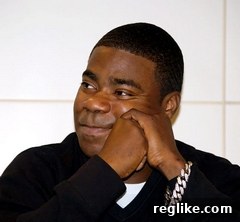
Comedian Tracy Morgan Can Now Officially Claim His Digital Home at TracyMorgan.com
For celebrities, public figures, and businesses alike, establishing a strong online presence is paramount in the digital age. A critical component of this presence is often owning your exact-match domain name. While comedian Tracy Morgan is well-known for his distinctive humor and ability to make audiences laugh, the journey to securing his rightful digital address, TracyMorgan.com, was no laughing matter. After a period of contention, a recent ruling by the World Intellectual Property Organization (WIPO) has ensured that the acclaimed actor and comedian now officially controls his eponymous domain, marking a significant victory for personal branding and intellectual property rights online.
The Battle for Digital Identity: Why Domain Names Matter
In today’s interconnected world, a domain name is far more than just an address; it’s a cornerstone of identity, branding, and communication. For a celebrity like Tracy Morgan, TracyMorgan.com represents the ultimate hub for his fans, media, and business partners. It serves as a direct, official channel to share news, tour dates, projects, and personal insights, free from potential misinformation or dilution by unauthorized third parties. The absence of this domain meant that someone else was potentially profiting from his fame, or worse, misrepresenting his brand. This incident highlights a recurring challenge faced by many public figures: the struggle against cybersquatting.
Cybersquatting involves the bad-faith registration of domain names with the intent to profit from the goodwill of a trademark owner. Whether it’s to sell the domain at an inflated price, redirect traffic to competing sites, or simply host misleading content, cybersquatters exploit brand recognition for personal gain. For Tracy Morgan, a globally recognized entertainer, reclaiming TracyMorgan.com was not merely about convenience; it was about protecting his brand integrity and ensuring a legitimate online space for his audience.
Tracy Morgan’s UDRP Complaint: A Clear-Cut Case
The saga began earlier this year when, as reported in January, the star of “30 Rock” and “Saturday Night Live” initiated a Uniform Domain-Name Dispute-Resolution Policy (UDRP) complaint against the registrant of TracyMorgan.com. The UDRP is an administrative procedure established by the Internet Corporation for Assigned Names and Numbers (ICANN) to provide an efficient and cost-effective means of resolving domain name disputes without resorting to traditional litigation.
To succeed in a UDRP complaint, a complainant must typically prove three key elements:
- The domain name is identical or confusingly similar to a trademark or service mark in which the complainant has rights.
- The registrant of the domain name has no rights or legitimate interests in respect of the domain name.
- The domain name has been registered and is being used in bad faith.
Tracy Morgan’s case presented a compelling example of these elements in action.
The domain TracyMorgan.com is, without question, identical to the comedian’s well-established personal name and de facto trademark. His extensive career in entertainment, spanning decades of television, film, and stand-up comedy, firmly establishes his rights to the name. Furthermore, the content hosted on the disputed domain prior to the complaint served as clear evidence of the registrant’s bad faith. The parked page featured links such as “Tracy Morgan Comedian,” “Alec Baldwin Actor” (referencing his “30 Rock” co-star), and “Saturday Night Live Clips” (where Morgan was a cast member from 1996 to 2003). These explicit references demonstrated that the registrant was fully aware of Tracy Morgan’s identity and was attempting to capitalize on his fame and associated works.
WIPO’s Decisive Ruling and the Importance of Non-Response
The World Intellectual Property Organization, one of the primary UDRP dispute resolution providers, oversaw the proceedings. The WIPO panel, acting as the independent arbiter, ultimately ruled in Morgan’s favor, ordering the transfer of TracyMorgan.com to him. While the decision was submitted last Thursday, the detailed findings were publicly published today, shedding light on the straightforward nature of the case. A significant factor contributing to the panel’s decisive ruling was the domain owner’s failure to respond to the complaint.
In UDRP proceedings, a respondent’s failure to submit a response often weighs heavily against them. While it doesn’t automatically guarantee a win for the complainant, it generally means the panel will accept all reasonable allegations made by the complainant as true, provided they are supported by evidence. In this instance, the lack of a rebuttal from the registrant reinforced the notion that they had no legitimate claim to the domain name and no valid defense against the accusations of cybersquatting and bad-faith registration. This absence of a response rendered the case “cut and dried,” as described, leaving little room for ambiguity.
Beyond the Headlines: The Broader Implications for Online Brand Protection
Tracy Morgan’s success in reclaiming his domain name serves as a crucial reminder of the ongoing challenges in the digital landscape and the importance of proactive brand protection. For celebrities, businesses, and individuals with strong personal brands, securing relevant domain names is a preventative measure against potential brand dilution, reputational damage, and loss of control over their online narratives. It underscores that while the internet offers boundless opportunities, it also presents unique vulnerabilities that require diligent management.
The UDRP mechanism continues to be an invaluable tool in this fight, offering a streamlined path to address cybersquatting without the complexities and costs associated with traditional court battles. This case further solidifies WIPO’s role as a vital adjudicator in these types of disputes, upholding intellectual property rights in the domain name system.
What TracyMorgan.com Means for the Comedian’s Future
With TracyMorgan.com now firmly in his control, the comedian is empowered to build an official digital presence that truly reflects his brand and connects directly with his audience. This dedicated platform can become the ultimate source for news about his stand-up tours, upcoming television and film projects, merchandise, and perhaps even personal anecdotes and behind-the-scenes content that fans crave. It provides an authoritative voice in an often-fragmented online world, ensuring that when fans search for “Tracy Morgan,” they land on his official digital home.
This development is not just a legal victory; it’s a strategic move that enhances Tracy Morgan’s digital footprint and fortifies his brand for years to come. It allows him to consolidate his online identity, fostering a direct relationship with his vast fanbase and reinforcing his status as a beloved and iconic figure in comedy.
Conclusion: A Victory for Personal Branding in the Digital Age
The resolution of the TracyMorgan.com dispute is a resounding success for the comedian and a clear demonstration of the effectiveness of the UDRP process in combating cybersquatting. It reaffirms the principle that a person’s name, especially that of a public figure with established fame, carries significant intellectual property value that deserves protection in the online realm. Tracy Morgan’s journey to reclaim his digital identity underscores the vital importance of domain name ownership for personal branding, brand protection, and maintaining an authentic connection with one’s audience in the ever-evolving digital landscape. Now, he can truly tell his jokes and share his story from his official online home, TracyMorgan.com, without compromise.