
Unlocking Domain Monetization Potential: A Comprehensive Guide
In the dynamic world of domain name investment, effective monetization strategies are crucial for maximizing returns. This article delves into proven techniques and platforms that domain investors can leverage to transform their domain assets into revenue-generating powerhouses. We’ll explore the performance of various platforms, including TrafficClub, DomainSponsor, Google AdSense for Domains, and Skenzo, analyzing key metrics like Revenue Per Mille (RPM) and highlighting strategies for optimization.
TrafficClub: Achieving Peak RPM Performance
My personal experience with Moniker’s TrafficClub has been exceptionally rewarding. I’ve witnessed significant growth in RPM, reflecting the platform’s ability to connect relevant traffic with targeted advertising. Recently, I achieved an all-time high RPM on TrafficClub, demonstrating the platform’s potential for generating substantial revenue.
Previously, I celebrated a personal best RPM of $65.85 for July. August exceeded expectations, yielding an impressive $73.82 RPM. This upward trend can be attributed, in part, to increased traffic to a particularly high-performing domain, generating nearly $400 per thousand views. This highlights the importance of identifying and nurturing domains with high monetization potential.
DomainSponsor: A Consistent Revenue Driver
DomainSponsor remains a reliable platform for domain monetization, consistently delivering strong performance. My optimized DomainSponsor landers yielded $111.10 per thousand views, while generic DomainSponsor landers produced $14.13. These figures underscore the value of optimization in maximizing revenue. Careful selection of keywords, ad placement, and landing page design can significantly impact RPM.
Alternative Platforms: Google AdSense for Domains and Skenzo
Beyond TrafficClub and DomainSponsor, other platforms offer viable monetization options. Google AdSense for Domains generated an RPM of $31.06, while Skenzo achieved a higher RPM of $70.27. Diversifying across multiple platforms can mitigate risk and capitalize on varying traffic patterns and advertiser demand.
Analyzing Domain Performance: The Power of RPM
Understanding RPM is crucial for assessing the effectiveness of your monetization strategies. My top-performing domain (with at least 100 hits) boasts an impressive RPM of $390.33, exclusively through DomainSponsor. Conversely, my lowest-performing domain (with at least 100 hits) had an RPM of $8.07. This significant disparity highlights the importance of identifying underperforming domains and implementing corrective measures, such as improving keyword relevance, optimizing landing page content, or exploring alternative monetization platforms.
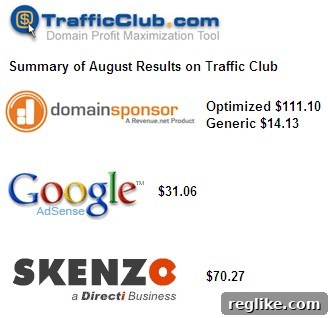
Analyzing TrafficClub performance metrics to identify areas for improvement and optimization.
Strategies for Maximizing Domain Monetization
Several key strategies can help domain investors maximize their monetization potential:
- Keyword Research and Optimization: Thoroughly research relevant keywords for each domain to attract targeted traffic. Optimize landing pages with these keywords to improve ad relevance and click-through rates.
- Landing Page Optimization: Design compelling and user-friendly landing pages that encourage visitors to interact with advertisements. A/B testing different landing page layouts and content can help identify the most effective designs.
- Traffic Analysis and Segmentation: Analyze traffic patterns to identify sources of high-quality traffic and areas for improvement. Segmenting traffic based on demographics, geography, and other factors can enable targeted advertising and improved RPM.
- Platform Diversification: Distribute domains across multiple monetization platforms to mitigate risk and capitalize on varying traffic patterns and advertiser demand.
- Regular Monitoring and Adjustment: Continuously monitor RPM and other key metrics to identify areas for improvement. Adjust monetization strategies based on performance data to optimize revenue generation.
- Domain Portfolio Management: Regularly review your domain portfolio to identify underperforming domains and implement corrective measures, such as improving keyword relevance, optimizing landing page content, or exploring alternative monetization platforms. Consider selling domains that consistently fail to generate sufficient revenue.
The Importance of Domain Value and Relevance
The underlying value and relevance of a domain name significantly impact its monetization potential. Domains with strong brand recognition, relevant keywords, and high search volume tend to attract more traffic and generate higher RPMs. Investing in high-quality domains is a fundamental step towards successful domain monetization.
Leveraging Data Analytics for Informed Decisions
Data analytics plays a vital role in optimizing domain monetization strategies. By tracking key metrics such as RPM, click-through rates, and traffic sources, domain investors can gain valuable insights into the performance of their domains and identify areas for improvement. Utilizing analytics tools can help make informed decisions about keyword selection, landing page design, and platform allocation.
Staying Ahead of the Curve: Trends in Domain Monetization
The domain monetization landscape is constantly evolving, with new platforms, technologies, and advertising formats emerging regularly. Staying informed about the latest trends and innovations is crucial for maintaining a competitive edge. Continuously research and experiment with new monetization strategies to adapt to the changing market dynamics.
Building a Sustainable Domain Monetization Strategy
Sustainable domain monetization requires a long-term perspective and a commitment to continuous improvement. By focusing on building a portfolio of high-quality domains, implementing effective optimization strategies, and staying informed about industry trends, domain investors can create a reliable and profitable revenue stream.
The Future of Domain Monetization
The future of domain monetization is likely to be shaped by advancements in artificial intelligence, machine learning, and personalized advertising. These technologies will enable more targeted and relevant advertising experiences, leading to higher RPMs and increased revenue for domain investors. Embracing these innovations will be essential for success in the evolving domain monetization landscape.
In conclusion, successful domain monetization requires a strategic approach that encompasses careful domain selection, diligent optimization, continuous monitoring, and adaptation to industry trends. By leveraging the insights and strategies outlined in this article, domain investors can unlock the full potential of their domain assets and achieve significant revenue growth.