
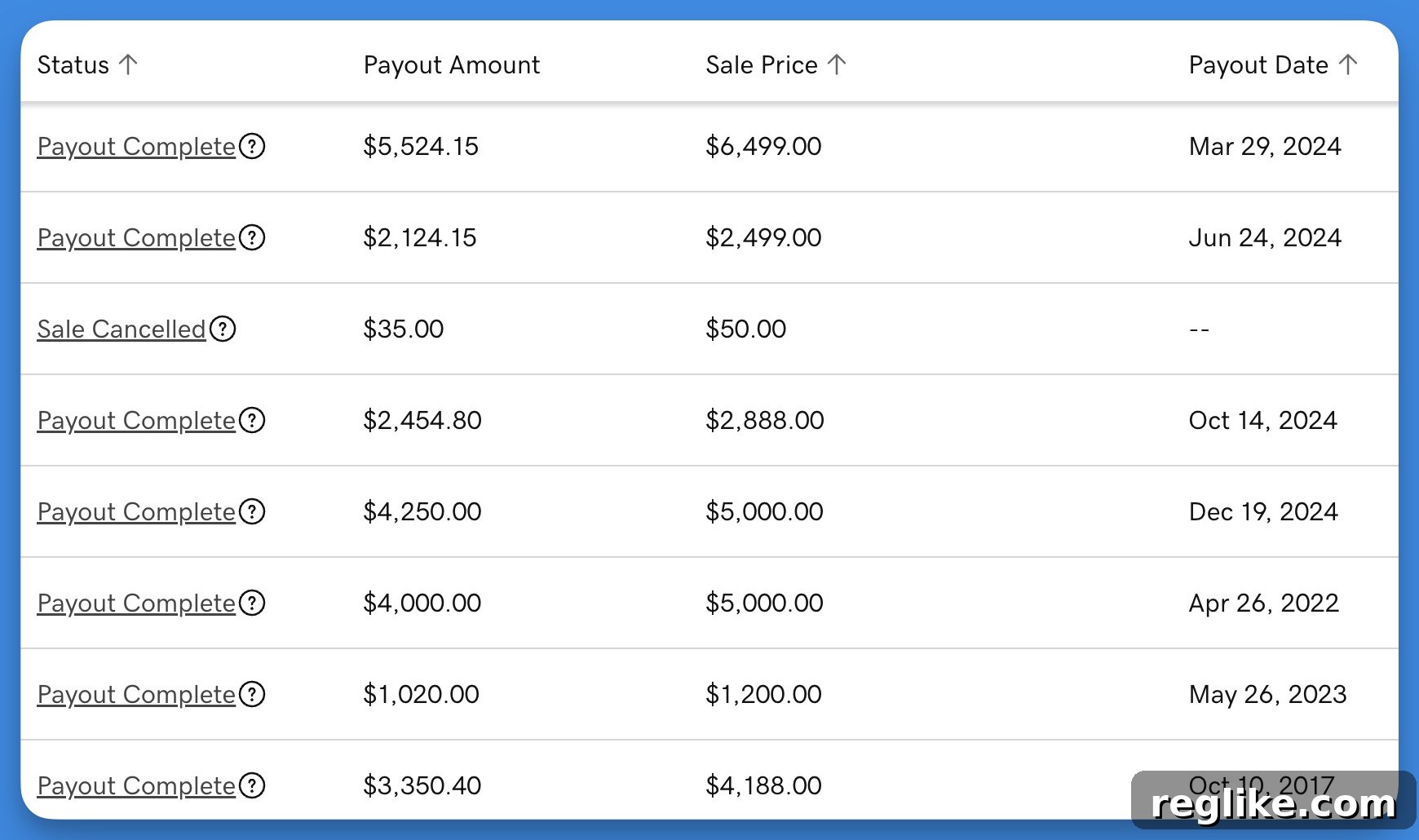
Streamlining Your Domain Sales: Essential Afternic Dashboard Improvements for Enhanced User Experience
In the dynamic world of domain investing, efficiency and clear data presentation are paramount. As a leading domain aftermarket platform, Afternic plays a crucial role in facilitating domain sales, acquisitions, and portfolio management. While the platform continually evolves, integrating new features and enhancing existing functionalities, there remain specific areas where further refinement can significantly boost the user experience and empower domain investors. This article delves into critical dashboard improvements that streamline sales tracking and optimize the Lease-to-Own (LTO) management process, ultimately contributing to a more intuitive and productive environment for domain professionals.
The Evolving Landscape of Domain Management and Afternic’s Commitment
The domain aftermarket is a fast-paced environment where quick access to relevant information can make all the difference. Domain investors frequently manage extensive portfolios, track numerous sales, and oversee complex transactions like Lease-to-Own agreements. Afternic, recognized for its vast network and robust sales channels, has consistently demonstrated a commitment to improving its platform. This dedication to user-centric development is evident in many of their recent updates, which have introduced welcome changes and expanded capabilities for sellers. Such ongoing enhancements are vital, as they directly impact the daily operations and strategic decisions of domain professionals.
When platforms like Afternic actively solicit and implement user feedback, it creates a virtuous cycle of improvement, fostering a stronger community and a more efficient marketplace. Identifying and addressing points of friction within the dashboard experience is key to maintaining a competitive edge and ensuring that users can focus on their core business: maximizing the value of their domain assets. Two particular areas have stood out as prime candidates for such targeted enhancements, directly influencing how sellers interact with their sales data and LTO agreements.
Enhancing the Sales Overview: A Journey Towards Clarity and Efficiency
One of the most frequently visited sections for any active domain seller is undoubtedly the Sales page. This critical overview provides a snapshot of recent transactions, payouts, and overall performance. However, for a considerable period, the default organization of this page presented a notable challenge. Upon navigating to the Sales page, the domains were often displayed without a discernible order, leading to an inconsistent and sometimes frustrating user experience. This lack of a logical default sort order meant that sellers frequently had to manually re-sort the data to find the information most pertinent to them.
Consider the typical workflow of a domain investor: tracking recent sales, confirming payouts, and monitoring the progression of transactions. When the Sales page presented an arbitrary list, such as the example below, it immediately introduced an unnecessary step. For instance, a common initial view might appear something like this, displaying domains without any apparent chronological or value-based sequence:
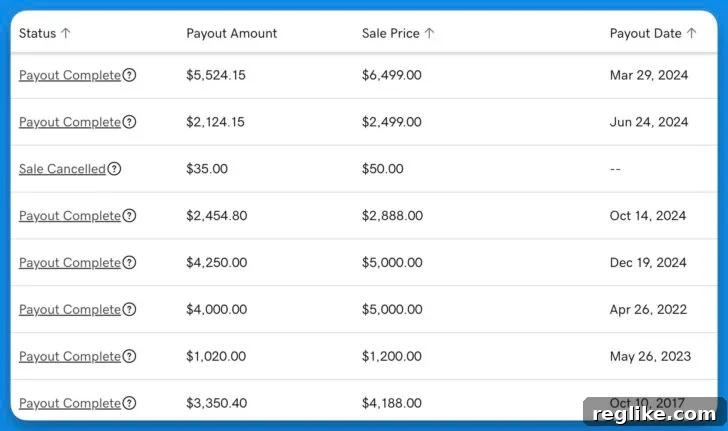
This absence of a default sorting mechanism meant that sellers would consistently spend valuable time applying a filter, most commonly sorting by ‘Payout Date,’ to ascertain their most recent sales. While the functionality to sort existed, the lack of an intelligent default added friction to an otherwise straightforward process. The ideal scenario, and a widely requested feature, was for the page to automatically display sales in a logical, time-based sequence.
Afternic’s Responsive Action: A Testament to User-Centric Design
It is with great appreciation that we acknowledge Afternic’s responsiveness to this specific user feedback. As of April 7, 2025, Afternic has implemented a significant improvement to the Sales page. The platform now features a dedicated “Sold Date” column, and, crucially, the page is automatically sorted by this column by default. This change represents a substantial enhancement to the user experience, directly addressing the pain point previously highlighted.
The introduction of the “Sold Date” and its automatic application as the default sorting parameter means that domain investors can now instantly view their most recent sales without any manual intervention. This seemingly minor adjustment yields considerable benefits: it saves time, reduces cognitive load, and provides immediate clarity on recent transactions. Such improvements are invaluable for active sellers who need quick, actionable insights into their sales performance. This positive update underscores Afternic’s commitment to listening to its user base and continuously refining its platform to meet the evolving needs of the domain investing community.
The success of this particular implementation serves as a strong precedent and encourages continued dialogue regarding further refinements that can optimize other critical sections of the Afternic dashboard, particularly those related to ongoing financial agreements like Lease-to-Own transactions.
Optimizing the Lease-to-Own (LTO) Dashboard for Actionable Insights
Beyond outright sales, Lease-to-Own (LTO) agreements represent a valuable and increasingly popular avenue for domain transactions. These agreements provide flexibility for buyers and a consistent revenue stream for sellers, making their effective management crucial for portfolio owners. However, the current presentation of information on the Afternic Lease-to-Own dashboard, while providing an overview, lacks a critical detail that could significantly improve financial tracking and operational efficiency.
The existing LTO overview page presents a list of domains under lease agreements. While it identifies the domains themselves and perhaps the overall status, it typically displays information in a format similar to this:

While this offers a basic outline, one of the most vital pieces of information for a seller managing an LTO agreement is the progress of payments. Specifically, knowing “how many installments have been paid” is essential for several reasons: it confirms the buyer’s commitment, indicates the remaining balance, and helps in assessing the overall health of the agreement. Currently, to access this crucial detail, a seller must click through to the individual domain’s details page. This adds an unnecessary layer of navigation for what should be a readily available metric on the primary overview page.
The Critical Need for Direct Installment Visibility
For domain investors managing multiple LTO agreements, the need to click into each domain’s page to ascertain payment progress is a significant inefficiency. Imagine overseeing dozens of LTOs; this process quickly becomes tedious and time-consuming. The number of paid installments is not merely a piece of trivia; it’s a key performance indicator. It informs financial forecasting, helps identify potentially struggling agreements at a glance, and streamlines the monitoring process.
Therefore, a highly beneficial enhancement would be to directly integrate a column on the Lease-to-Own overview page that clearly displays the “Number of Installments Paid” for each listed domain. This would transform the LTO dashboard from a basic list into an actionable management tool. Sellers could instantly assess the progress of all their LTOs, prioritize agreements that require attention, and gain immediate financial insights without additional clicks. Such an addition would dramatically improve the dashboard’s utility, reflecting the real-time status of their LTO portfolio more accurately and efficiently.
This change aligns perfectly with the principle of providing “at-a-glance” information, reducing the cognitive load on users, and enabling quicker, more informed decision-making. Just as the Sales page benefited from a default “Sold Date” sort, the LTO dashboard stands to gain immensely from direct visibility into payment progress, making it an even more powerful tool for domain investors.
The Broader Impact of User-Centric Design in Domain Marketplaces
These proposed and implemented dashboard improvements, while seemingly granular, collectively contribute to a superior overall platform experience. In a competitive market where domain investors often utilize multiple platforms, the ease of use, clarity of information, and efficiency of management tools are crucial differentiators. A well-designed, intuitive dashboard not only saves time but also reduces potential errors, instills confidence, and ultimately empowers users to be more effective in their domain investment strategies.
Afternic’s proactive approach to enhancing its platform, as demonstrated by the recent Sales page update, sets a positive example. Continuous engagement with user feedback, focusing on areas that introduce friction or obscure critical data, ensures that the platform remains at the forefront of the domain aftermarket. By simplifying processes and making essential information readily accessible, Afternic reinforces its position as a go-to resource for domain sellers and buyers alike.
Conclusion: A Future of Enhanced Efficiency and Clarity
The journey towards an ideal domain management platform is one of continuous improvement and adaptation. Afternic’s recent successful update to the Sales page, incorporating a “Sold Date” and default sorting, is a clear indication of their commitment to user experience. Building on this positive momentum, implementing a direct display of “Installments Paid” on the Lease-to-Own dashboard would be another significant step forward.
These enhancements are not just about adding features; they are about refining the core functionality to better serve the needs of a sophisticated user base. By focusing on clarity, efficiency, and actionable data, Afternic can continue to empower domain investors, making their experience on the platform more streamlined, productive, and ultimately, more rewarding. We remain optimistic that Afternic will continue to embrace these user-centric improvements, further solidifying its reputation as an industry leader dedicated to the success of its community.