
Growth in cybersquatting cases increased in second quarter of this year.
The second quarter of this year saw a notable rise in cybersquatting and domain dispute decisions under the Uniform Domain-Name Dispute-Resolution Policy (UDRP). According to a recently published quarterly digest, the total number of UDRP decisions in Q2 increased by nearly 12% compared with the same quarter last year. This growth reflects continued activity in domain name disputes and suggests sustained enforcement efforts by rights holders and adjudicators.
GigaLaw’s quarterly roundup, prepared by Doug Isenberg—who serves both as a UDRP panelist and as counsel—focuses on decisions issued during the quarter rather than new filings. That distinction means the report tracks resolutions and panel outcomes, providing insight into how many disputes reach a decision stage and what those outcomes tend to be.
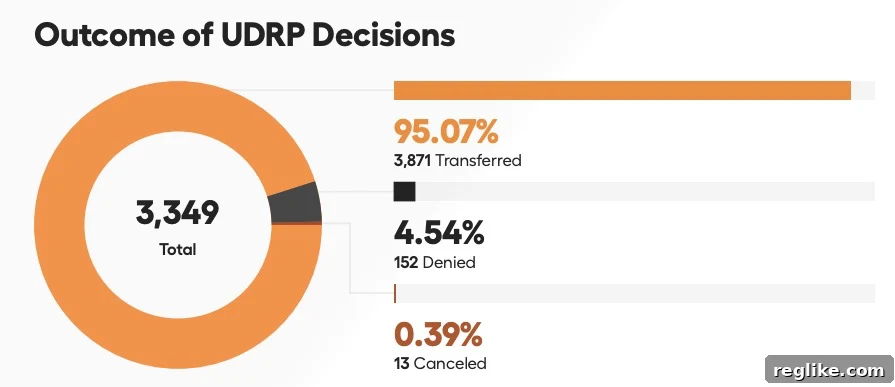
In Q2, the digest records 2,324 decisions, covering 3,349 individual domain names. Both figures represent an approximate 11–12% year-over-year increase in decisions and domains affected. While this marks a sharp uptick in the number of adjudicated disputes, it is somewhat lower than the 15% increase seen in the first quarter of the year. The trend nonetheless points to an active period for intellectual property enforcement in the domain space.
Outcome patterns remain heavily skewed toward complainants: 95% of decisions resulted in either a transfer of the disputed domain name or its cancellation, while only 5% of cases were denied. This distribution is consistent with recent historical trends where panels find in favor of complainants in the vast majority of cases, reinforcing the effectiveness of UDRP proceedings for many rights holders who can demonstrate the requisite elements of bad-faith registration and confusing similarity.
Institutional activity among dispute providers also varied. The World Intellectual Property Organization (WIPO) issued the largest share of decisions with 1,337 determinations during the quarter. The National Arbitration Forum followed with 707 decisions, and the Czech Arbitration Court contributed 202 decisions. Other providers, including regional centers such as the Asian Pacific Network’s dispute resolution entities and smaller national providers, handled fewer than 100 cases each in this period.
The report also tracks findings of reverse domain name hijacking (RDNH), a formal determination that a complainant attempted to misuse the UDRP process in bad faith. RDNH findings declined in Q2 relative to Q1: panels issued 18 RDNH findings in the second quarter compared with 24 in the first quarter. While the raw numbers are small, they serve as an important reminder that panels monitor conduct and can penalize abusive complaint strategies.
For brand owners and domain defenders, these statistics provide useful context for enforcement planning. The high rate of complainant victories suggests that well-documented complaints that clearly meet UDRP standards continue to be an effective remedy. At the same time, the presence of RDNH findings, though limited, underscores the need for careful fact-gathering and responsible filing practices to avoid potential sanctions or reputational damage.
For registrars, registrants and legal practitioners, the quarterly increase in decisions highlights the ongoing importance of clear trademark policing, prompt response strategies, and an understanding of provider-specific procedures. Monitoring trends in provider caseloads and outcomes can help stakeholders choose the most appropriate forum and craft more effective dispute resolution strategies.
Overall, Q2’s rise in UDRP decisions demonstrates persistent enforcement activity across multiple providers, a dominant pattern of complainant success, and continued vigilance against abusive filings. Observers and participants in the domain dispute ecosystem will likely continue to watch subsequent reports for shifting patterns in filings, decisions, and the distribution of outcomes among adjudicating bodies.