
Unlocking Hidden Gems: A Comprehensive Guide to Discovering Hand-Registration Domains with GoDaddy Watching
In the dynamic world of domain name investing, finding valuable domains at a low cost is the ultimate goal. While domain auctions often command premium prices, the real treasure lies in discovering high-potential domains available for standard “hand-registration” fees. Alvin Brown, a seasoned expert in the domain industry, has unveiled an innovative and incredibly effective method to do just that. Building upon his previous insights into finding expired domains, this guide delves deep into his strategy, leveraging GoDaddy’s often-overlooked “Watching” feature to unearth hidden gems.
Many domain investors focus solely on active auctions, battling it out for names that have already attracted significant attention. However, Alvin’s approach shifts the paradigm, guiding us towards a less competitive, yet remarkably fruitful, avenue. By systematically collecting and analyzing historical data from GoDaddy, investors can identify domains that were once highly desired but ultimately dropped, becoming available again at the most basic registration cost. This strategy not only maximizes potential ROI but also offers a scalable path to building a valuable domain portfolio.
The Power of GoDaddy’s Watching Feature: A New Perspective
GoDaddy’s “Watching” feature is primarily designed to help users track domains they are interested in acquiring, particularly those heading to auction. While some may recall a brief experiment by GoDaddy to display “Watcher” data on auction landing pages, its true potential for discovery has largely remained untapped. Alvin Brown’s method repurposes this feature, transforming it into a powerful data collection tool rather than just a notification system.
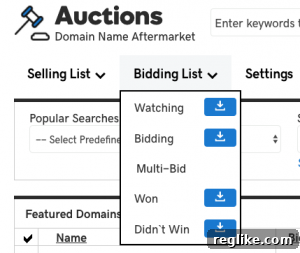
Typically, users “watch” domains to monitor bidding activity and ensure they don’t miss an opportunity to place a bid before an auction closes. However, the critical element here is the ability to export this “Watching” data. This export provides a comprehensive list of expiring domains, including their current status and bidding information. This raw data, when accumulated over time, becomes an invaluable resource for uncovering domains that eventually drop and become available for hand-registration.
Prior to developing this particular strategy for public sharing, Alvin himself utilized this export feature extensively for his personal investment decisions. He carefully downloads a daily list of expiring domains he’s watching, analyzing them to strategize his bids and determine his maximum acquisition cost. This consistent daily interaction with the data laid the groundwork for his groundbreaking discovery – the untapped potential within historical “Watching” exports.
Beyond its use for auction strategy, Alvin even used this data as a personal tool to hone his domain valuation skills. He would add an extra column next to the “Bid Price” column, inputting his estimated auction close value. By comparing these estimates with the actual closing prices from previous days, he could refine his ability to predict market value. This disciplined approach to data analysis highlights the depth of insight that can be gained from consistent data collection, even if the initial purpose isn’t directly related to finding hand-reg domains.
The Foundation: Consistent Data Collection and the “Aha!” Moment
The success of Alvin’s strategy hinges on consistent data collection. Each day, the “Watching” export contains thousands of expiring and closeout domains. While many of these domains will have active bids and proceed through auctions, a significant percentage will show zero bids at the time of export. These “zero bid” domains are particularly interesting, as they represent names that haven’t yet captured the attention of active bidders, or perhaps have already passed through the initial auction phase without being picked up.
Alvin, a meticulous record-keeper, routinely moves his daily exported “Watching” CSV files to a dedicated storage drive at the end of each week. This seemingly mundane act of “digital spring cleaning” ultimately led to a profound discovery. After accumulating over two years’ worth of daily expired domain data, he had a “light bulb moment.” He realized the immense potential hidden within this vast archive.
💡 The crucial insight was this: what if he could execute a bulk search on these historical lists to see if any of the domains, having passed through all their various expiry stages, were now available for hand registration? 💡
His initial experiment yielded astonishing results. From his very first export file, then just over two years old, he discovered that nearly 10 percent of the domains were available at standard hand-registration fees. Further bulk searches on files from different months consistently showed an availability rate of 6-10%. This revelation demonstrated a clear, repeatable opportunity that had previously gone unnoticed.
While the temptation to immediately register these newfound opportunities was strong, Alvin exercised commendable discipline. He calmly backed away from his browser and instituted a 24-hour “sleep on it before purchasing” policy. This crucial step underscores the importance of thoughtful decision-making in domain investing, even when faced with exciting discoveries. It allows for proper due diligence and prevents impulsive, potentially regrettable, acquisitions.
The Hand-Registration Discovery Process: A Step-by-Step Guide
For those eager to replicate Alvin’s success, here’s a detailed breakdown of the process:
1. Establish Your Watching Routine and Export
- Identify Domains to Watch: Begin by adding a substantial number of domains to your GoDaddy “Watching” list. These could be based on keywords, niches, or simply domains you encounter during your general browsing that seem promising. The more domains you watch, the larger your data pool will be.
- Consistent Export: Make it a habit to download your “Watching” list daily or at least weekly. This export typically comes in a CSV (Comma Separated Values) format, which is easily readable and manageable in spreadsheet software. The more consistently you export, the richer your historical data archive will become.
2. Archive and Organize Your Data
- Create a Storage System: Designate a specific folder on your computer or cloud storage for these exported CSV files. Organize them by date (e.g., “GoDaddy_Watching_2023-10-26.csv”) to maintain a clear chronological record.
- Consolidate Periodically: While daily exports are crucial, you might eventually want to consolidate these into monthly or quarterly master lists to make managing large datasets easier.
3. Embrace the Waiting Game (The 40-60 Day Window)
- Understand the Domain Lifecycle: This is perhaps the most critical aspect of Alvin’s strategy. When a domain expires, it doesn’t immediately become available for hand-registration. It goes through several stages:
- Expired Status: The domain is expired but the original registrant still has a grace period (usually 30-45 days) to renew it.
- Redemption Grace Period: If not renewed, it enters a redemption grace period (typically 30 days), during which the original registrant can still renew for a higher fee.
- Pending Delete: After the redemption grace period, the domain moves to “pending delete” status (around 5 days).
- Dropped: Finally, after pending delete, the domain is dropped and becomes available for general registration.
- Why the Delay? By waiting approximately 40-60 days from your export date, you allow enough time for domains that were on your “Watching” list to pass through these various stages and potentially become truly available. Bulk searching too soon would yield fewer results, as many domains would still be in a redemption or pending delete status.
4. Select Your Bulk Search Tool Wisely
- GoDaddy’s Limitations: While GoDaddy offers a bulk search feature, it typically limits searches to around 500 domains at a time. This can be restrictive when dealing with large lists.
- Hexonet’s Advantage: Alvin specifically recommends using Hexonet’s Bulk Search feature. Hexonet allows for searching up to 1,000 domains simultaneously, significantly increasing efficiency when processing large, historical datasets. Look for other registrars or domain tools that offer similar high-volume bulk search capabilities.
5. Execute the Bulk Search and Analyze Results
- Prepare Your List: From your archived CSV files (e.g., a file from 60 days ago), extract only the domain names into a simple text file, with one domain per line.
- Upload and Search: Upload this clean list to your chosen bulk search tool (like Hexonet). The tool will then process the list and indicate which domains are currently available, taken, or premium.
- Identify Available Domains: Focus on the domains marked as “available.” These are your potential hand-registration opportunities.
- Initial Vetting: Quickly scan the available domains for obvious value: keywords, brandability, length, and TLD.
Why This Strategy Works: The Advantage of Delayed Discovery
This method offers several distinct advantages over traditional domain acquisition strategies:
- Reduced Competition: By targeting domains that have already passed through the high-competition auction phase, you’re looking at a pool of names that others have either overlooked, couldn’t afford, or simply weren’t aware of at the right time.
- Cost-Effectiveness: The primary benefit is acquiring potentially valuable domains at the lowest possible cost – the standard hand-registration fee (typically around $10-$15), as opposed to hundreds or thousands of dollars in an auction.
- Massive Data Pool: Consistent daily exports build an enormous historical database, providing a vast hunting ground for profitable names.
- Catching “Slippers”: Many domains with genuine value might slip through the cracks of auctions due to various reasons – low initial bids, a niche appeal not recognized by the masses, or simply bad timing. This strategy allows you to catch these “slippers.”
Maximizing Your Success: Essential Tips for Domain Investors
To truly capitalize on this strategy, consider these additional tips:
- Diversify Your Watchlist: Don’t limit yourself to just obvious keywords. Explore niche industries, emerging trends, short and brandable names, and different domain extensions (TLDs) beyond just .com.
- Understand Domain History: Before registering, always perform due diligence. Check the domain’s history using tools like Archive.org’s Wayback Machine to ensure it hasn’t been used for spam or illicit activities. A clean history is crucial for future value.
- Check for Trademarks: A quick trademark search is vital. Registering a domain that infringes on an existing trademark can lead to legal issues and the loss of your domain.
- Evaluate Potential Value: Consider if the domain is truly brandable, keyword-rich, or has potential for development. Is there a clear use case or market for it?
- Build a Portfolio Mindset: Aim to build a diversified portfolio of domains. Not every domain will be a home run, but a collection of carefully selected names increases your overall chances of success.
- Stay Disciplined: Reiterate Alvin’s “sleep on it” policy. Avoid impulsive registrations. Take time to evaluate each potential acquisition thoroughly.
The Future: Automating Your Domain Discovery for Scale
For those with a knack for software development and engineering, this entire process can be significantly streamlined and scaled through automation. Instead of manual exports and bulk searches, a programmatic approach can handle the heavy lifting, allowing you to process even larger volumes of data with greater efficiency.
Here’s a conceptual outline for automating this strategy:
- Scripting: Use a scripting language like Python or PHP to automate the daily download of your GoDaddy “Watching” list. This script could log into your GoDaddy account (if API access is limited for watching data) or leverage any available direct export links.
- Database Integration: Instead of storing CSVs, feed the daily exported domain lists directly into a relational database (e.g., MySQL, PostgreSQL). This allows for easy querying, consolidation, and tracking of domains over time. You can add columns for “export_date,” “status_at_export,” etc.
- Automated Bulk Availability Checks: Utilize GoDaddy’s API or similar APIs from other registrars (like Hexonet) to programmatically check domain availability. GoDaddy’s API, for example, allows you to query the availability of numerous domains. Your script could regularly pull older domain names from your database (e.g., those exported 60 days ago) and submit them to an availability API.
- Alerting System: Once available domains are identified by the API, the system could automatically send you notifications (email, Slack, etc.) with a list of potential hand-registration opportunities.
- Automated Registration (with caution): For advanced users, it’s possible to automate the registration of desirable domains directly via API, though this should be approached with extreme care and robust filtering to avoid unwanted registrations.
Automating this process transforms it from a labor-intensive research method into a powerful, passive domain acquisition engine, capable of sifting through millions of data points to pinpoint valuable hand-registration opportunities.
Conclusion: Embark on Your Domain Discovery Journey
Alvin Brown’s strategy of leveraging GoDaddy’s “Watching” export data offers a refreshing and highly effective approach to finding valuable domains at hand-registration fees. By combining diligent data collection, a strategic waiting period, and efficient bulk searching, investors can uncover a wealth of opportunities that often go unnoticed in the fast-paced domain auction environment.
Whether you choose to follow the manual steps or delve into the exciting world of automation, the core principle remains the same: consistent effort and smart data utilization are the keys to unlocking hidden value. The domain market is vast and ever-evolving, and methods like this empower individual investors to compete effectively and build significant assets. Good luck on your domain mining adventure, and may your efforts lead to a thriving portfolio of profitable hand-registered domains!