
Uniregistry has introduced a new subscription model requiring customers to pay recurring plan fees to retain or access domain registration and renewal discounts. This strategic shift has sparked considerable discussion within the domain community, with some users reporting they were informed of impending price increases unless they subscribed to one of these new plans.
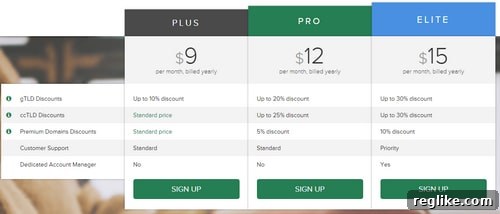
Uniregistry’s New Domain Discount Program: A Comprehensive Look at Subscription-Based Savings
Leading domain name registrar Uniregistry rolled out its new discount plan at the beginning of the month, introducing a mandatory monthly or annual subscription fee for customers seeking reduced prices on new domain registrations and renewals. This marks a significant departure from traditional models where discounts were often based on volume or promotional offers without an upfront fee.
The implementation of this “Uniregistry Perks” program has not been universally communicated, leading to varied customer experiences. One Uniregistry customer brought this to my attention, stating he was directly informed that his current domain prices would escalate unless he subscribed to one of the new plans. Interestingly, with a smaller portfolio of only 22 domains registered at Uniregistry, I have yet to receive any such direct notification, suggesting a targeted rollout or a phased approach to customer communication.
Understanding the Uniregistry Perks Program
The Uniregistry Perks program is designed to activate discounts on both new domain registrations and existing domain renewals. These plans are tiered, with the cheapest option starting at an annual cost of $108. The system is structured such that higher tiers offer greater discounts but also come with higher subscription fees. For instance, the most competitive plan observed brings down the price of a .com domain to approximately $8.59, a notable reduction from Uniregistry’s standard retail pricing of $10.88 for a .com domain.
One of the more distinctive and arguably controversial aspects of this new program is its pricing structure: the subscription fees appear to increase based on the number of domains a customer has under management. This approach contrasts sharply with other industry players, such as GoDaddy, whose long-standing Domain Discount Club charges a flat annual fee regardless of the size of the customer’s domain portfolio. This tiered pricing based on portfolio size raises questions about its fairness and value proposition for large-scale domain investors.
Customer Experience and Transparency Concerns
The varied notification process for the Uniregistry Perks program has led to some confusion and concern among customers. The customer who received a direct warning about impending price hikes if he didn’t subscribe likely manages a larger portfolio or has a specific account history that triggered the communication. This selective notification can create an uneven playing field and prompt existing customers to feel pressured into paying additional fees to maintain their perceived discount levels.
For many domain owners, especially those with numerous domains, consistent and transparent pricing is paramount. Any change that introduces an additional layer of cost or complexity can be met with resistance. The lack of a universal announcement or clear explanation for all customers about how this new system affects their existing pricing models could potentially erode trust and prompt customers to seek more transparent alternatives.
Comparing Uniregistry Perks with Industry Standards
The domain registration industry has long employed various strategies to attract and retain customers, including bulk discounts, loyalty programs, and promotional pricing. GoDaddy’s Domain Discount Club serves as a prominent example, offering a predictable annual fee for access to reduced pricing across a wide range of domain extensions. Its straightforward, flat-rate model has been a consistent draw for domain investors and businesses alike, providing clarity and simplicity.
Uniregistry’s decision to implement a tiered fee structure that scales with portfolio size introduces a different paradigm. While it might aim to segment customers based on their usage levels and offer more tailored benefits, it simultaneously adds complexity. For a large domain investor managing thousands of domains, the cost of the Uniregistry Perks subscription could become a significant annual expenditure, potentially outweighing the per-domain savings, especially if competitor offerings remain simpler and more cost-effective for high volumes.
This move highlights a broader trend in digital services towards subscription models, but its application in the domain registration space, particularly with variable fees based on portfolio size, is relatively novel and warrants close observation. It forces domain managers to re-evaluate their total cost of ownership (TCO) and consider not just the per-domain price but also any associated membership or subscription fees.
Strategic Rationale Behind Uniregistry’s Move
From a business perspective, Uniregistry’s pivot to a subscription-based discount model could be driven by several strategic objectives. Firstly, it provides a more predictable and recurring revenue stream, moving away from potentially volatile transaction-based income. This stability can be invaluable for long-term business planning and investment.
Secondly, it could be an effort to enhance customer lifetime value. By locking customers into a subscription, Uniregistry aims to foster greater loyalty and reduce churn. Customers who pay an annual fee for discounts are perhaps less likely to transfer their domains to another registrar, thereby increasing their stickiness with Uniregistry.
Thirdly, this model might be an attempt to segment its customer base more effectively. Serious domain investors who truly benefit from the deeper discounts offered by the Perks program would likely subscribe, effectively self-identifying as high-value customers. Conversely, casual domain owners with only a few domains might choose not to subscribe, potentially streamlining Uniregistry’s service focus and operational costs for those accounts.
It also allows Uniregistry to potentially offer more premium features or enhanced support to its “Perks” subscribers in the future, justifying the additional fee through a more comprehensive value proposition beyond just pricing. This could include early access to new gTLDs, advanced domain management tools, or priority customer service.
Implications for Domain Investors and Portfolio Managers
The Uniregistry Perks program carries significant implications for various types of domain holders. For small portfolio owners or individuals with just a few domains, the $108 annual fee for the cheapest plan might not yield sufficient savings to justify the cost, especially if their domain renewals are infrequent. They may find it more economical to pay standard prices or seek out registrars with consistently low everyday rates.
For domain investors managing substantial portfolios, the situation becomes more complex. While the per-domain savings of over $2 for a .com might seem appealing, the increasing subscription fee based on portfolio size could quickly add up. For example, if a large investor manages 5,000 domains, the highest tier of subscription could translate into a substantial annual cost, impacting their overall profitability. It’s not hard to imagine a scenario where a $219-per-month (or higher) surcharge, as speculated in the original content, could make registrars with flat-fee discount clubs or direct bulk pricing more attractive.
Indeed, I wouldn’t be surprised if Uniregistry demonstrates flexibility or offers bespoke arrangements for extremely large portfolios. Losing a 50,000-domain portfolio over a relatively small annual surcharge compared to the value of the portfolio itself would be a strategic misstep. Registrars often engage in direct negotiations with enterprise-level clients or large investors to offer customized pricing structures that deviate from publicly advertised plans. This type of flexibility would be crucial for Uniregistry to retain its most valuable customers in the face of this new model.
Weighing the Pros and Cons of Subscription-Based Discounts
The shift to a subscription model for domain discounts presents a mix of advantages and disadvantages for both the registrar and its customers.
Pros for Customers:
- Predictable Savings: For active domain managers, the plan offers consistent discounts on new registrations and renewals, making budgeting easier.
- Potential for Bundled Services: The subscription model could pave the way for Uniregistry to offer additional premium services or features exclusively to Perks members in the future, enhancing overall value.
- Streamlined Access: Once subscribed, discounts are automatically applied, removing the need to search for promotional codes or wait for sales.
Cons for Customers:
- Additional Upfront Cost: The mandatory annual fee is an extra expense that must be factored into the total cost of domain ownership, especially for smaller portfolios.
- Complexity: The tiered pricing based on portfolio size adds a layer of complexity not seen in simpler discount club models.
- Potential for Forced Upgrades: As some customers have reported, the feeling of being forced into a subscription to avoid price increases can lead to dissatisfaction.
- Reduced Flexibility: Customers may feel more tied to Uniregistry if they’ve paid an annual subscription, potentially limiting their willingness to transfer domains elsewhere.
Navigating the New Landscape: Advice for Domain Holders
For Uniregistry customers, it’s now more important than ever to carefully evaluate their domain portfolio and current registrar pricing. Here are some actionable steps:
- Review Your Portfolio: Determine the exact number of domains you have with Uniregistry and their renewal dates.
- Calculate Your Savings: Compare your current renewal costs with the potential savings offered by a Uniregistry Perks plan, factoring in the annual subscription fee. Calculate the break-even point to see if the subscription is financially beneficial for your specific needs.
- Explore Alternatives: Research other domain registrars, particularly those offering flat-fee discount clubs (like GoDaddy) or competitive bulk pricing for larger portfolios. Consider consolidating domains with registrars that offer the best overall value.
- Monitor Communications: Pay close attention to any direct communications from Uniregistry regarding your account or pricing, as the rollout seems to be targeted.
- Negotiate (for large portfolios): If you manage a very large portfolio, reach out to Uniregistry directly to inquire about enterprise-level pricing or special arrangements that might bypass the standard Perks program structure.
Conclusion: Adapting to the Evolving Domain Market
Uniregistry’s introduction of the Perks program signifies an evolving landscape in the domain registration industry, moving towards subscription-based models for accessing discounts. While this strategy may offer advantages for the registrar in terms of predictable revenue and customer retention, it presents a new set of considerations for domain owners.
The key for customers will be diligence: understanding their own needs, evaluating the true cost-benefit of such programs, and being prepared to adapt by potentially consolidating or diversifying their domain portfolios across different registrars. As the domain market continues to mature, registrars will continue to innovate their pricing and service models, making informed decision-making more crucial than ever for maintaining a cost-effective and efficient domain management strategy.