
Mastering Online Payments: A Comprehensive Guide to Payment Gateways and Processors for Your eCommerce Business
In the dynamic world of eCommerce, a visually appealing online store and a fantastic product catalog are just the initial steps. The true measure of success lies in converting browsing visitors into loyal, paying customers. This crucial conversion hinges on one fundamental element: trust. Customers will only commit to a purchase when they feel 100% confident in the security and reliability of your payment system, entrusting you with their sensitive financial information.
Choosing the right payment infrastructure is paramount for any online business aiming for sustained growth and customer satisfaction. However, the terminology surrounding online payments can often be a source of confusion for many eCommerce entrepreneurs, particularly when distinguishing between a “payment gateway” and a “payment processor.” While both are integral components in the intricate chain of online payment processing, their roles, though interconnected, are distinct.
This comprehensive guide will demystify these essential components, clarify their functions, and delve into the various types of payment processors available. By the end, you’ll have a clear understanding of how to select the most secure, feature-rich, and suitable payment solutions to finalize your online transactions and propel your business forward.
Understanding the Pillars of Online Payments: Gateways vs. Processors
To effectively manage online transactions, it’s crucial to differentiate between payment gateways and payment processors. Though often used interchangeably or provided by the same service, they perform different, yet complementary, functions in bringing a sale to completion.
What is a Payment Gateway?
Think of a payment gateway as the digital equivalent of a physical point-of-sale (POS) terminal in a brick-and-mortar store. It’s the secure online portal where your customers initiate their payment process by entering their credit card or other payment details. The primary role of a payment gateway is to securely collect this sensitive information from the customer and then either authorize the payment directly or transmit it securely to the next stage in the transaction chain.
Essentially, the payment gateway acts as the initial point of interaction. It encrypts the customer’s payment data, ensuring it remains confidential and protected from cyber threats. From there, depending on the setup, it may directly finalize the transaction (as is often the case with third-party gateways like PayPal, which often encompass both gateway and processing functions), or it connects with your website’s dedicated payment processor to complete the transaction flow. Modern gateways are designed for seamless integration with your eCommerce platform, providing a smooth checkout experience for your customers while maintaining robust security protocols like SSL encryption and tokenization.
Common payment gateways widely used with WordPress eCommerce sites and other platforms include prominent names like:
- PayPal: A ubiquitous and trusted gateway offering a variety of payment options and often includes processing capabilities.
- Authorize.net: One of the industry’s leading payment gateways, providing advanced fraud detection and a reliable interface.
- Stripe: Known for its developer-friendly APIs and flexible solutions for businesses of all sizes.
- Braintree: A PayPal service that offers extensive customization and supports global payments.
It’s important to note that many popular WordPress eCommerce solutions, such as WooCommerce, come equipped with built-in integrations for several payment gateways. In numerous instances, especially for smaller businesses, these integrated gateways can handle the entire transaction process, negating the immediate need for a separate, dedicated payment processor. However, for businesses scaling rapidly or those with high transaction volumes, particularly retailers grossing millions in sales annually, a specialized payment processor often becomes a necessary component for optimizing efficiency, reducing costs, and enhancing financial control.
What is a Payment Processor?
Payment processors, frequently referred to as merchant accounts, are the central nervous system of your online payment operations. Their critical function is to transmit sensitive financial information between your website, the customer’s issuing bank (the bank that issued the customer’s credit card), and the acquiring bank (your bank or the bank that processes transactions for your business). They are the engine that drives the actual movement of funds.
Once a customer has made a purchase on your website and securely entered their payment information via the gateway, the payment processor takes over. It initiates the request to the customer’s bank for authorization, manages the communication between all parties, executes the payment, and ultimately finalizes the transaction by ensuring the funds are transferred from the customer’s account to your business account. This entire process, though complex, typically happens in mere seconds.
In essence, payment processors are responsible for a multitude of vital tasks, ensuring the seamless and secure flow of money:
- Managing Bank Relationships: They act as intermediaries, fostering and maintaining relationships between your business and various credit card companies and banks.
- Handling Sensitive Data: They securely manage and transmit your customers’ personal and financial information, adhering to stringent security standards.
- Transaction Execution: They are responsible for processing transactions by withdrawing money from your customer’s account and crediting it to your merchant account.
- Fund Transfer: They facilitate the final transfer of approved funds from your merchant account to your business bank account, typically within a few business days.
- Fraud Detection and Prevention: Many processors offer advanced tools to identify and mitigate fraudulent transactions, protecting both your business and your customers.
- Reporting and Analytics: They provide detailed reports on transactions, sales trends, and other financial data crucial for business analysis and reconciliation.
It’s important to acknowledge that the market offers flexibility: some companies provide both a payment processor and multiple payment gateways as an all-in-one solution for online shop owners. This integrated approach can simplify management. However, businesses also have the option to utilize separate companies for their gateway and processing needs, allowing for greater customization and potentially better rates or specialized services tailored to specific business models. The choice often depends on the business size, transaction volume, and desire for control over individual components of the payment ecosystem.
Choosing the Right Payment Solution: Why a Processor Matters
For small businesses just starting out, an all-in-one solution like PayPal or Stripe, which often bundles gateway and basic processing, might suffice. However, as your business grows, particularly when you start handling higher transaction volumes or enter international markets, the distinct benefits of a dedicated payment processor become increasingly clear. A robust payment processor offers advanced features that can significantly impact your operational efficiency, cost management, and overall financial health. These include more competitive processing rates, sophisticated fraud protection, advanced reporting capabilities, and faster settlement times. Understanding these advantages is key to scaling your eCommerce operations effectively and securely.
Key Criteria for Selecting a Payment Processor
With numerous options available, choosing the ideal payment processor for your eCommerce business requires careful consideration of several critical factors:
- Security and Compliance: Ensure the processor is PCI DSS compliant and offers robust fraud detection tools, tokenization, and encryption. Security should be non-negotiable.
- Fee Structure: Understand all associated costs, including transaction fees (percentage + fixed fee), monthly fees, setup fees, chargeback fees, and termination fees. Look for transparency and competitive rates.
- Supported Payment Methods and Currencies: Choose a processor that accepts a wide range of credit cards, debit cards, digital wallets (e.g., Apple Pay, Google Pay), and supports the currencies relevant to your customer base.
- Integration Capabilities: Verify seamless integration with your existing eCommerce platform (WooCommerce, Shopify, Magento, etc.) and other business software. API access for custom integrations is a plus.
- Settlement Times: How quickly will funds be transferred from the customer’s account to your business bank account? Faster settlements improve cash flow.
- Customer Support: Reliable and responsive customer support is crucial for troubleshooting issues and ensuring smooth operations.
- Reporting and Analytics: Detailed transaction reports, sales analytics, and reconciliation tools are vital for financial management and business insights.
- Scalability: The processor should be able to grow with your business, handling increasing transaction volumes and expanding into new markets without issues.
- International Capabilities: If you plan to sell globally, check for multi-currency support, local payment methods, and compliance with international regulations.
Top WordPress Payment Processors for Your Online Store
When it comes time to set up or optimize your online store, especially on a platform as versatile as WordPress, selecting the right payment processor is a strategic decision. Here are some of the most highly-regarded options, each offering a unique set of features and catering to different business needs:
1. Selz

Selz provides a comprehensive solution for website owners looking to build or integrate an eCommerce store directly onto an existing website or blog. It stands out by offering more than just payment processing; it’s a full-fledged platform that simplifies online selling. With pre-defined themes, the option for a custom domain, and free SSL certificates, Selz helps establish a professional online presence. It also includes built-in social sharing features and even enables selling directly from your Facebook page, expanding your sales channels effortlessly. Merchants can leverage integrated buy buttons, access detailed sales metrics, offer customer discounts, and benefit from a fully integrated shopping cart experience.
Additional features that make Selz a compelling choice include:
- The availability of a free Selz WordPress plugin, providing essential eCommerce functionalities that can be integrated within minutes.
- Flexibility to use Selz Pay, PayPal, or 2Checkout as payment gateways for credit card processing, giving businesses choices.
- Commitment to security with the latest SSL encryption for all transactions, ensuring customer data protection.
- Extensive international reach, accepting over 100 currencies to cater to a global customer base.
- Customizable order confirmations, which include intelligent upsell and cross-sell capabilities to boost average order value.
- Efficient cash flow management with weekly payouts through Selz Pay.
PRICE: Starting at $12.99/month (varies by plan and features).
2. Helcim
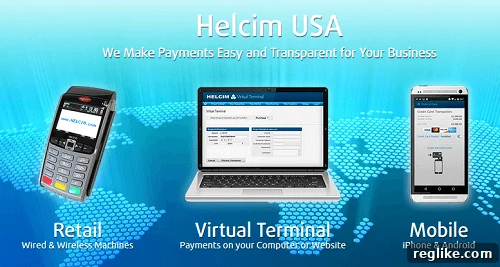
Helcim distinguishes itself as an all-encompassing payment processor, designed to accommodate a diverse range of business environments – whether transactions occur in-person, via mobile devices, or through an online eCommerce store. This versatility makes it an excellent choice for businesses with varied sales channels. Helcim empowers merchants to implement recurring billing cycles, send email invoice requests, and integrate seamlessly with popular hosted shopping carts such as Ecwid, Shopify, and BigCommerce. For those who prefer more control, Helcim also supports downloadable shopping cart integrations with platforms like Magento, Squirrel Cart, and the widely-used WooCommerce.
Key advantages and additional features include:
- A user-friendly Virtual Terminal, allowing easy login for manual entry of customer credit card information, ideal for phone orders.
- Built-in acceptance for major credit cards, including Visa, Mastercard, and Discover, streamlining the checkout process.
- Expedited 2-day bank settlements, ensuring businesses receive their funds quickly, improving cash flow.
- A secure Credit Card Vault for the safe storage of customers’ financial information, enhancing repeat purchase convenience and security.
- Direct integration capabilities for payment gateways into your website, shopping cart, billing system, or custom applications.
- Compatibility with third-party payment gateways like Authorize.net, offering flexibility in your payment stack.
- A significant cost-saving benefit: no PCI compliance fees, simplifying adherence to industry security standards.
PRICE: $25/month (plus transaction fees, which are often transparent and competitive).
3. PayJunction
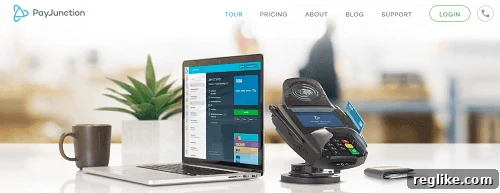
PayJunction is engineered as the optimal payment processor for mid- to large-scale businesses, providing a robust suite of tools tailored for higher transaction volumes and complex operational needs. It excels with features like smart payment processing, which optimizes transaction routes, electronic signature capturing for enhanced security and compliance, and multi-user, multi-location reporting capabilities crucial for distributed enterprises. Furthermore, PayJunction facilitates sending digital receipts to customers, significantly reduces the likelihood of costly chargebacks through advanced verification, and transforms any web browser into a virtual terminal for efficiently finalizing purchases, processing checks, and recharging existing accounts.
Additional features highlighting PayJunction’s value for growing businesses include:
- Comprehensive reporting tools that offer deep insights into sales, transactions, and business growth, fostering accountability.
- Extensive connectivity with leading third-party applications such as Magento and Shopify, and a dedicated integration for WooCommerce, ensuring broad compatibility.
- Adherence to stringent security standards, being both PCI and HIPAA compliant, making it suitable for businesses handling sensitive data.
- Expedited next-day deposits, enhancing cash flow management and operational liquidity.
- An intuitive interface allowing for easy searching and retrieval of all transactions, simplifying reconciliation and auditing.
- Qualified businesses benefit from receiving one free Smart Terminal for streamlined in-person purchases, bridging online and offline sales.
- A strong commitment to value with a price match guarantee, ensuring competitive pricing for its services.
PRICE: Often advertised as FREE for the platform, with competitive processing fees that vary based on transaction volume and business type.
4. 2CheckOut
2Checkout, now known as Verifone, empowers merchants globally to accept secure, worldwide mobile and online payments with exceptional ease and robust security. It is particularly renowned for its global reach and comprehensive payment capabilities. Meeting the highest PCI compliance standards and implementing stringent fraud rules, 2Checkout ensures that both your business data and your customers’ financial information are safeguarded against potential threats. The platform is designed for rapid deployment, allowing you to integrate this powerful payment processor directly onto your website within minutes and begin selling to customers across the globe without delay.
Its extensive feature set caters to international eCommerce, including:
- A responsive and mobile-friendly design, ensuring an optimal checkout experience across all devices.
- Support for an impressive 8 payment methods and 87 currencies, facilitating global sales and local payment preferences.
- The capability to enable recurring billing, ideal for subscription-based services and membership models.
- Seamless integration with dozens of popular open-source shopping carts, offering flexibility for various eCommerce setups.
- Acceptance of a wide array of payment types, including PayPal, major credit cards, and even debit card transactions.
- Multiple options for receiving funds, such as EFT (Electronic Funds Transfer), wire transfer, or Payoneer, in the currency of your choice.
- A vast selection of 87 currency options, allowing businesses to cater to a truly international customer base and present prices in local currencies.
PRICE: Often structured as FREE for the platform, with competitive transaction fees tailored to different business models and sales volumes.
Notable Mentions for Diverse eCommerce Needs
The landscape of payment processing is rich with innovation, offering a plethora of popular payment processors that provide extensive features, competitive pricing, and user-friendly interfaces. While the previously detailed options are top contenders, several other solutions might be perfectly suited for your unique business requirements, whether you specialize in specific transaction types or operate within niche markets.
Consider these notable mentions, each bringing distinct advantages to the table:
- ACH Payments: Specializes in electronic fund transfers directly from bank to bank, often preferred for recurring payments, large transactions, or reducing credit card fees.
- Flagship Merchant Services: Known for its personalized service and competitive rates, particularly appealing to small and medium-sized businesses looking for tailored merchant account solutions.
- Payline Data: Offers transparent pricing models and a focus on customer support, making it a strong option for businesses seeking clarity and reliability in their processing partner.
- Adyen: A global payment platform that helps businesses process payments across various channels and geographies, ideal for large international enterprises.
Final Thoughts: Securing Your eCommerce Future with the Right Payment Solution
Embarking on the journey of opening an online shop necessitates a meticulous consideration of how your website will effectively and securely accept payments. While many eCommerce platforms gracefully integrate various payment gateways into their software, offering a convenient starting point for website owners, the reality is that businesses often require a solution with enhanced features, greater handling power, and more sophisticated capabilities as they grow.
Ultimately, if you are a medium to large-sized online retailer, or if you aspire to scale your business to that magnitude, strategically utilizing the robust power of a dedicated payment processor becomes an indispensable decision. The right payment processor not only ensures the seamless flow of funds but also provides critical tools for fraud prevention, comprehensive reporting, and global transaction management. Moreover, with an optimally chosen processor, you might find that it encompasses both gateway and processing functionalities, potentially eliminating the need to invest in a separate payment gateway to confidently accept payments. By making an informed choice, you empower your business with the secure, efficient, and scalable payment infrastructure needed to thrive in the competitive digital marketplace.