
GoDaddy’s Strategic Integration with Dan.com: A New Era for Domain Parking and PPC Ads
The domain aftermarket is a dynamic ecosystem, constantly evolving with new players, technologies, and strategic partnerships. A significant development that sent ripples through the industry last month was GoDaddy’s acquisition of Dan.com. This strategic move promised to reshape how domain names are bought, sold, and monetized. The first tangible outcome of this acquisition, directly impacting domain investors and owners, is the fundamental change in how pay-per-click (PPC) advertisements are served on parked domains managed through Dan.com.
Previously, Dan.com maintained a robust partnership with Bodis, offering a highly effective hybrid landing page solution. This innovative approach skillfully combined contextual advertisements with a clear purchase option, providing domain owners with a dual monetization strategy. However, as of August 25th, this era comes to an end, as GoDaddy steps in to manage the ad serving mechanism. For many, this marks a pivotal moment requiring immediate attention to ensure continuous monetization of their valuable domain assets.
Seamless Transition: Integrating Your GoDaddy Customer Number for Continued PPC Earnings
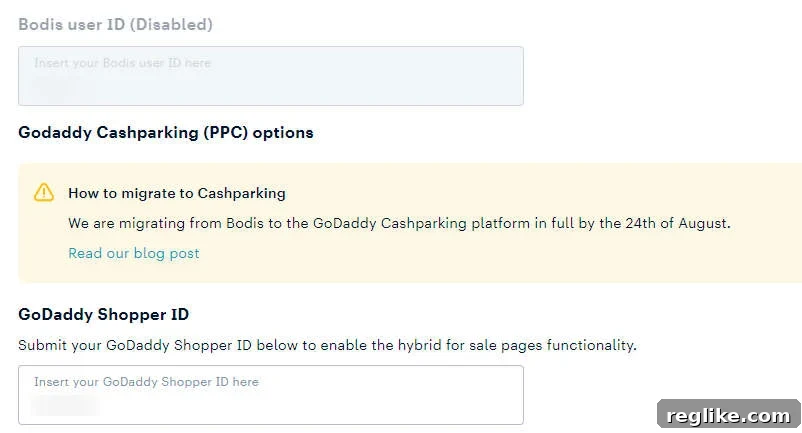
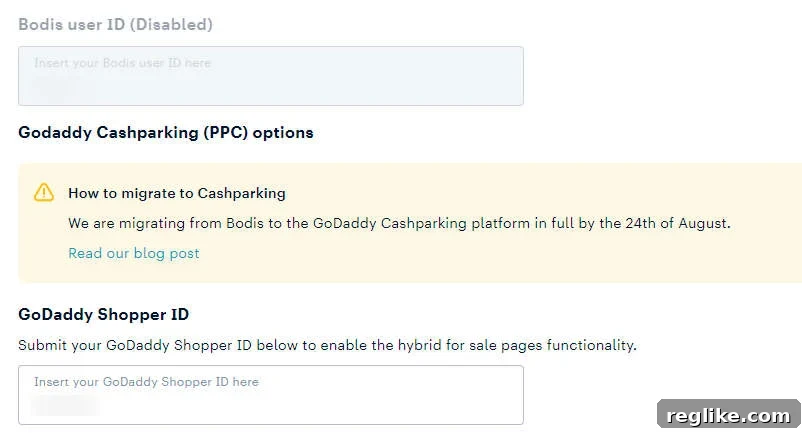
Ensuring your parked domains continue to generate revenue through PPC ads requires a simple, yet crucial, update within your Dan.com account. GoDaddy’s integration aims for a smooth transition, but proactive steps from domain owners are necessary. The process is designed to be straightforward, allowing you to link your Dan.com account with your GoDaddy profile, thereby enabling GoDaddy to serve relevant advertisements on your domain landing pages.
Here’s a quick guide to update your settings and secure your PPC ad revenue:
- Log In to Your Dan.com Account: Access your account using your registered credentials.
- Navigate to Settings: Locate the ‘Settings’ option, typically found in the top navigation or sidebar menu. This section is your control panel for various account preferences.
- Access Integrations: Within the ‘Settings’ menu, find and click on ‘Integrations’. This specific section is dedicated to linking your Dan.com account with external services, including GoDaddy.
- Enter Your GoDaddy Customer Number: You will find a designated field clearly labeled “GoDaddy Shopper ID” or “GoDaddy Customer Number.” Accurately enter your unique GoDaddy customer number into this box. This identifier is crucial for linking your Dan.com earnings to your GoDaddy account, ensuring proper credit and timely payouts for any ad revenue generated.
This integration is vital. Without linking your GoDaddy customer number, your domains might experience a disruption in PPC ad serving, potentially leading to a loss of passive income. It’s a quick, one-time setup that secures your future ad revenue stream under the new GoDaddy-Dan.com framework, ensuring your domain portfolio remains profitable.
A Visual Evolution: Understanding the New GoDaddy Parking Page Design
Beyond the backend integration, one of the most noticeable and impactful changes for domain investors will be the aesthetics and functionality of the landing pages themselves. The visual presentation of a parked domain significantly influences both ad engagement and the likelihood of a purchase. With GoDaddy taking over ad serving, the design philosophy of these hybrid parking pages has evolved, shifting away from the previous Dan.com/Bodis presentation.
The Former Dan.com/Bodis Hybrid Page Experience
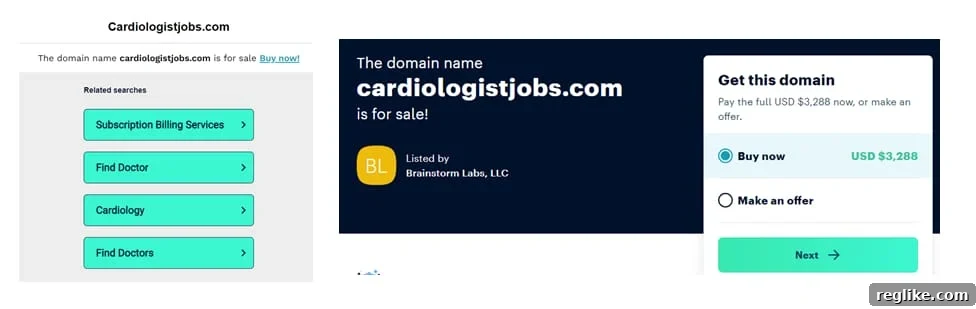
In its previous iteration, the Dan.com and Bodis integration offered a distinctive hybrid page design that many domain investors found effective. As observed earlier, when this integration was a cornerstone for domain monetization, the pages beautifully balanced contextual advertisements with a prominent ‘For Sale’ section. This design aimed to maximize revenue opportunities by catering to both visitors interested in information (via ads) and those potentially interested in acquiring the domain. The purchase box was usually clearly visible, often positioned above the fold, providing a strong and immediate call to action for prospective buyers.
When I previously wrote about the Dan/Bodis integration in May, the pages looked like this, showcasing a clear emphasis on both monetization avenues:
The New GoDaddy-Integrated Landing Page Design
With the new GoDaddy integration, the aesthetic and functional emphasis appears to have undergone a significant shift. The redesigned hybrid pages now lean more heavily towards a traditional pay-per-click (PPC) lander format. While still offering the option to purchase the domain, this feature is significantly downplayed, often appearing as a small, less prominent link or button amidst a more dominant display of advertisements. This design choice aligns with a strategy focused on maximizing immediate ad revenue, potentially at the expense of upfront, direct domain sales.
The hybrid pages with the GoDaddy integration will now look like this, reflecting a design that clearly prioritizes ad visibility and click-throughs:

This subtle, yet impactful, design alteration suggests a strategic pivot in how domains are monetized. A Dan.com support representative did mention that the Bodis integration had previously changed to pages similar to this new format even before the full GoDaddy takeover. This implies a gradual industry trend towards more ad-centric parking solutions, potentially reflecting evolving user behavior and monetization priorities within the domain aftermarket.
Weighing the Benefits and Drawbacks: A Domain Investor’s Perspective
The transition to GoDaddy’s ad serving platform on Dan.com presents both promising opportunities and potential challenges for domain investors. Understanding these nuances is crucial for optimizing your domain monetization strategy in this new landscape, balancing the pursuit of ad revenue with direct sales potential.
The Upsides: Leveraging GoDaddy’s Network for Enhanced Monetization
One of the primary advantages of this integration is the potential to tap into GoDaddy’s extensive and sophisticated pay-per-click advertising network. For many years, GoDaddy, through platforms like Afternic (which it also owns), has been a powerhouse in domain parking and monetization. This integration means Dan.com users can now leverage a PPC page experience similar to what’s offered by Afternic, potentially leading to higher ad revenue for domains with relevant traffic. This offers several distinct benefits:
- Expanded Ad Reach and Revenue: Access to a broader advertiser base through GoDaddy’s vast network could mean more competitive ad bids, higher click-through rates, and ultimately, higher eCPMs (effective cost per mille). This translates directly into increased passive income from your parked domains.
- Streamlined Management and Payouts: For those already managing domains or other services through GoDaddy, this integration could significantly simplify account management. Consolidating revenue streams under one umbrella can make tracking earnings and receiving payouts more efficient.
- Competitive Sales Commission: A significant financial benefit is the highly competitive 9% commission on domain sales that originate directly from a click-through on these parking pages. This is considerably lower than standard marketplace commissions, making it an attractive proposition for passive sales generated purely via ad traffic. It rewards the domain owner for organic traffic that converts through the parking page.
- Consistent Passive Income Potential: Domains that might not sell immediately, or those with steady organic traffic, can still generate valuable passive income through ad impressions and clicks. This ensures that your domain portfolio maintains its economic contribution even while awaiting a direct sale.
The Downsides: Prioritizing Ads Over Direct Sales
However, the new design philosophy, which heavily favors ad display over a prominent ‘For Sale’ option, introduces several drawbacks that domain investors must carefully consider for their specific portfolios:
- Downplayed Purchase Option: The most significant concern is that the new landing pages visibly downplay the purchase option. For premium domains, brandables, or those where a direct sale is the primary and most lucrative goal, burying the “buy now” link can significantly reduce conversion rates. Potential buyers might overlook the sales option, become frustrated searching for it, or simply assume the domain isn’t actively for sale, leading them to move on to alternatives.
- Reduced Conversion for Direct Sales: Many experienced domain investors have moved away from this type of “hybrid” lander precisely because it can dilute the primary call to action. A visitor with high purchase intent might get distracted by numerous ads or simply fail to quickly find the sales option, diminishing the chances of a direct sale.
- Investor Preference for “For Sale Only” Landers: The current trend among professional domain investors, especially for high-value or brandable domains, is to utilize “For Sale Only” landing pages. These pages offer a clean, focused presentation of the domain, clearly stating its availability and guiding the buyer directly to the purchase or inquiry process. This approach is widely believed to convey more professionalism, higher perceived value, and a stronger, unambiguous intent to sell.
- Loss of Distinct Bodis Experience: For those who valued the specific balance, aesthetic, and performance of the previous Dan.com/Bodis hybrid pages, the shift represents a loss of a familiar and often effective monetization tool. This may require an adjustment period and new strategies.
Strategic Considerations for Domain Owners in the New Landscape
Given these fundamental changes, domain owners leveraging Dan.com for their portfolios must strategically re-evaluate their monetization tactics. The “one size fits all” approach may no longer be optimal, and a nuanced strategy tailored to individual domain assets will likely yield better results in this evolving environment.
Consider the following critical steps for adapting your domain monetization strategy:
- Segment Your Portfolio Strategically: Not all domains benefit equally from the same landing page strategy. High-traffic, generic domains that attract informational searches might thrive on PPC-heavy pages, generating consistent ad revenue. Conversely, premium, brandable, or highly targeted domains with strong sales potential might be better served by “For Sale Only” landers to maximize direct sales conversion. Categorize your domains to apply the most appropriate strategy.
- Monitor Performance Closely and Continuously: It’s crucial to actively monitor the performance of your domains post-integration. Track both your PPC revenue (impressions, clicks, earnings) and the number of sales leads or direct purchases. This data will provide invaluable insights, informing whether the new hybrid pages are effectively balancing ad revenue with sales potential for specific domain types within your portfolio. A/B testing different approaches might also be beneficial.
- Evaluate Sale vs. Parking Priority for Each Domain: For every domain in your portfolio, make a clear decision: is maximizing immediate sale potential or generating passive ad income the higher priority? This strategic decision should fundamentally guide your choice of landing page type. If a quick, direct sale is paramount, consider using Dan.com’s dedicated ‘For Sale’ page templates or even exploring other platforms that offer more prominent and conversion-optimized sales displays.
- Consider Alternative and Diversified Monetization Strategies: While Dan.com’s new integration offers a robust PPC option, savvy domain owners should always consider diversifying their monetization strategies. This could include developing simple mini-sites with relevant content, forwarding domains to affiliate offers, or even exploring other parking providers for specific domains where their strategies align better with your goals. Diversification reduces reliance on a single income stream.
- Stay Informed and Adaptable: The domain industry is dynamic and constantly evolving. Staying updated on changes from major players like GoDaddy and Dan.com, as well as broader market trends, is not just beneficial but essential for long-term success. Be prepared to adapt your strategies as new features, challenges, or opportunities emerge.
Conclusion: Adapting to the Future of Domain Monetization
The integration of GoDaddy’s ad serving into Dan.com’s domain parking infrastructure marks a significant evolution in the domain aftermarket. This move, stemming from the strategic acquisition, aims to consolidate services and leverage GoDaddy’s vast network to offer a streamlined monetization solution. While it presents a new avenue for PPC revenue and attractive sales commissions, it also necessitates a careful re-evaluation of current domain monetization strategies by investors.
The shift towards a more ad-centric hybrid landing page design presents both opportunities and challenges. Domain owners must now actively assess their portfolios, segmenting domains based on their highest monetization potential—whether that’s through maximizing ad clicks and impressions or prioritizing a direct, prominent ‘For Sale’ call to action. By understanding the new mechanics, adapting their strategies based on data-driven insights, and diligently monitoring performance, domain investors can continue to thrive and optimize their returns in this exciting, ever-changing landscape of digital real estate.