
U.S. Sanctions Cloud Future of .Sport Top-Level Domain for SportAccord
The race for new internet real estate is a fiercely competitive landscape, particularly when it comes to coveted top-level domains (TLDs). One such domain, .Sport, has been the subject of an intense battle, with organizations vying for the right to manage this potentially influential online space. However, the path forward for one of the primary applicants, SportAccord, has become significantly complicated, overshadowed by serious geopolitical implications.
What initially appeared to be a standard review process for a new TLD application has now taken an unexpected turn, placing SportAccord’s bid for the .Sport domain under intense scrutiny. A key member of the organization’s governing council has been identified on a critical U.S. sanctions list, raising fundamental questions about the viability and compliance of SportAccord’s application with international regulations, particularly those enforced by the Internet Corporation for Assigned Names and Numbers (ICANN), the global body responsible for coordinating the internet’s domain name system.
The High Stakes Battle for the .Sport TLD
The journey to launch a new top-level domain is arduous, requiring extensive planning, financial investment, and compliance with a rigorous application process set forth by ICANN. For the .Sport domain, the competition has been particularly robust. SportAccord, an international sports organization, was one of two prominent entities vying for the exclusive rights to operate the .Sport TLD. The other direct competitor for .Sport was Famous Four Media, a well-known registry operator in the new gTLD space. Adding to the competitive landscape, Donuts Inc., another major player in the domain name industry, applied for the closely related domain .sports. This multi-faceted competition highlights the perceived value and strategic importance of these sport-related TLDs, which could become central hubs for sports federations, clubs, athletes, and fans worldwide.
Both Famous Four Media and Donuts encountered significant hurdles in their respective applications, facing objections that led to their initial rejection. These organizations are currently engaged in a challenging legal battle, pursuing their cases through an Independent Review Panel (IRP) – an arbitration mechanism designed to ensure fairness and transparency in ICANN’s decision-making process. The IRP offers a last resort for applicants to challenge ICANN’s rulings, making it an uphill struggle for both companies to re-enter the race for their desired domains. While these rival applicants grapple with their external challenges, SportAccord now finds itself contending with a significant internal issue that could prove to be an even greater impediment.
The Shadow of Sanctions: Kirsan Ilyumzhinov’s Involvement
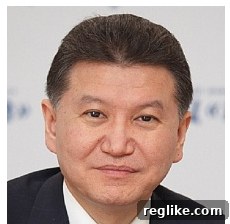
The core of SportAccord’s predicament lies with one of its key figures: Kirsan Ilyumzhinov. As a member of the SportAccord Council, described as the “executive organ of SportAccord,” Ilyumzhinov holds a position of considerable influence within the organization. However, his presence on the council has become a serious liability due to his inclusion on a critical list maintained by the United States government. In November 2015, the U.S. Department of the Treasury’s Office of Foreign Assets Control (OFAC) added Kirsan Ilyumzhinov to its Specially Designated Nationals and Blocked Persons (SDN) List.
The SDN List is a powerful tool used by the U.S. Treasury to combat global threats to national security, foreign policy, and the economy. Individuals and entities on this list are subject to severe sanctions, including asset freezes and prohibitions on transactions with U.S. persons. The official designation for Ilyumzhinov explicitly stated that he was sanctioned for “materially assisting and acting for or on behalf of the Government of Syria, Central Bank of Syria, Adib Mayaleh, and Batoul Rida.” This direct link to the Syrian government and associated individuals under sanctions is the crux of the problem for SportAccord.
Ilyumzhinov’s background is notable, extending beyond his role at SportAccord. He is widely recognized as a wealthy Russian businessman and served as the former president of the Russian Republic of Kalmykia. Perhaps most prominently, he held the long-time presidency of the World Chess Federation (FIDE), an international organization governing the sport of chess. The OFAC announcement further detailed his historical financial ties, including links to transactions involving Khuri-associated companies as early as 1997, and his ownership or control of the Russian Financial Alliance Bank alongside Khuri. The press release also referenced past controversies, noting that an advisor to Ilyumzhinov, during his tenure as President of Kalmykia, was convicted in Russia in 1999 for the murder of an opposition journalist who was reportedly investigating an offshore business registration mechanism in Kalmykia tied to Ilyumzhinov. Russian authorities subsequently closed this mechanism, concluding it was being used for illegal purposes. These details paint a picture of a figure with a complex history and significant international connections, which now directly impact SportAccord.
Following the announcement of the U.S. sanctions, Ilyumzhinov took steps to mitigate the immediate impact on his other leadership roles, specifically withdrawing from the legal, financial, and business operations of the World Chess Federation (FIDE), where he served as President. While this move demonstrated an understanding of the gravity of the sanctions, his continued presence on the SportAccord Council creates a direct conflict with ICANN’s compliance requirements.
ICANN’s Mandate: Navigating U.S. Sanctions Law
The primary concern for SportAccord stems from ICANN’s stringent adherence to U.S. law. As an organization incorporated in California, USA, ICANN is legally bound to comply with all U.S. laws, rules, and regulations, including the economic and trade sanctions program administered by OFAC. This obligation is clearly articulated in ICANN’s applicant guidebook for new top-level domains, specifically in Section 1.1, which states:
ICANN must comply with all U.S. laws, rules, and regulations. One such set of regulations is the economic and trade sanctions program administered by the Office of Foreign Assets Control (OFAC) of the U.S. Department of the Treasury. These sanctions have been imposed on certain countries, as well as individuals and entities that appear on OFAC’s List of Specially Designated Nationals and Blocked Persons (the SDN List). ICANN is prohibited from providing most goods or services to residents of sanctioned countries or their governmental entities or to SDNs without an applicable U.S. government authorization or exemption. ICANN generally will not seek a license to provide goods or services to an individual or entity on the SDN List.
This section unequivocally outlines ICANN’s legal responsibilities. It explicitly prohibits ICANN from providing goods or services to individuals or entities on the SDN List without explicit U.S. government authorization. Crucially, ICANN also states its general policy is not to seek such licenses, implying a strong preference to avoid any entanglement with sanctioned individuals or entities. The core question for SportAccord, and indeed for ICANN, is whether Ilyumzhinov’s role as a member of the SportAccord Council—an “executive organ”—constitutes the provision of “goods or services” by ICANN to an SDN or an entity significantly influenced by one. While the guideline directly addresses providing services *to* an SDN, the spirit of the regulation extends to avoiding indirect support or endorsement of sanctioned entities, especially when they hold significant leadership roles within an applicant organization.
SportAccord’s original application for the .Sport TLD, submitted prior to Ilyumzhinov’s sanctioning, included a section (11)d requiring the listing of individuals with legal or executive responsibility. While Ilyumzhinov was added to the SportAccord Council in 2015, *after* the initial application was submitted, his subsequent sanctioning introduces a profound compliance challenge. Even if his name wasn’t on the original submission, his current involvement with the organization’s governance body raises a significant red flag under ICANN’s policies and U.S. law. Organizations are expected to maintain compliance throughout the application lifecycle, and changes in the status of key personnel, particularly regarding international sanctions, necessitate immediate and transparent action.
Unanswered Questions and Potential Ramifications
The situation presents a complex dilemma with no easy answers. The ambiguity lies in whether a council member’s presence directly triggers the ICANN prohibition, or if it falls into a legal grey area. Given the robust nature of OFAC regulations and ICANN’s clear policy, it is highly probable that Ilyumzhinov’s involvement will, at a minimum, cause a significant delay in SportAccord’s application process, and at worst, lead to its ultimate rejection. ICANN is notoriously cautious about any potential non-compliance with U.S. law, especially when it involves international sanctions, which carry severe penalties for violations.
The potential ramifications for SportAccord are severe. If ICANN determines that Ilyumzhinov’s presence on the council constitutes a violation of its policies or U.S. law, SportAccord could be forced to remove him from the council, or face the revocation or indefinite suspension of its .Sport TLD application. This would be a significant blow, not only to SportAccord’s ambition to manage the .Sport domain but also to its international reputation. Furthermore, it could open a window for the previously challenged applicants, Famous Four Media or Donuts, to potentially re-enter the race if SportAccord’s application is indeed derailed.
When approached for comment on this sensitive issue, ICANN declined to provide any statement, indicating the delicate and possibly ongoing nature of their internal review. Similarly, inquiries made to several SportAccord employees starting on May 28 yielded a non-committal response. A representative, speaking earlier this week, confirmed that the inquiry had been forwarded to the appropriate person who was “looking into it.” The lack of official statements from either party underscores the seriousness of the situation and the cautious approach being taken as they navigate these complex legal and geopolitical waters.
This situation highlights the critical importance of rigorous due diligence and continuous compliance monitoring for any organization operating on a global scale, especially within the highly regulated internet governance space. For SportAccord, the path forward for the .Sport TLD is now fraught with uncertainty, dependent on how it addresses the serious questions raised by Kirsan Ilyumzhinov’s sanctioned status and how ICANN interprets its obligations under U.S. law.
Conclusion: A Test of Compliance and Governance
The SportAccord saga underscores the intricate challenges faced by organizations operating within the global domain name system, where geopolitical realities and national laws intersect with technical governance. The presence of Kirsan Ilyumzhinov, a sanctioned individual, on the SportAccord Council presents a profound test of ICANN’s commitment to U.S. compliance and SportAccord’s ability to rectify a potentially disqualifying issue. The future of the .Sport TLD—a valuable digital asset for the global sports community—now hinges not just on technical merit or organizational capacity, but on adherence to strict international regulations designed to prevent illicit financial activities and support. The coming months will reveal how this delicate situation is resolved, setting a precedent for how future TLD applicants will be vetted against an increasingly complex global regulatory landscape.