Verisign and ICANN ought to reverse course on third-level .name domains
The reputational damage will hurt both organizations.
Over the past week, two more registrants of third-level .name domains have filed reconsideration requests with ICANN, asking the board to reverse the organization’s decision to allow Verisign to eliminate their domain names.
I agree with them. This is one of those cases where ICANN and Verisign ought to recognize their mistake and reverse course since eliminating these registrations undermines trust in both organizations.
Verisign (NASDAQ: VRSN), the registry operator for .com, also manages the .name namespace.
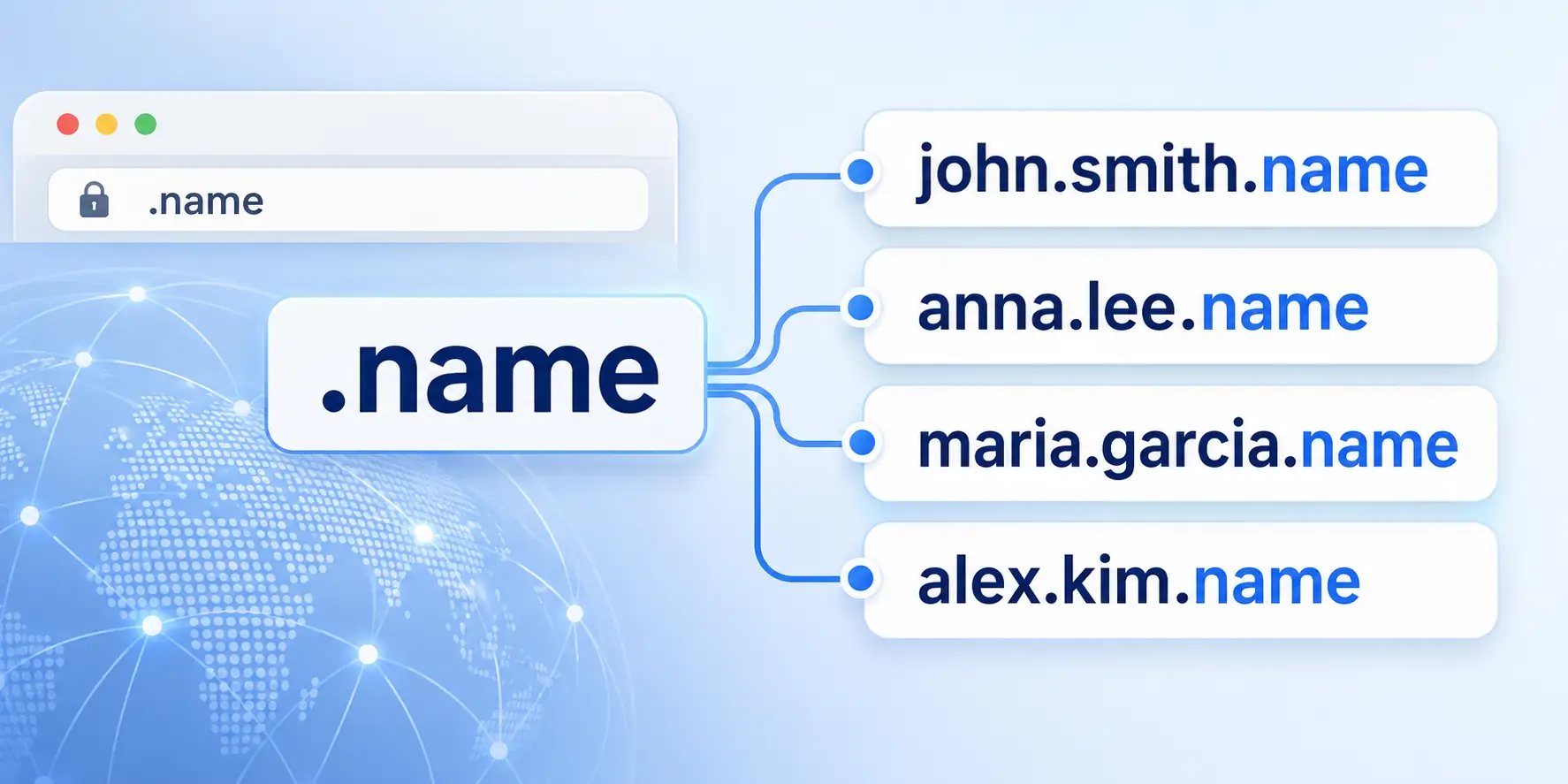
For decades, individuals have been able to register third-level .name domains, such as firstname.lastname.name. Verisign has decided it no longer wants to support these registrations, and ICANN approved its request to discontinue the service.
Verisign cites limited registrar support and declining usage as reasons for eliminating the domains. Regarding 22,000 third-level .name registrations exist, but Verisign states the “majority” are not in use.
Verisign’s financial rationale is easy to understand. These registrations generate a rounding error in the firm’s overall revenue, especially compared to the money it makes operating .com.
But for people who have used these domains for decades, losing them will be devastating.
Imagine having a domain name for 20 or 25 years. You’ve built a website on it, used it for your personal email address, and connected it to hundreds of online accounts.
Now imagine being told that your domain will simply cease to exist.
You’ll need to change the email address associated with every bank account, subscription, shopping site, social media account, and other service you’ve signed up for over the past two decades.
If you forget to update one of those accounts, you might lose access to it permanently.
Worse, if the underlying second-level domain becomes available for registration, someone else could potentially acquire it and receive emails intended for you. That creates a serious security risk.
As I previously noted, Neil Fraser registered neil.fraser.name nearly 25 years ago. He uses it for his website, email, and other services. His registrar told him the domain would be terminated in February, even though he had paid to renew it through 2040.
How can anyone reasonably be expected to track down every account associated with an email address they’ve used for a quarter century? And why ought to they have to?
I understand why Verisign wants to eliminate this service. It’s a legacy product with declining usage that requires disproportionate attention relative to the revenue it generates.
But we’re also talking regarding a firm that expects to generate between $1.745 billion and $1.755 billion in revenue this year, with operating income of $1.185 billion to $1.195 billion.
Surely a firm that size can keep supporting a relatively modest number of legacy registrations, even if it stops accepting fresh ones.
One of ICANN’s core responsibilities is ensuring the security, stability, and resilience of the domain name system.
How does eliminating thousands of existing domain registrations, some used for decades, advance that mission?
The domain name system depends on trust. People register domains expecting that, as long as they keep renewing them and follow the rules, the domains will remain theirs.
If ICANN is willing to approve eliminating long-established domains simply since a registry operator no longer finds them commercially attractive, what message does that send to other registrants?
Verisign also has reason to reconsider.
Its most notable business is operating .com, a contract that requires an ongoing relationship with ICANN and the U.S. government. The firm benefits from being viewed as a reliable steward of critical internet infrastructure.
It might be tempting to dismiss the complaints of a relatively modest number of .name registrants. But those people could become vocal critics of Verisign, and their concerns are likely to resonate far beyond the .name namespace.
There is a reasonable compromise: stop accepting fresh third-level .name registrations, but grandfather existing registrations.
Yes, this will create some overhead for Verisign. But it’s modest potatoes, and the firm ought to honor the expectations of the people who entrusted it.
ICANN and Verisign ought to work together to save these registrants from losing their domains. Now is the time to reverse course.