
Verisign’s Innovative Patent: Revolutionizing Expired Domain Drop Catching with a Dedicated Cache System
The intricate world of domain name registration is constantly evolving, driven by innovation aimed at improving efficiency, fairness, and system stability. At the forefront of this evolution stands Verisign, the world’s largest domain name registry, responsible for critical top-level domains like .com and .net. While the fundamental, highly competitive practice of “drop catching” — the frantic attempt to acquire valuable domain names moments after they expire and become available — has largely remained unchanged for years, Verisign continues to explore and patent novel systems to refine this process. Their latest innovation, described in a recently granted patent, introduces a groundbreaking concept: a separate “cache” pool specifically designed for expired domains.
Understanding the Challenge: The High-Stakes World of Expired Domains
Domain names have a finite lifecycle, progressing from initial registration through potential renewal periods, and eventually, expiration. When a domain expires, it doesn’t immediately become available to the public. Instead, it typically enters various stages, including a grace period, a redemption period, and finally, a “pending delete” status. It is during the fleeting moments after a domain is officially dropped from the registry that the intense competition of “drop catching” ensues.
The allure of expired domains is immense. Many carry significant value due to established backlinks, existing search engine optimization (SEO) authority, residual traffic, brand recognition, or simply being short, memorable, and desirable names. Consequently, registrars and domain investors employ sophisticated technologies to be the first to register these valuable assets. The prevailing method involves registrars barraging the registry with a multitude of “add” commands precisely at the moment a domain becomes available. This creates a virtual land rush, often placing considerable strain on the main registration system and sometimes leading to performance bottlenecks, not just for drop catchers but also for those attempting regular, new domain registrations.
Verisign’s Continuous Pursuit of a More Efficient Domain Ecosystem
Recognizing the challenges posed by the current drop-catching paradigm, Verisign has a long history of seeking solutions to streamline the process, enhance system integrity, and promote a fairer environment. This dedication is evidenced by several previous patents and system designs aimed at transforming how expired domains are handled:
-
Selling Pools of Drop-Catching Access to Registrars: One notable patent describes a model where Verisign could sell pre-allocated “pools” of drop-catching access to registrars. This system would move away from the direct, real-time “add command” competition towards a more structured allocation system, potentially reducing the load on the registry’s core infrastructure and offering a more predictable environment for registrars.
-
Detecting Registrar Collusion: Verisign has also designed systems focused on detecting and preventing registrar collusion. In a highly competitive market, the potential for unethical practices exists. By developing mechanisms to identify and deter collusive behaviors, Verisign aims to maintain the integrity and fairness of the domain acquisition process, ensuring that opportunities remain equitable for all participating registrars.
-
Selling “Encoding Domains” to Reserve Expired Domains: Another intriguing concept Verisign has contemplated involves selling “encoding domains.” While the precise mechanics can be complex, this system essentially proposes a method to reserve or pre-order expired domains using a unique identifier or “encoding.” This could potentially transform the speculative and real-time nature of drop catching into a more organized backorder-like system, allowing interested parties to signal their intent before a domain formally drops.
These past initiatives underscore Verisign’s proactive approach to optimizing the domain name system, ensuring it can handle the immense demand and inherent competitiveness of the market while maintaining robust performance for all users.
Introducing Patent 11,411,913: A Dedicated Cache for Expired Domains
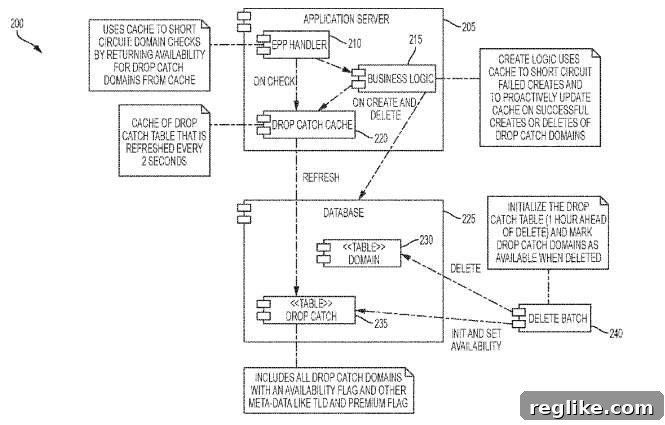
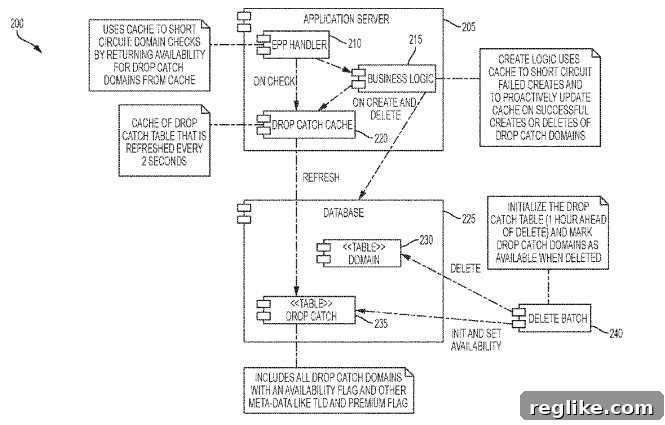
Continuing its trajectory of innovation, the U.S. Patent and Trademark Office recently granted Verisign patent number 11,411,913, titled “System and method for domain name registration using a cache.” This patent introduces a revolutionary architectural change designed to specifically address the challenges associated with expired domain drop catching.
The Core Mechanism: A Separate “Cache” Environment
At the heart of this patent lies the concept of a distinct, cached environment that operates separately from the registry’s main system. Here’s how the proposed system would fundamentally alter the drop-catching process:
-
Isolated Drop Activity: Instead of expired domains instantly becoming available in the main registration system, they would first enter this dedicated “cached environment.” This isolation means that the intensive, high-volume requests from registrars attempting to catch dropping domains would be directed to this separate pool, effectively offloading this activity from the primary system.
-
Strategic Time Delay: A critical feature of this system is a specified “time delay.” After a domain enters the cache pool, it would be held there for a predetermined period before it becomes available in the regular domain registration system. This delay is crucial for several reasons. It prevents registrars from simultaneously attempting to register domains in both the cached and the main systems, which could lead to conflicts and inefficiencies. It creates a controlled window for drop catching to occur within the isolated environment.
-
Enhanced System Integrity: The primary objective of this segregated system is to prevent drop-catching activity from interfering with the standard registration process for new domains or for domains that are not expiring. By channeling the burst of drop-catching traffic away from the main system, Verisign can ensure that users attempting to register fresh domain names experience minimal latency and maximum reliability.
Verisign originally applied for this patent in 2017, highlighting the significant time and strategic foresight invested in developing this advanced solution. This long-term vision demonstrates a profound commitment to optimizing the fundamental infrastructure of the internet.
Implications for the Domain Name Industry
The implementation of a system like the one described in patent 11,411,913 could have far-reaching implications across the domain name industry:
-
For Registries (like Verisign): This innovation offers a robust solution for managing peak loads during drop events. It enhances the overall stability and performance of the registry’s infrastructure, safeguarding it against potential bottlenecks and ensuring a smoother experience for all types of domain transactions. It also solidifies Verisign’s position as a leading innovator in domain name technology.
-
For Registrars: While the method of drop catching might change, the core competition will likely remain. However, the new system could enforce a more predictable and potentially fairer environment. Registrars would need to adapt their strategies to interact with the dedicated cache pool, possibly leading to more specialized tools and techniques for this specific environment. It might also reduce the need for brute-force “add command” spamming, encouraging more refined technical approaches.
-
For Domain Investors and End-Users: A more stable registry system benefits everyone. Regular users registering new domains will face less interference. For domain investors, while the race remains, the process could become more structured and less prone to system-wide glitches during crucial moments. The increased efficiency might also reduce the cost implications associated with maintaining highly aggressive drop-catching infrastructures.
-
Overall Market Stability: By isolating high-demand, time-sensitive operations, the patent contributes to greater overall market stability. It demonstrates a commitment to building a domain ecosystem that can scale efficiently and securely, accommodating intense competitive activities without compromising foundational services.
Conclusion: A Step Towards a More Refined Domain Ecosystem
Verisign’s patent for a dedicated “cache” pool for expired domains represents a significant step forward in the ongoing effort to refine and optimize the domain name registration process. By strategically segregating and managing drop-catching activity, this system promises to enhance the efficiency and stability of the main registry, ensuring that the frantic race for valuable expired domains does not impede the smooth functioning of everyday domain registrations. As the digital landscape continues to expand, innovations like these are crucial for maintaining a robust, fair, and high-performing domain name system, benefiting registrars, domain investors, and internet users worldwide.