
Domain Name Optimization: A Look at Contextual Domains and Search Engine Results
The realm of Search Engine Optimization (SEO) is constantly evolving, with marketers and website owners perpetually seeking innovative strategies to enhance their online visibility. One intriguing, albeit potentially controversial, concept revolves around leveraging multiple domain names to target specific keywords and improve click-through rates on search engine results pages (SERPs). This article delves into a patent filed by Verisign that explores this idea and examines its potential implications for the future of SEO.
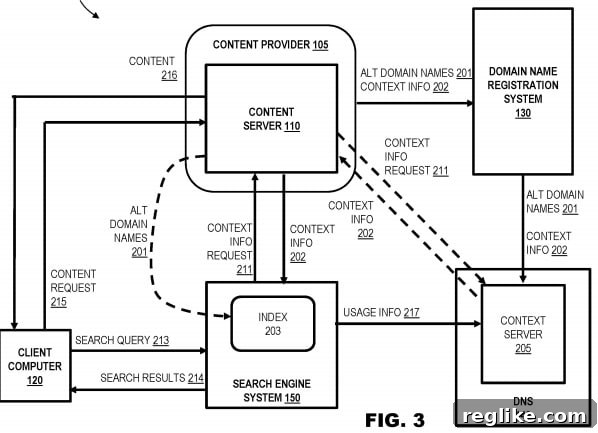
Verisign’s Patent: Domain Name Determination and Contextual Relevance
Verisign, a prominent player in the domain name industry, has been granted U.S. Patent #10,764,245 for a system called “Domain name determination.” This patent introduces the concept of website owners maintaining multiple domain names and having search engines display the most contextually relevant domain name based on the user’s search query. The fundamental idea is to enhance the relevance of search results by aligning the domain name displayed with the specific keywords used in the search.
This approach challenges the traditional SEO focus on optimizing a single primary domain. Instead, it proposes a strategy where businesses actively manage a portfolio of domain names, each tailored to specific keywords and search intents. This could significantly alter how businesses approach their online branding and marketing efforts.
An Example: Winchester Orthodontics and Keyword-Rich Domains
To illustrate this concept, consider a hypothetical dental practice named Winchester Orthodontics. Currently, they might operate under the primary domain WinOrtho.example. Under Verisign’s patented system, this practice could also register and maintain additional domains such as Winchester-Dentistry.example, Metro-Dentistry.example, Metro-Teeth-Whitening.example, and Winchester-Braces.example.
The beauty of this approach lies in its ability to target specific search queries. If a user searches for “Winchester braces,” the search engine could display Winchester-Braces.example in the search results instead of the primary domain, WinOrtho.example. This more precise matching of the domain name with the user’s search intent could lead to a higher click-through rate and ultimately drive more traffic to the practice’s website.
By strategically using keyword-rich domain names, businesses can improve their visibility in search results and attract users who are actively searching for specific products or services. This targeted approach has the potential to significantly enhance the effectiveness of online marketing campaigns.
Tracking Domain Usage and Optimizing for Search
The proposed system also includes a mechanism for tracking the performance of each domain name. Website owners would receive reports on how often each domain appears in search results, allowing them to identify and cull domains that are not performing well. This data-driven approach would enable businesses to optimize their domain portfolio and focus on the domains that are most effective at driving traffic.
This feedback loop is crucial for ensuring the long-term success of this strategy. By continuously monitoring and analyzing domain performance, businesses can refine their keyword targeting and maximize their return on investment. This iterative process is essential for adapting to changing search engine algorithms and user behavior.
The Potential of New Top-Level Domains (TLDs)
Interestingly, the patent’s background suggests that this system could be particularly beneficial for new top-level domains (TLDs). The patent highlights that many website operators, especially smaller businesses, may lack the technical knowledge or awareness to consider using lesser-known TLDs when registering a domain name.
The patent states:
The Internet provides hundreds of different top level domains (“TLDs”), such as .com, .net, .org, .gov, .gift, .kitchen, etc. However, many website operators lack sufficient technical knowledge to consider using lesser-known TLDs when obtaining a domain name. For example, a small dental practice may only be aware of the most common TLDs. As such, the dental practice may not consider a potentially better domain name from another TLD (e.g., .biz, .doctor, or .expert).
By utilizing this system, businesses could be encouraged to explore the use of more specific TLDs that align with their industry or niche. For example, a dental practice could use a domain with the .doctor or .dental TLD, while a restaurant could use a domain with the .restaurant or .cafe TLD. This could lead to more relevant and memorable domain names, further enhancing their online presence.
Challenges and Skepticism: Will Major Search Engines Adopt This Approach?
While Verisign’s idea is undoubtedly clever, its widespread adoption, particularly by major search engines like Google, remains uncertain. Google has consistently emphasized the importance of content quality and user experience over keyword-rich domain names. In fact, Google has actively downplayed the significance of exact-match domains in its search ranking algorithms.
The primary concern is that allowing website owners to manipulate their SERP click-through rates by displaying keyword-juiced domain names could lead to a decline in the quality and relevance of search results. Search engines prioritize providing users with the most accurate and informative results, and they may be hesitant to adopt a system that could be easily exploited for SEO purposes.
It is also worth considering the potential for abuse. Malicious actors could register numerous domain names containing irrelevant keywords and attempt to game the system to drive traffic to low-quality or even harmful websites. This could undermine the integrity of search results and erode user trust.
The Future of Domain Name Optimization
Despite the skepticism, Verisign’s patent raises important questions about the future of domain name optimization. While major search engines may not fully embrace this specific approach, it highlights the growing importance of contextual relevance in search results. As search algorithms become more sophisticated, businesses will need to find new and innovative ways to connect with their target audience and deliver relevant content.
One potential compromise could involve search engines allowing website owners to suggest alternative domain names for specific search queries, but ultimately retaining control over which domain is displayed in the search results. This would give businesses some input into the process while preventing them from directly manipulating the SERPs.
Ultimately, the success of any domain name optimization strategy will depend on its ability to provide value to users. Search engines are constantly evolving to prioritize user experience, and businesses that focus on creating high-quality content and delivering a seamless user experience will be best positioned to succeed in the long run.
Conclusion: A Novel Idea with Uncertain Prospects
Verisign’s patent for domain name determination presents a novel and intriguing concept for optimizing domain names for search engine results. While its widespread adoption by major search engines is unlikely in its current form, it underscores the ongoing importance of domain names in SEO and highlights the potential for leveraging contextual relevance to improve online visibility. The future of domain name optimization will likely involve a combination of technical strategies, creative content creation, and a deep understanding of user search behavior. As the digital landscape continues to evolve, businesses must remain adaptable and innovative in their approach to SEO to stay ahead of the curve.