
Revolutionizing Domain Privacy: Web.com Subsidiary Patent Distinguishes Whois Privacy from Proxy Services
Web.com subsidiary Network Solutions has secured a significant patent for its Whois Privacy service, drawing a clear distinction from traditional Whois Proxy models. This development is crucial for domain registrants seeking enhanced protection for their personal and business information in an increasingly complex digital landscape.
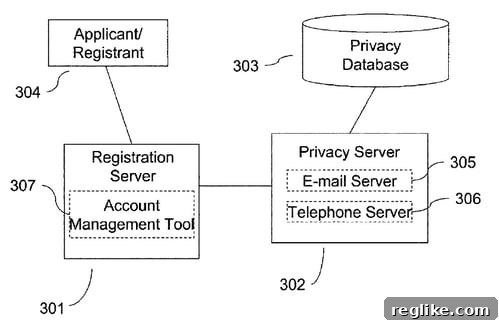
While industry giant GoDaddy has long held patents for domain name proxy services, this new patent granted to Web.com’s Network Solutions marks a pivotal moment. It officially recognizes and protects a distinct approach to safeguarding domain owner information, an approach that prioritizes direct registrant ownership while offering comprehensive privacy protection.
Understanding the Whois Database and the Need for Privacy
The Whois database is a publicly accessible directory containing registration details for every domain name on the internet. Mandated by ICANN (Internet Corporation for Assigned Names and Numbers), it was originally designed to provide transparency and facilitate the resolution of technical and legal issues related to domain ownership. However, in the modern digital age, the public availability of this data, which often includes the registrant’s name, email address, physical address, and phone number, poses significant privacy and security risks.
From unsolicited marketing emails and spam to more serious threats like identity theft, targeted harassment, and competitive intelligence gathering, the public Whois record has become a data goldmine for malicious actors. This growing vulnerability has driven the demand for robust privacy solutions, making the distinction between different service models more critical than ever.
The Core Distinction: Whois Privacy vs. Whois Proxy
Although often used interchangeably, “Whois Privacy” and “Whois Proxy” represent fundamentally different methods of protecting domain registrant information. The new patent highlights these crucial technical and legal differences, offering clarity to domain owners.
What is Whois Privacy?
U.S. Patent #9,817,979 (pdf), granted to Network Solutions, specifically covers a method for Private domain name registration. In this model, the domain name remains registered in the name of the actual, rightful registrant. The crucial element of privacy is achieved by replacing the registrant’s personal contact details – such as their email address, phone number, and postal address – with the contact information of the privacy service provider.
This approach means that while the privacy service acts as an intermediary for contact, the individual or entity who purchased the domain retains full legal and technical ownership. They remain the undisputed registrant on record, granting them complete control over their domain assets, including management, renewals, and most importantly, transfers. Network Solutions has long championed this approach, with its privacy service designed to provide this direct ownership model.
The primary benefits of this true Whois Privacy model are significant. It effectively shields personal information from public view, drastically reducing spam, preventing direct solicitation, and mitigating risks associated with identity theft or targeted harassment. Furthermore, because the registrant’s name remains on record as the official owner, domain transfers to other registrars typically proceed smoothly without requiring the privacy service to be first removed, simplifying domain management for the owner.
What is Whois Proxy?
In contrast, services like GoDaddy’s Domains By Proxy operate on a different technical and legal framework. These are technically proxy services rather than pure privacy solutions. Under a proxy service, the proxy company (e.g., Domains By Proxy) becomes the *technical owner* of the domain name, acting on the customer’s behalf. The customer effectively becomes a licensee or beneficiary, rather than the direct, registered owner.
While a proxy service also hides the customer’s personal details from the public Whois record, it does so by inserting the proxy company’s name and contact information as the official registrant. This can lead to certain challenges, particularly when it comes to domain transfers. As Web.com (NASDAQ:WEB) points out in its patent application, proxy services can create hurdles when transferring domain names. The proxy service often needs to be explicitly removed, and the domain ownership reverted to the actual customer, before a transfer to another registrar can be initiated. This adds an extra layer of complexity and potential delay to what should be a straightforward process.
Furthermore, in legal disputes or specific situations where absolute ownership needs to be proven, the indirect ownership structure of a proxy service can introduce ambiguities. While reputable proxy services have agreements in place to protect their customers, the direct legal ownership of the domain can be less clear-cut compared to a true Whois Privacy service.
The Significance of Network Solutions’ Patent #9,817,979
The granting of U.S. Patent #9,817,979 for “Private domain name registration” is a monumental achievement for Web.com and its subsidiary, Network Solutions. This patent not only legally protects their specific methodology for Whois Privacy but also solidifies the technical and conceptual distinction between privacy and proxy services within the intellectual property landscape.
This patent signals a clear competitive advantage. While GoDaddy has extensively patented proxy service models, Network Solutions now holds a key patent for a superior privacy model that prioritizes direct registrant ownership and ease of management. This could significantly influence how domain privacy services are developed and marketed across the industry.
Network Solutions’ long-standing commitment to this model is evident in their history. The company applied for a similar patent as early as 2004 but abandoned it. However, they persevered, filing this specific patent application in May 2012, which ultimately led to its issuance. This decade-long pursuit underscores the strategic importance Network Solutions places on differentiating its privacy offerings.
Ironically, in recent years, Network Solutions itself introduced a proxy-style service called Perfect Privacy, which, confusingly, was also referred to as a privacy service. This internal naming convention highlights the industry-wide blurriness that this new patent now aims to clarify, providing a definitive framework for what constitutes true Whois Privacy.
Why Domain Privacy Matters in Today’s Digital Landscape
The debate and legal differentiation between Whois Privacy and Whois Proxy arrive at a time when digital privacy is more crucial than ever. The internet has evolved dramatically since the inception of the Whois database, and the risks associated with public personal data have multiplied.
Combating Spam and Unwanted Solicitations
One of the most immediate and common benefits of Whois Privacy is the dramatic reduction in unsolicited emails and phone calls. Spammers and telemarketers routinely scrape the public Whois database for contact information, leading to an inundation of unwanted communications. A robust privacy service acts as a vital barrier, protecting registrants from this constant digital noise.
Protecting Personal and Business Information
Beyond spam, Whois Privacy is a critical tool for personal and business security. Individuals, especially those running home-based businesses or with public profiles, can face risks of identity theft, doxing, or harassment if their personal details are freely available. For businesses, keeping domain ownership details private can prevent competitors from easily discovering new ventures, expansion plans, or key personnel involved in projects. This level of confidentiality is paramount for maintaining a competitive edge and safeguarding sensitive information.
Navigating Domain Transfers and Management
As discussed, the architecture of a Whois Privacy service that maintains the actual registrant as the owner simplifies crucial administrative tasks. Domain transfers, which are common occurrences for individuals and businesses acquiring or divesting digital assets, become far more streamlined. The ability to transfer a domain without first disentangling it from a proxy service saves time, reduces potential errors, and ensures continuous control over the domain.
The Evolving Landscape of Domain Data and Regulations
The discussion around Whois Privacy is also set against a backdrop of evolving global data protection regulations. The implementation of the General Data Protection Regulation (GDPR) in Europe, for instance, has fundamentally reshaped how personal data in the Whois database is handled for registrants residing in the EU. In many cases, GDPR has made domain privacy the de facto standard, limiting the public display of personal data. This global shift towards greater data protection only amplifies the relevance and importance of services like the one patented by Network Solutions.
ICANN itself is continuously engaged in discussions regarding the future of Whois, exploring models for a “next-gen” Whois system that balances transparency with privacy concerns. In this climate of regulatory change and increased privacy awareness, having clearly defined and legally protected privacy solutions becomes even more valuable for both service providers and domain registrants.
Web.com and Network Solutions’ Commitment to Privacy
Web.com’s strategic move to secure this patent through Network Solutions underscores its long-term commitment to providing robust and legally sound privacy options for its customers. Network Solutions has been a pioneer in the domain registration space, and its sustained effort to protect this specific privacy model demonstrates foresight in an industry grappling with data protection challenges.
By differentiating its Whois Privacy service, Network Solutions empowers domain owners with a clearer choice: a service that ensures their personal details are protected while maintaining their full, undisputed ownership and control over their digital assets. This patent not only protects Network Solutions’ innovation but also serves as a benchmark for clarity in an often-confused area of domain management.
In conclusion, Web.com’s subsidiary Network Solutions has made a significant stride in the domain name industry by securing a patent for its Whois Privacy service. This development critically distinguishes true privacy, where the registrant retains ownership, from proxy services, where an intermediary technically owns the domain. For domain owners, this means a clearer understanding of their options for protecting personal information, ensuring smoother domain transfers, and maintaining ultimate control over their digital identities. As the digital world continues to prioritize data protection, the clarity and legal backing provided by this patent will undoubtedly shape the future of domain name privacy services.