
The Critical Void: Why MyICANN’s Absence Is a Major Setback for Transparency
For many within the global internet governance community, tracking the vast and dynamic landscape of ICANN’s activities was once made significantly simpler by a singular, indispensable tool: MyICANN. This essential service, designed to cut through the inherent complexity of a vital international organization, served as a beacon of transparency and efficient information dissemination. Yet, for over a year now, MyICANN has been conspicuously absent, leaving a critical void that directly impacts the ability of stakeholders to stay informed and engaged with the myriad decisions shaping the future of the internet.
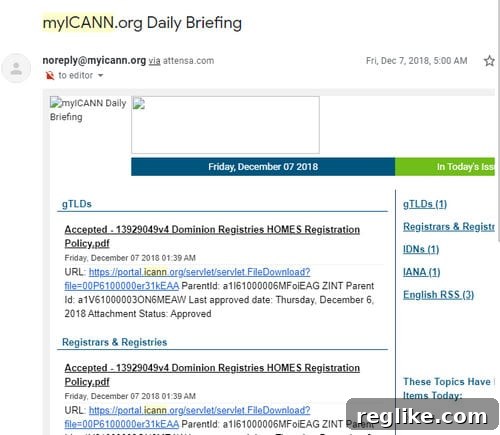
The Genesis of a Game-Changer: MyICANN’s Impact on Transparency
The introduction of MyICANN under the leadership of former ICANN CEO Fadi Chehadé marked a pivotal moment for the organization’s commitment to openness. Prior to its inception, navigating the depths of ICANN.org to find newly published documents, policy updates, meeting agendas, or public comment periods was often a formidable task. ICANN, by its very nature, generates a tremendous volume of information across various departments, working groups, and policy development processes. This deluge of data, while essential for its mission, often proved overwhelming for even the most dedicated participants.
MyICANN addressed this fundamental challenge with an elegantly simple, yet profoundly effective, solution: it notified users whenever new content was added to ICANN.org. This proactive notification system transformed the user experience from one of constant searching and potential oversight to one of effortless, timely awareness. It wasn’t about reinventing the wheel; it was about building a clear, accessible path to the information wheel itself. Whether it was a critical policy brief, an urgent announcement, or even information published on a Saturday when many might not be actively monitoring the site, MyICANN ensured that relevant updates were brought directly to the attention of those who needed them most.
Navigating the Labyrinth: The Inherent Complexity of ICANN.org
To truly appreciate the value of MyICANN, one must understand the intricate architecture of ICANN.org. As the central repository for all things ICANN, the website is a sprawling digital landscape housing countless documents, historical records, policy papers, community forums, and administrative updates. While comprehensive, its sheer size and multifaceted structure often make it notoriously difficult to navigate. Information, even critical information, can easily become buried several clicks deep, lost amidst a wealth of other content. This isn’t necessarily a flaw in design but rather a reflection of the organization’s expansive mandate and the sheer volume of its output.
The complexity of ICANN.org necessitates a robust system for drawing attention to new or particularly important items. Without such a system, stakeholders – ranging from governments and businesses to civil society organizations, technical experts, and individual internet users – are forced to either constantly monitor the site manually or rely on fragmented, incomplete information streams. This creates inefficiencies, increases the risk of missed deadlines for public comments, and ultimately undermines the principles of inclusive participation that ICANN strives to uphold.
The Pillars of Internet Governance: Why Transparency Is Non-Negotiable
Transparency is not merely a desirable trait for an organization like ICANN; it is a fundamental imperative. ICANN operates at the crucial intersection of technology, policy, and global society, overseeing the unique identifiers that ensure the internet functions as a single, global, interoperable network. Its decisions regarding domain names, IP addresses, and protocol parameters have far-reaching implications for billions of users worldwide. Given this immense responsibility, the organization must operate with the utmost openness to maintain legitimacy, foster trust, and enable meaningful accountability.
Without transparency, the risk of perception of bias, lack of public input, and erosion of trust escalates. Stakeholders need to understand how decisions are made, what data informs those decisions, and when and where they can contribute their perspectives. MyICANN directly supported this foundational requirement by making the flow of information transparent and easily accessible. It empowered individuals and organizations, regardless of their resources or technical prowess, to stay abreast of developments and engage in policy discussions that shape the internet’s future.
The Unseen Costs: The Impact of MyICANN’s Disappearance
The abrupt termination of MyICANN at the end of 2018 left a palpable void. What was once an effortless stream of critical updates has now reverted to a more fragmented and labor-intensive process. While some information is indeed syndicated through ICANN’s RSS feeds, these feeds are often insufficient for comprehensive tracking. They may not cover all types of content, or their format might not be as user-friendly as MyICANN’s consolidated briefings. The result is that many key updates are simply harder to find, requiring more time, effort, and specialized knowledge to locate.
This regression in information accessibility carries several hidden costs. For dedicated individuals and smaller organizations with limited staff, the burden of manually sifting through ICANN.org is substantial. It can lead to missed opportunities for engagement, particularly concerning public comment periods which often have tight deadlines. For the broader stakeholder community, it can create a sense of being disconnected from the organization’s ongoing work, potentially diminishing participation and reducing the diversity of voices in critical policy debates. The absence of a centralized, proactive notification system inevitably raises the bar for effective engagement, inadvertently marginalizing those with fewer resources.
The Promise of a “More Robust Version”: Addressing Future Needs
When questioned about MyICANN’s termination, an ICANN spokesperson indicated that the organization is working towards a “more robust version.” While the intention to improve services is commendable, there’s a significant risk in over-engineering a solution that was already highly effective due to its simplicity. The strength of MyICANN lay in its straightforward functionality: timely, comprehensive notifications delivered directly to the user.
A “more robust” version, while potentially offering advanced features, must first and foremost replicate and then enhance this core functionality. The focus should not be on adding complexity for complexity’s sake, but on ensuring that the primary goal of surfacing critical information remains paramount. Any new system must be intuitive, reliable, and capable of reaching a broad audience without requiring significant technical expertise or extensive customization. True robustness, in this context, means seamless reliability and ease of use, not necessarily a multitude of intricate features that might inadvertently obscure information rather than highlight it.
Rebuilding the Bridge: Essential Features for a Future MyICANN
As ICANN moves forward, the design of any replacement for MyICANN must be guided by clear principles of user-centricity and transparency. The ideal solution would encompass:
- Comprehensive Coverage: It must include notifications for all types of content published on ICANN.org, including policy documents, meeting materials, public comment periods, board resolutions, and press releases.
- Customizable Notifications: Users should be able to tailor their notifications based on specific areas of interest (e.g., gTLDs, ccTLDs, security, policy development), reducing information overload while ensuring relevant updates are received.
- Multiple Delivery Channels: While email notifications are crucial, offering additional options like in-app alerts (if a portal is developed), or even integration with popular communication platforms, could further enhance accessibility.
- Archive and Search Functionality: A well-organized archive of past notifications with robust search capabilities would allow users to easily revisit historical updates and track developments over time.
- Reliability and Simplicity: The system must be consistently reliable in its delivery and simple to understand and use, avoiding unnecessary complexity that could deter engagement.
- Timeliness: Notifications must be sent promptly after content is published, ensuring stakeholders have maximum time to review and respond to critical updates.
The goal is not just to replace what was lost, but to build an even more effective bridge between ICANN and its global community. This bridge must be strong, wide, and easily traversable by all.
Conclusion: The Enduring Importance of Accessible Information for ICANN’s Mission
MyICANN was more than just a notification service; it was a testament to ICANN’s commitment to transparency and inclusive stakeholder engagement. Its absence has undeniably made it harder for individuals and organizations to track, understand, and participate in the critical processes that govern the internet’s unique identifiers. As ICANN continues its vital work, fostering an open, secure, and resilient internet for all, the importance of robust and accessible information dissemination cannot be overstated.
The community needs a reliable, user-friendly mechanism that proactively brings essential information to the forefront, removing the burden of constant manual monitoring. While a “more robust version” is promised, the true measure of its success will be its ability to restore and ideally surpass the simple, yet profound, transparency that MyICANN once delivered. Reinstating such a service is not merely a matter of convenience; it is a strategic imperative for maintaining trust, fostering participation, and ensuring the continued health and stability of the global internet ecosystem.