
WIPO Domain Name Dispute Statistics: A Comprehensive Analysis of 2025 UDRP Trends
The World Intellectual Property Organization (WIPO), a leading authority in global intellectual property services, recently released its domain name dispute statistics for 2025. This data provides valuable insights into the ongoing battle against cybersquatting and the effectiveness of the Uniform Domain Name Dispute Resolution Policy (UDRP) as a mechanism for brand protection.
While the numbers reveal a record high in the total number of cases handled, a closer examination suggests a stabilization in the overall trend. This article delves into the key findings of the WIPO report, comparing them with previous years and exploring the implications for trademark holders and domain name registrants alike.
Relatively Stable Caseload at the Leading UDRP Service Provider
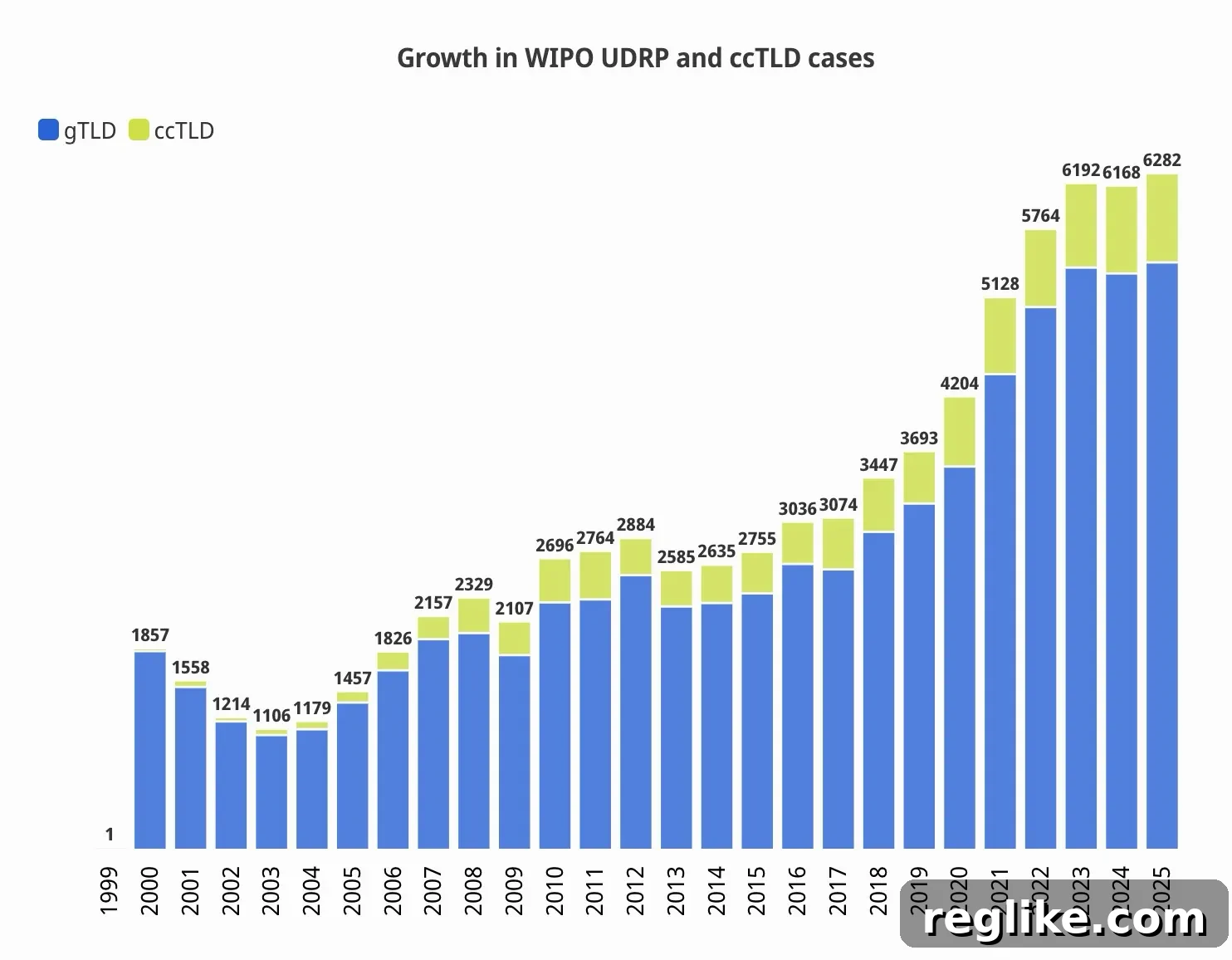
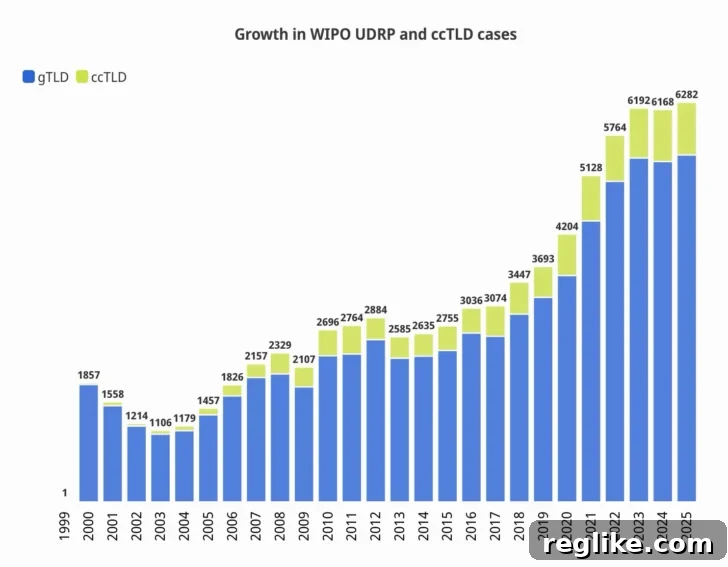
The data indicates that the number of domain name disputes handled by WIPO has remained relatively consistent over the past few years. While 2025 saw a record of 6,282 cases, the increase is marginal compared to the 6,192 cases in 2023 and 6,168 in 2024. This suggests that the initial surge in UDRP filings seen in earlier years has leveled off, indicating a possible equilibrium in the landscape of domain name disputes.
The slight increase could be attributed to various factors, including increased awareness of UDRP procedures among trademark holders, the continued growth of the internet and the proliferation of new domain extensions, and the ongoing efforts of WIPO to promote the UDRP as an efficient and cost-effective dispute resolution mechanism.
WIPO’s Official Data Release confirms these trends, highlighting the organization’s commitment to providing a neutral and reliable platform for resolving domain name disputes. The release further underscores the importance of brand protection in the digital age and the UDRP’s role in safeguarding intellectual property rights.
Beyond WIPO: The Broader UDRP Landscape
It’s important to note that WIPO is not the only provider of UDRP services. While it is the most widely utilized, other organizations, most notably FORUM (formerly the National Arbitration Forum), also handle a significant number of cases. Therefore, to gain a complete picture of the UDRP landscape, it’s necessary to consider the statistics from all providers.
According to UDRP.tools, a platform that tracks UDRP cases across different providers, a total of 8,236 cases resulted in a decision last year, a slight decrease from the 8,244 cases in 2024. This data, combined with WIPO’s figures, paints a more comprehensive picture of the overall volume of UDRP disputes being resolved globally.
The fact that the total number of UDRP cases across all providers remained relatively stable further reinforces the notion that the domain name dispute landscape has reached a state of relative equilibrium. While the problem of cybersquatting persists, the available mechanisms for addressing it appear to be effectively managing the volume of disputes.
Outcomes of UDRP Disputes at WIPO
The WIPO report also sheds light on the outcomes of UDRP disputes. In 2025, approximately 5% of disputes were denied, meaning the complainant (typically the trademark holder) was unsuccessful in their attempt to have the domain name transferred or cancelled. This could be due to various reasons, such as the complainant failing to prove that the domain name was registered and used in bad faith, or that the domain name was confusingly similar to the complainant’s trademark.
On the other hand, 15% of cases were settled before a decision was rendered. This indicates that in a significant number of disputes, the parties were able to reach a mutually agreeable resolution, often involving the transfer of the domain name to the trademark holder in exchange for compensation. Settlements can be a more efficient and cost-effective way to resolve disputes compared to going through the full UDRP process.
The remaining cases, representing the majority, resulted in a transfer or cancellation of the domain name. This means that the complainant was successful in proving their case and the domain name was either transferred to them or cancelled altogether. This outcome is a testament to the effectiveness of the UDRP as a tool for protecting trademark rights and combating cybersquatting.
Domain Extension Breakdown: .Com Still Reigns Supreme
The WIPO statistics also provide a breakdown of the domain extensions involved in UDRP disputes. Unsurprisingly, .com accounted for the largest share of disputes, reflecting its status as the most popular and widely used domain extension. The sheer volume of .com domain names in existence makes it a prime target for cybersquatters.
Following .com, the most frequently disputed domain extensions were .shop, .net, and .org. The popularity of .shop reflects the growing trend of online shopping and the increasing value of domain names related to e-commerce. The inclusion of .net and .org is consistent with their historical use and widespread recognition.
The prevalence of certain domain extensions in UDRP disputes highlights the importance of trademark holders monitoring these extensions for potential infringements. By proactively registering their trademarks as domain names in key extensions, brand owners can significantly reduce the risk of cybersquatting and the need to engage in costly UDRP proceedings.
Implications for Brand Protection Strategies
The WIPO domain name dispute statistics for 2025 provide valuable insights for brand owners seeking to protect their intellectual property online. The data reinforces the importance of a proactive and comprehensive brand protection strategy that includes:
- Trademark Registration: Registering trademarks in key jurisdictions is the foundation of any effective brand protection strategy. A registered trademark provides legal grounds for pursuing UDRP claims and other enforcement actions.
- Domain Name Registration: Registering domain names that match trademarks in key extensions, such as .com, .net, and .org, can prevent cybersquatters from registering those names and using them to infringe on trademark rights.
- Domain Name Monitoring: Regularly monitoring the internet for domain names that are confusingly similar to trademarks can help identify potential infringements early on, allowing for swift action to be taken.
- UDRP Enforcement: Utilizing the UDRP as a cost-effective and efficient mechanism for resolving domain name disputes is crucial for protecting brand rights and combating cybersquatting.
- Settlement Negotiations: Being open to settlement negotiations can often lead to a faster and more cost-effective resolution of domain name disputes compared to going through the full UDRP process.
Conclusion: The Ongoing Importance of UDRP in Protecting Brand Identity
The WIPO domain name dispute statistics for 2025 demonstrate the continued relevance and importance of the UDRP as a tool for protecting brand identity online. While the overall volume of disputes has stabilized, the problem of cybersquatting persists, and trademark holders must remain vigilant in protecting their intellectual property rights.
By understanding the trends and insights revealed in the WIPO data, brand owners can develop more effective brand protection strategies and proactively combat cybersquatting, ensuring that their brands are protected in the ever-evolving digital landscape.