
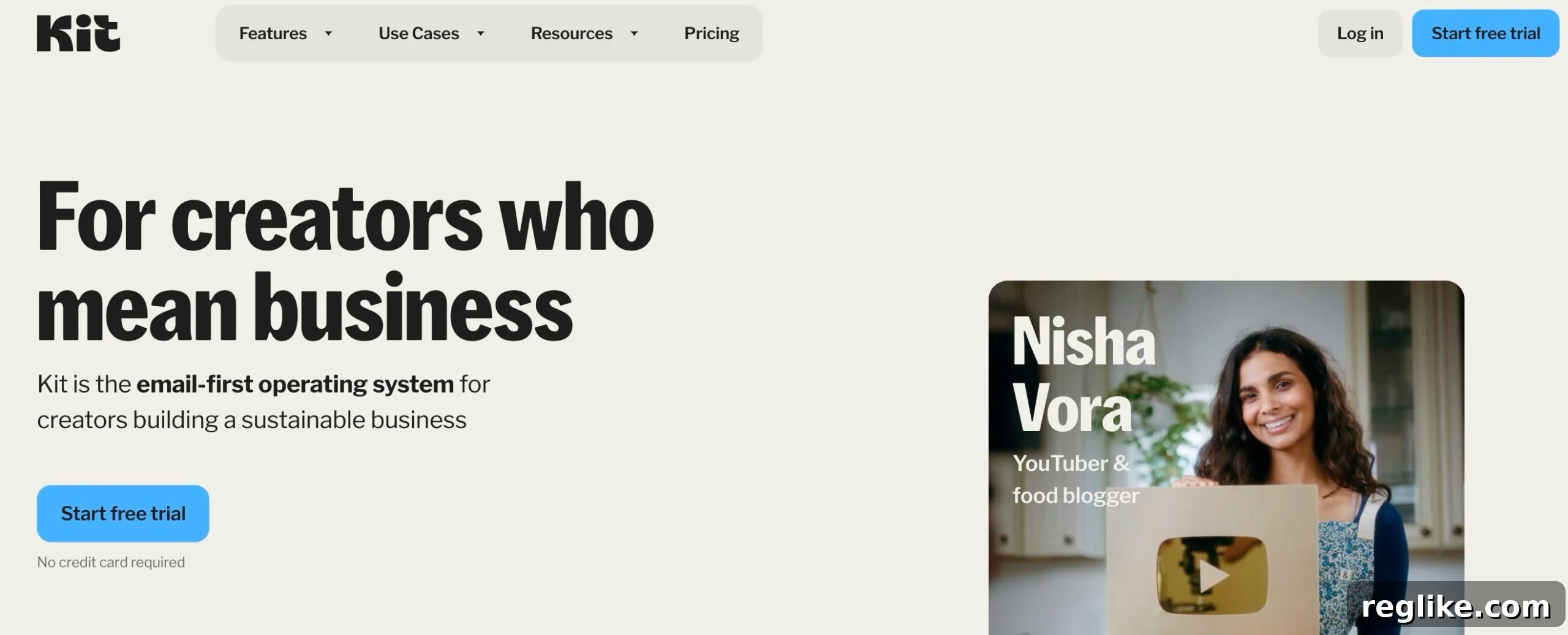
ConvertKit Officially Becomes Kit, Completing Major Rebrand with Kit.com Domain Migration
In a significant move for the creator economy, ConvertKit, the renowned email marketing platform, has officially completed its rebranding journey by migrating its primary domain name from ConvertKit.com to Kit.com. This transition marks the culmination of months of public rebranding efforts, signaling a strategic evolution for the company as it expands its offerings beyond traditional email marketing tools.

This long-anticipated domain migration sees ConvertKit.com now forwarding seamlessly to Kit.com, providing users with a fresh, concise, and forward-looking brand identity. The strategic decision reflects a deeper shift in the company’s vision, moving beyond just “converting kits” to empowering creators with a comprehensive suite of tools for audience building, engagement, and monetization.
The Vision Behind the Rebrand: Outgrowing “ConvertKit”
The journey to Kit has been a meticulously planned process, championed by founder Nathan Barry. As he shared on Domain Name Wire Podcast #498, the decision to rebrand stemmed from a clear realization: the company had simply outgrown its original name. ConvertKit, while descriptive of its initial focus on converting subscribers and driving sales through email, no longer encapsulated the broader range of services and aspirations the platform now holds for the creator economy.
Barry articulated that as the platform expanded its offerings to include features like landing pages, e-commerce integrations, and community tools, the name “ConvertKit” felt increasingly limiting. A simpler, more expansive name like “Kit” better represents a collection of tools, a complete package designed to support creators at every stage of their journey. This strategic foresight aims to position Kit as the essential toolkit for creators, regardless of their specific niche or business model.
The rebranding is not merely a cosmetic change; it’s a recalibration of the company’s identity to align with its ambitious growth trajectory and its commitment to being a holistic partner for modern creators. By shedding the specificity of “ConvertKit,” the company opens itself up to broader markets and innovative new features without being constrained by its initial moniker.
A Deliberate and Transparent Approach: “Rebranding in Public”
Nathan Barry’s approach to this rebrand has been remarkably transparent and deliberate, famously described as “rebranding in public.” This strategy involved openly sharing the process, the challenges, and the decision-making with the company’s community and the wider public. This level of transparency is not only refreshing but also smart, fostering trust and engagement with their loyal user base.
The “rebranding in public” methodology allowed the company to gather feedback, address concerns proactively, and manage expectations, significantly minimizing potential disruption. This approach stands in stark contrast to previous attempts at rebranding, such as the plan to change the name to Seva, which encountered unforeseen issues due to the term’s specific cultural and spiritual meanings. Learning from that experience, Barry adopted a more consultative and open process this time around, ensuring that the new brand name, “Kit,” would resonate positively and clearly with its global audience.
Such a public transition builds anticipation and allows users to adapt gradually to the new identity, making the final domain migration a logical next step rather than a sudden shock. It underscores a commitment to community and demonstrates a mature understanding of brand management in the digital age.
Navigating the Domain Name Change: Minimizing Disruption and Protecting Brand Equity
Changing a primary domain name is a complex undertaking fraught with potential risks, particularly concerning search engine optimization (SEO), user experience, and brand recognition. Kit’s team, under Barry’s guidance, implemented a meticulous process to minimize disruption. Key to this strategy was the seamless 301 redirect from ConvertKit.com to Kit.com. A 301 redirect is crucial for SEO, signaling to search engines that a page has permanently moved, thereby transferring the vast majority of its link equity and search ranking power to the new URL.
Beyond technical redirects, the process involved extensive communication with users, updating all marketing materials, product interfaces, and social media channels. A staggered approach to the public announcement and the technical migration also contributed to a smoother transition, giving search engines time to re-index content and users time to adjust.
A notable aspect of this domain strategy was the simultaneous acquisition of Kit.co alongside Kit.com. This dual acquisition is a shrewd move for several reasons:
- Brand Protection: Owning both .com and .co versions helps prevent cybersquatting and ensures that competitors or other entities cannot capitalize on the rebranded name.
- Future-Proofing: It provides flexibility for future branding or product lines, allowing Kit to utilize different domain extensions for specific initiatives if needed.
- User Experience: It minimizes user confusion, as many users might instinctively type .com or .co when recalling a brand name.
The careful planning involved in securing not just a new name but also the prime domain assets underscores the strategic thinking behind this rebrand. It demonstrates an investment in long-term brand integrity and digital presence.
SEO Best Practices During a Domain Migration
For any business contemplating a domain change, ConvertKit’s transition to Kit.com offers valuable lessons in SEO best practices. The primary objective during such a move is to retain as much organic search traffic and search engine rankings as possible. Key steps include:
- Comprehensive 301 Redirects: Implementing page-by-page redirects from the old domain to the new one. This is non-negotiable for preserving link equity.
- Google Search Console Updates: Using the “Change of Address” tool in Google Search Console to inform Google of the domain migration. Submitting updated sitemaps for the new domain is also critical.
- Internal Link Audits: Updating all internal links on the website to point to the new domain’s URLs, rather than relying solely on redirects.
- Backlink Outreach: Reaching out to high-authority websites that link to the old domain and requesting them to update their links to the new domain.
- Content Review: Ensuring all content, including meta titles and descriptions, is optimized for the new brand identity and relevant keywords.
- Monitoring Performance: Closely monitoring search traffic, rankings, and crawl errors in Google Search Console and other analytics tools post-migration.
By diligently following these steps, Kit has set itself up for a smoother SEO transition, minimizing the potential for a drop in organic visibility that can often accompany a major domain change.
Implications for the Creator Economy and Future Growth
The rebrand to Kit is more than just a name change; it’s a powerful statement about the company’s ambitions within the rapidly expanding creator economy. By positioning itself as a comprehensive “kit” of tools, the platform signals its intent to become an indispensable hub for creators seeking to build, grow, and monetize their audiences effectively. This move is particularly relevant as the creator landscape evolves beyond simple email lists to encompass diverse channels like social media, podcasts, video, and direct fan engagement platforms.
For existing ConvertKit users, the transition to Kit.com reinforces the idea that they are part of a forward-thinking platform that is continually adapting to their needs. For potential new users, the simplified name “Kit” is easier to remember, pronounce, and communicate, potentially lowering the barrier to entry and increasing brand recall.
This strategic shift anticipates future trends, allowing Kit to innovate and integrate new functionalities without being confined by a legacy brand identity. It empowers the company to expand into areas beyond email, such as advanced analytics, diversified monetization models, or even community-building features, all under the umbrella of a cohesive and versatile “Kit” for creators.
Conclusion: A Bold Step Towards a Broader Horizon
The successful rebrand and domain migration from ConvertKit.com to Kit.com represent a pivotal moment for Nathan Barry’s company. It exemplifies a thoughtful, transparent, and strategically executed business transformation. By embracing a simpler, more encompassing brand name, Kit is poised to strengthen its position as a leading platform in the dynamic creator economy.
This deliberate evolution, underpinned by meticulous planning for brand protection and SEO integrity, serves as an inspiring case study for any business considering a similar journey. Kit’s future, now encapsulated by a name that promises a complete toolkit for creators, looks brighter and more expansive than ever before.