
Mastering Domain Name Arbitration: An Essential Guide to UDRP and Cybersquatting Disputes
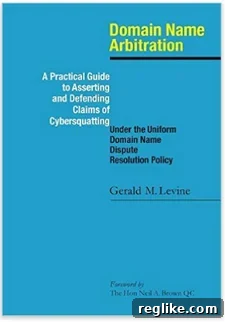 Navigating the complex world of domain name disputes requires a definitive resource, and Dr. Gerald Levine’s book, Domain Name Arbitration, A Practical Guide to Asserting And Defending Claims of Cybersquatting Under the Uniform Domain Name Dispute Resolution Policy, stands out as an indispensable tool. Authored by Dr. Levine, a distinguished New York attorney with profound experience in intellectual property law, this guide offers an authoritative deep dive into the specialized realm of domain name arbitration. Known for his extensive contributions to prestigious publications such as the Dispute Resolution Journal of the American Arbitration Association, the New York Law Journal, and various law school journals, Dr. Levine brings unparalleled expertise to this critical subject. This review, offered in a personal capacity by Chris LaHatte (ICANN Ombudsman), highlights the immense value this text provides to anyone involved in or impacted by online domain name disputes.
The Emergence of UDRP: Addressing Cross-Border Cybersquatting in the Digital Age
The dawn of the internet age brought with it unprecedented opportunities, but also novel challenges, particularly concerning intellectual property rights. When ICANN (the Internet Corporation for Assigned Names and Numbers) assumed oversight of the domain name system, a pressing need arose for a standardized mechanism to resolve conflicts between trademark owners and those who registered domain names identical or confusingly similar to existing trademarks. This phenomenon, widely known as “cybersquatting,” posed a significant threat to brand integrity and consumer trust. The inherent cross-border nature of domain name registration – where a domain name can be owned by virtually anyone, anywhere in the world, and registrars can be similarly dispersed globally – complicated traditional legal approaches to intellectual property protection.
The Uniform Domain Name Dispute Resolution Policy (UDRP) was therefore developed as a pragmatic solution to this global dilemma. It specifically targets disputes within generic top-level domains (gTLDs), such as .com, .org, and .net, rather than country code top-level domains (ccTLDs), which typically fall under national regulatory frameworks. While some ccTLD policies may draw inspiration from UDRP principles, Dr. Levine’s book primarily focuses on the widely applicable gTLD system. A useful appendix, however, provides a concise overview of key differences in dispute resolution policies within several English-speaking countries, offering valuable comparative insights for practitioners.
UDRP’s Transformative Role: Forging a Global Legal Framework
What truly sets the UDRP system apart is its unique jurisdictional foundation. Unlike traditional legal frameworks that are rooted in specific national laws or international treaties, the UDRP operates as a creation of ICANN, a non-profit organization registered in California but with a global footprint. Recognizing the imperative for a streamlined, international dispute resolution mechanism, ICANN collaborated with the World Intellectual Property Organization (WIPO) to establish the UDRP. Dr. Levine aptly describes this system as “transformative in offering a form liberated from national jurisdictions.” This groundbreaking approach has given rise to a body of law that is not beholden to any single country’s legal system or a multi-party treaty. In essence, the UDRP represents the first truly global body of law, a reflection of the borderless nature of the internet itself, providing a unified approach to resolving disputes that transcend geographical and legal boundaries.
This “liberated” jurisdiction provides a unique advantage, offering a faster and often more cost-effective alternative to traditional litigation in multiple national courts. It ensures that trademark owners worldwide have a consistent avenue to reclaim their rightful online presence without being entangled in the complexities of varied national legal systems. For legal professionals and brand owners operating globally, understanding this distinctive jurisdictional landscape is paramount, and Dr. Levine’s book meticulously dissects its nuances, making it accessible and actionable.
The Evolution of UDRP Jurisprudence: Building Precedent in a Novel System
Since its inception in 1999, the UDRP system has been the subject of academic scrutiny. However, Dr. Levine’s text distinguishes itself by offering the first practical guide that meticulously analyzes reported cases, distilling core principles from a vast body of decisions. This aspect is particularly noteworthy because, conventionally, arbitration is a private adjudication process where outcomes are rarely published. This lack of public decisions in traditional arbitration can sometimes lead to a diminishment of stare decisis – the principle of following precedent – which judges in common-law systems often lament. Yet, the UDRP system, remarkably, has published its decisions from the very beginning.
Dr. Levine brilliantly illustrates how a robust body of jurisprudence has evolved from these reported cases, developing principles in a manner analogous to a common-law jurisdiction. Parties leveraging the UDRP system frequently draw upon this accumulated wisdom, alongside established trademark law and other relevant legal sources. It is increasingly common to observe UDRP decisions citing previous panel determinations, demonstrating the growing weight of precedent within the system. Dr. Levine’s detailed factual and legal analysis of these cases serves as an invaluable resource, enabling parties to quickly grasp the relevant principles and strategize their claims or defenses effectively. This analytical depth transforms what could be a mere compendium of rules into a dynamic roadmap for understanding and influencing UDRP outcomes.
Navigating the UDRP Process: A Comprehensive Guide to Asserting and Defending Claims
Dr. Levine’s book is structured to provide an authoritative yet practical guide to the UDRP. It commences with a thorough outline of the historical development of the policy, delving into the legislative framework and architectural design of the UDRP, complemented by an insightful discussion of its jurisprudence. This foundational understanding is crucial for any practitioner or party engaging with the system.
Foundational Principles: Scope and Contractual Basis
A particularly vital section of the book addresses the contractual basis and scope of the UDRP. This is an area where many parties, regrettably, exhibit a lack of understanding, often leading to rejected claims. Dr. Levine carefully explains that the UDRP is explicitly designed to resolve disputes concerning abusive domain name registrations (cybersquatting) and is not intended for broader business disagreements, contractual conflicts between former partners, or other general commercial disputes. Misinterpreting the UDRP’s scope can result in wasted time and resources, making Dr. Levine’s detailed clarification in this chapter exceptionally beneficial for setting realistic expectations and ensuring claims are properly framed.
The Complainant’s Burden of Proof: Unpacking the Three Elements
The book then meticulously details the complainant’s burden of proof, outlining the comprehensive thresholds and tests required to establish a successful claim. A UDRP complainant must demonstrate three key elements:
- The domain name is identical or confusingly similar to a trademark or service mark in which the complainant has rights.
- The respondent has no rights or legitimate interests in respect of the domain name.
- The domain name has been registered and is being used in bad faith.
Dr. Levine provides invaluable guidance on establishing each of these elements. He dedicates a particularly useful section to the issue of unregistered trademarks, a critical point, especially in civil law jurisdictions where common law rights may be less recognized but can still form the basis of a successful UDRP claim. Understanding how to prove unregistered rights and the nuances of “confusingly similar” is essential for many trademark owners.
Defending Against a Claim: The Respondent’s Rights and Legitimate Interests
The other side of the coin is the respondent’s defense. Dr. Levine offers a careful analysis of how respondents can demonstrate rights or legitimate interests in a disputed domain name and rebut allegations of bad faith registration and use. This includes examining issues such as priority of use, common examples of legitimate interests (e.g., bona fide offering of goods/services, noncommercial use, or being commonly known by the domain name), and effectively proving a prima facie case. He also extensively covers evidence related to a respondent’s registration and use of a domain name in bad faith, providing examples and scenarios that illuminate the complexities of these determinations. This balanced approach ensures that both sides of a UDRP dispute are thoroughly understood, equipping both complainants and respondents with the knowledge to build strong arguments.
Procedural Elements and Strategic Considerations in UDRP Arbitration
The concluding chapters of the book delve into selected rules of the UDRP policy, ensuring readers are familiar with crucial procedural elements. This includes important matters such as dealing with single or multiple complainants, managing multiple domain names within a single proceeding, and the process of consolidating disputes. These procedural insights are critical for efficient case management and strategic planning.
Rules, Timelines, and Consequences of Default
Dr. Levine discusses the issue of timing for filing submissions, an often-overlooked yet vital aspect of UDRP proceedings. Adherence to deadlines is paramount, and the book clarifies the consequences of default, underscoring the importance of timely and complete submissions. Understanding these procedural intricacies can significantly impact the outcome of a dispute.
Panel Selection and Provider Choice: Strategic Decisions
While Dr. Levine provides a brief discussion on the constitution of the arbitral panel, there is an opportunity for even deeper exploration in this area. For instance, the choice between a single-member panel and a three-member panel is a critical strategic decision, particularly in complex cases. Experienced counsel in this field often hold strong views on the advantages of a three-member panel, believing it offers a more robust and nuanced consideration of intricate factual and legal issues. Expanding on the factors that should influence this choice – such as the complexity of the facts, the value of the domain name, or the potential for conflicting precedents – would be highly beneficial.
Similarly, the choice of the dispute resolution provider (e.g., WIPO, Forum, the Asian, Czech, and Arab Centres for Domain Dispute Resolution) is a significant strategic consideration that merits substantial discussion. While language preference plays a role, differences in administrative procedures, panelist pools, and sometimes even the perceived interpretive leanings of different providers can influence outcomes. WIPO, for example, handles the vast majority of UDRP disputes, but other providers offer specialized services or regional focus. A comprehensive analysis of the advantages and disadvantages of each provider would further empower practitioners in making informed choices for their clients.
Beyond UDRP: Court Proceedings and Remedies
Finally, Dr. Levine addresses the ramifications and interplay of UDRP proceedings with national courts of competent jurisdiction. He meticulously compares the remedies available under UDRP with those obtainable through court actions, such as relief under the Anticybersquatting Consumer Protection Act (ACPA) legislation in the United States. This section includes a concise discussion on relevant rules and judicial approaches in the United Kingdom, offering a valuable comparative perspective. Understanding when and how to pursue remedies in parallel or subsequent court proceedings is essential for a holistic approach to domain name enforcement.
An Indispensable Resource for Domain Name Litigation
In summary, Dr. Gerald Levine’s Domain Name Arbitration is definitively a guide for the practicing lawyer, domain investor, and anyone involved in the ICANN ecosystem, rather than a purely academic treatise. Its analysis of legal principles, however, is remarkably in-depth, making it highly probable that this text will be frequently cited in future UDRP panel decisions. The summaries of complex issues are consistently succinct and clear, aiding quick comprehension. While the absence of an index is a minor point of surprise, the fully detailed table of contents largely compensates for this. The author’s thoughtful provision of updates, described as a “work in progress,” further underscores the book’s commitment to staying current in a dynamic legal landscape.
The practical utility of this guide is amplified by its focus on reported decisions, with appropriate references to ICANN rules and accompanying commentary. Although UDRP decisions are generally accessible on provider websites, this text serves as a convenient “one-stop shop” for domain name litigators, consolidating essential information and analysis in a single volume. It is an indispensable addition to the professional library of any lawyer practicing in this specialized field, as well as domain investors and stakeholders within the ICANN community. Its comprehensive coverage and practical insights make it a highly recommended purchase for anyone navigating the intricate world of domain name disputes.