
Verisign’s latest patent application unveils a powerful solution for searching Internationalized Domain Names (IDNs) by providing dynamic translations and transliterations of standard ASCII search queries. This innovation promises to significantly simplify the discovery and registration of domains across diverse linguistic landscapes.
 In a significant step towards a more inclusive and global internet, Verisign (NASDAQ: VRSN), the esteemed registry operator for the .com and .net top-level domains, has officially filed a U.S. patent application detailing an innovative method for searching for Internationalized Domain Names (IDNs). This development, poised to reshape how businesses and individuals discover relevant domain names in a multilingual world, addresses a long-standing challenge in the domain industry.
Unlocking the Global Internet: Verisign’s Breakthrough in IDN Search
The internet, by its very nature, is a global phenomenon. However, its foundational technologies, including domain names, were initially conceived within an ASCII (American Standard Code for Information Interchange) framework. This historical context has presented unique challenges for non-English speakers and those wishing to establish an online presence using their native scripts. Internationalized Domain Names (IDNs) were introduced to overcome this barrier, allowing domain names to include characters from virtually any language script in the world.
What are Internationalized Domain Names (IDNs)?
An IDN is fundamentally a domain name that incorporates at least one character outside the traditional ASCII set. This means domains can feature characters from languages such as Arabic, Chinese, Japanese, Russian, Devanagari, and many others. The ability to register domain names in native languages is crucial for fostering digital inclusion and enabling a truly global online identity. Many top-level domains (TLDs), including .com, now support the registration of IDNs, allowing users to express their brand or identity in a manner consistent with their language and culture. Verisign itself has also begun offering transliterations of .com to the right of the dot, essentially providing a domain ending that phonetically mirrors ‘com’ in various languages.
The Challenge of Discovery: Why Verisign’s Patent Matters
Despite the growing adoption of IDNs, a significant hurdle has remained: how do users effectively search for them? If a user, particularly one accustomed to ASCII keyboards or seeking a global presence, wants to find a domain relating to a specific concept (e.g., “house”) but is unaware of its exact spelling or transliteration in various IDN scripts, the search process can be cumbersome, if not impossible. Traditional search engines might struggle to bridge the gap between an ASCII input and its myriad IDN equivalents across different languages and character sets.
This is precisely the problem Verisign’s new patent application aims to solve. The patent describes a sophisticated method designed to facilitate the discovery of IDNs by intelligently translating and transliterating ASCII search queries into their international counterparts. This innovative approach promises to democratize IDN accessibility, making the global digital landscape more navigable for everyone.
How Verisign’s IDN Search Technology Works
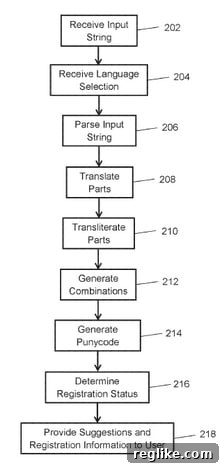
At its core, Verisign’s patented technology functions as an advanced “namespinner” with a powerful translation and transliteration engine. Imagine a user entering a simple ASCII word, such as ‘house’, into a search interface. Instead of merely returning ASCII domain results, this system would perform a multi-layered analysis:
- Translation: The system identifies direct translations of the ASCII search term into various target languages. For ‘house’, this might include ‘maison’ (French), ‘Haus’ (German), ‘casa’ (Spanish/Italian), ‘домо’ (Russian), or ‘家’ (Japanese/Chinese).
- Transliteration: Beyond direct translation, the patent also covers transliteration. This process involves converting characters from one script to another based on phonetic similarity, rather than meaning. For instance, if a brand name is entered in ASCII, the system could suggest how that brand name might be written phonetically in Cyrillic or Arabic scripts, even if a direct translation doesn’t exist or isn’t appropriate.
- Domain Availability Check: Crucially, after generating these translated and transliterated equivalents, the system then checks the availability and registration status of corresponding IDNs. This means a user could immediately see if “maison.com” or “家.com” (if supported as an IDN for the desired TLD) is available or already registered.
The graphic included in the original patent application (seen on the right) visually illustrates this concept, depicting the flow from an ASCII input to a diverse array of IDN suggestions. This mechanism significantly reduces the complexity and linguistic expertise required for users to explore the full spectrum of IDN options.
The innovation stems from the collaborative efforts of inventors Sumit Daryani and Craig Davies. The patent application was initially filed in March 2017 and was officially published by the U.S. Patent and Trademark Office, marking a public disclosure of this potentially game-changing technology.
Profound Benefits for a Globalized Internet
This patent holds immense implications for various stakeholders within the internet ecosystem:
1. For Businesses and Global Brands: Enhanced Brand Protection and Market Expansion
- Comprehensive Brand Protection: Companies can more easily identify and secure their brand names across multiple languages and scripts, preventing cybersquatting and protecting their intellectual property in international markets.
- Simplified Market Entry: Businesses looking to expand into non-ASCII speaking regions can swiftly discover relevant IDNs, enabling them to establish a localized online presence that resonates directly with target audiences.
- Improved Customer Reach: By securing IDNs that are easily discoverable through common ASCII search terms, businesses can make it simpler for international customers to find them online, fostering stronger global connections.
2. For Individual Users and Registrants: Greater Accessibility and Inclusivity
- Effortless Domain Discovery: Users no longer need to be fluent in multiple languages or familiar with various character sets to find a relevant IDN. A simple ASCII search can unveil a world of possibilities.
- Empowered Digital Identity: Individuals can more readily register domain names that truly reflect their native language, culture, and personal identity, enhancing their sense of belonging in the digital space.
- Breaking Language Barriers: The technology acts as a linguistic bridge, making the internet more accessible and inclusive for diverse user groups, ultimately enriching the online experience for everyone.
3. For Registries and Registrars: Stimulating IDN Adoption and Innovation
- Increased IDN Registrations: By simplifying the search and discovery process, this technology is likely to drive higher adoption rates for IDNs across various TLDs.
- Enhanced Search Tools: Registries and registrars can integrate this advanced search capability into their platforms, offering a superior service to their customers and differentiating themselves in a competitive market.
- Fostering Innovation: Verisign’s patent sets a new standard for domain search technology, potentially inspiring further innovations in multilingual internet tools.
Verisign’s Vision for a Truly Universal Internet
As the long-standing operator of the most critical parts of the internet’s addressing system (.com and .net), Verisign has a vested interest in the evolution and accessibility of the global internet. This patent application is a testament to their ongoing commitment to innovation and their vision for a more inclusive digital future. By investing in technologies that bridge linguistic divides, Verisign reinforces its role as a steward of a universally accessible and understandable internet.
The complexities of accurate translation and transliteration across hundreds of languages and character sets are significant. This patent highlights the necessity of robust linguistic databases, sophisticated algorithms, and continuous refinement to ensure the system provides relevant and accurate results. It’s not just about matching words; it’s about understanding context and phonetic nuances that are vital for meaningful domain discovery.
The Future Landscape of Domain Search
The implications of Verisign’s IDN search patent extend beyond mere utility; they point towards a future where language is less of a barrier in the digital realm. As global connectivity continues to deepen, the ability to seamlessly navigate and claim digital territory in any language will become increasingly vital. This patent lays groundwork for:
- More intuitive and user-friendly domain registration experiences worldwide.
- Greater cultural relevance and representation in domain names.
- A stronger foundation for global e-commerce and digital services.
In conclusion, Verisign’s patent for translating and transliterating ASCII search queries into Internationalized Domain Names represents a monumental leap forward in domain name technology. It elegantly addresses a critical gap in the existing system, empowering users and businesses to more effectively participate in the global digital economy. This innovation not only simplifies the search process but also significantly contributes to the vision of a truly multilingual, accessible, and inclusive internet for all.