
Mastering Domain Parking Arbitrage: Strategies, Risks, and Sustainable Alternatives
In the vast and ever-evolving landscape of online business, domain names stand as digital real estate. For decades, investors have sought innovative ways to monetize these assets, even when they remain undeveloped. One such method, often shrouded in controversy and high stakes, is domain parking arbitrage. This strategy, while promising massive income to a select few, also carries significant risks and ethical considerations. But what happens when this intricate dance of clicks and ad impressions targets the very community that understands it best: domainers themselves?
This article delves deep into the mechanics of domain parking arbitrage, examines its historical context, explores the inherent challenges, and critically analyzes a peculiar instance where arbitrage ads were aimed directly at domain investors. We’ll uncover why such a play is likely unprofitable and highlight more sustainable approaches to domain monetization.
Understanding Domain Parking Arbitrage: A High-Stakes Game
At its core, domain parking arbitrage is a digital marketing strategy designed to profit from the difference between the cost of acquiring website traffic and the revenue generated from ads displayed to that traffic. It’s essentially a form of pay-per-click (PPC) arbitrage, applied specifically to parked domain names. For the uninitiated, here’s a breakdown of how this often-speculative game works:
-
Traffic Acquisition: Buy Clicks from Search Engines or Ad Networks: The process begins by purchasing traffic, typically through advertising platforms like Google Ads (formerly AdWords) or other major search engines. Marketers identify specific keywords or audiences and bid on clicks, aiming to acquire visitors at a certain cost-per-click (CPC).
-
Redirect Traffic to a Parked Domain Page: Once a user clicks on the purchased ad, they are redirected to a parked domain page. These pages are typically provided by domain parking services (like the now-defunct Parked.com or others) and are populated with various contextual advertisements.
-
Monetize Visitor Clicks on Parking Ads: The ultimate goal is for the visitor, once on the parked page, to click on one of the displayed ads. If the revenue generated from these subsequent clicks (often measured by cost-per-impression, CPM, or cost-per-click, CPC) exceeds the initial cost of acquiring the visitor, then a profit is made. This positive difference is the “arbitrage.”
Historically, domain parking arbitrage gained significant traction, allowing some individuals to generate substantial income. Parked.com was once a prominent platform in this space. However, the landscape shifted dramatically when major players like Yahoo (NASDAQ: YHOO) began to crack down on these practices, specifically targeting those deemed to be manipulating traffic or violating terms of service. This intervention by key advertising networks ultimately led to a significant decline in the viability and acceptance of such direct arbitrage plays, making it much harder for individuals to participate profitably and ethically.
The Inherent Risks and Challenges of PPC Arbitrage
While the concept of buying low and selling high sounds appealing, domain parking arbitrage is fraught with challenges and ethical dilemmas. Every major domain parking company and advertising network explicitly forbids direct traffic arbitrage. Why? Because it often leads to low-quality traffic, inflated ad impressions, and a poor user experience. Here are some key reasons why this strategy is so precarious:
-
Terms of Service Violations: Most ad networks have strict policies against generating artificial traffic or using deceptive methods to generate ad clicks. Engaging in domain parking arbitrage can lead to immediate account suspension and forfeiture of earnings.
-
Negative ROI: The profit margin in arbitrage is extremely thin. The cost of buying clicks often closely matches or even exceeds the revenue generated from parking page ads. Factors like fluctuating CPCs, low click-through rates (CTR) on parking pages, and high bounce rates can quickly turn a potential profit into a significant loss.
-
Quality Score Penalties: Advertising platforms prioritize user experience and ad relevance. Sending paid traffic to a page with minimal content and an abundance of ads can negatively impact an advertiser’s Quality Score, leading to higher ad costs and reduced ad visibility.
-
Lack of User Intent Alignment: Users clicking on a search ad expect to find valuable, relevant content. A parked page, by its very nature, often fails to meet this expectation, leading to frustration and a high likelihood of the user quickly leaving the page without engaging with any ads.
-
Ad Fraud Concerns: Arbitrage schemes can inadvertently (or intentionally) contribute to ad fraud, making them highly undesirable for legitimate advertisers and platforms.
A Curious Case: Arbitrage Targeting Domainers
Given the general prohibition and inherent risks, encountering an active domain parking arbitrage operation is increasingly rare, let alone one that targets such a specific niche. Recently, an intriguing observation surfaced: an ad for domain parking arbitrage specifically aimed at—of all people—domainers. This scenario raises an important question: Would a domainer, someone deeply familiar with the domain industry and the mechanics of monetization, actually click on a domain parking ad?
The intuition suggests otherwise. Domainers understand the value of developed content, specific user intent, and sustainable monetization strategies. They are keenly aware of the pitfalls and low profitability associated with simple parked pages. Therefore, an ad targeting “parking domain name” that leads to a generic parked page is unlikely to resonate with this knowledgeable audience.
Consider the psychology: A domainer searching for “parking domain name” might be looking for information on alternative parking services, best practices for displaying ads, or advanced monetization techniques for their undeveloped domains. They are not typically looking for a simple click-to-ad conversion on a generic parked page. The intent mismatch here is glaring and points to a fundamental flaw in the arbitrage strategy’s targeting.
Analyzing a Real-World Example: DomainLoyal.com
Let’s examine the specific instance described: The search term was “parking domain name,” and an ad for DomainLoyal.com appeared. This immediately stood out as a potential arbitrage ad due to its generic nature and relevance to the search query, yet lacking any specific value proposition beyond domain parking itself.

Upon clicking the ad, the user was redirected to a classic parked page, displaying an array of contextual advertisements. This is a tell-tale sign of a domain parking arbitrage attempt – buying traffic from a search engine and attempting to earn more from subsequent ad clicks on the landing page.
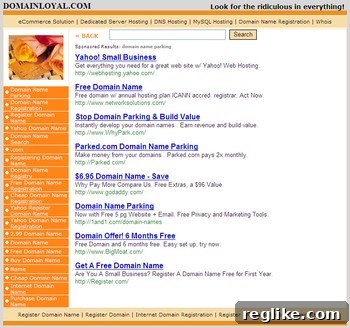
As the original observer correctly surmised, it is highly probable that this particular arbitrage play for DomainLoyal.com was not profitable. The reasons are multifaceted: the cost of acquiring clicks from a competitive keyword like “parking domain name” would likely be significant. The conversion rate of domainers clicking on ads on a generic parked page would be abysmally low. Furthermore, the revenue generated from those few clicks would scarcely cover the initial traffic acquisition cost, let alone generate a meaningful profit.
Sustainable Alternatives for Domain Monetization
Given the precarious nature of domain parking arbitrage, domain investors and online marketers should focus on more sustainable, ethical, and value-driven monetization strategies. Building genuine value around a domain is always the most profitable long-term approach. Here are some alternatives:
-
Domain Development: The most effective way to monetize a domain is to develop it into a functional website. This could be a blog, an e-commerce store, a service site, or an informational portal. Developed sites attract organic traffic, build authority, and offer diverse monetization options like affiliate marketing, direct advertising, product sales, or lead generation.
-
Affiliate Marketing: Create niche websites that review products or services and earn commissions for referrals. This strategy leverages targeted content and builds trust with an audience.
-
Lead Generation: Develop a site focused on collecting leads for a specific industry (e.g., insurance, home services) and sell those leads to businesses.
-
Direct Advertising: Once a website generates substantial traffic, advertisers may directly approach you to place banners or sponsored content, offering higher CPMs than generic ad networks.
-
Selling the Domain: For many domain investors, the primary monetization strategy is to buy desirable domain names at a low price and sell them at a higher price (domain flipping). This requires keen market insight and negotiation skills.
-
High-Quality Parked Pages (with specific intent): While simple parking is often frowned upon, some services allow for more intelligent parking solutions where specific, high-intent queries might be directed to very relevant offers. This is less about arbitrage and more about smart targeting.
Key Takeaways for Domain Investors and Online Marketers
The journey into domain monetization can be rewarding, but it demands strategic foresight and an understanding of the digital advertising ecosystem. Here are crucial takeaways:
-
Avoid Arbitrage with Caution: While the allure of quick profits from domain parking arbitrage is strong, the risks of account suspension, negative ROI, and ethical concerns far outweigh the potential benefits. Most major ad networks and parking providers prohibit it.
-
Focus on Value Creation: Sustainable success in domain investing comes from creating genuine value. Whether through content development, lead generation, or building a brand, a domain’s true potential is unlocked when it serves a purpose beyond a mere parking page.
-
Understand User Intent: Effective monetization hinges on aligning with user intent. An ad or a landing page that misunderstands what a user is searching for will inevitably fail to convert or generate meaningful revenue.
-
Stay Compliant: Always adhere to the terms of service of any advertising platform or domain service provider. Non-compliance can lead to severe penalties that harm your long-term business prospects.
In conclusion, while domain parking arbitrage once held a certain mystique for generating passive income, its efficacy and ethical standing have significantly diminished. The digital landscape favors authenticity, user experience, and value-driven content. For domainers and online entrepreneurs looking to monetize their digital assets, investing in genuine development and adhering to industry best practices offers a far more robust and rewarding path to success.