
Major Liquor Company Alleges Typosquatting in High-Stakes Domain Name Dispute Over Rufino.com
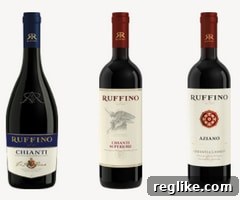
In a significant legal battle that highlights the persistent challenges of brand protection in the digital age, a Fortune 500 liquor giant, Constellation Brands, Inc., finds itself embroiled in a contentious domain name dispute. The company, renowned for its extensive portfolio of beverages, including the prestigious Ruffino wine brand, has asserted that the domain name Rufino.com is a clear case of typosquatting, designed to capitalize on its well-established trademark. This claim has sparked a lawsuit filed by a prominent domain name investor seeking to overturn an unfavorable Uniform Domain Name Dispute Resolution Policy (UDRP) decision, setting the stage for a compelling legal showdown in U.S. federal court.
The Core of the Conflict: Ruffino’s Brand vs. Rufino.com
At the heart of this dispute lies the venerable Ruffino brand, a subsidiary of Constellation Brands (NYSE: STZ) and a name synonymous with quality Italian wines. With a rich history spanning decades and a strong global presence, Ruffino SRL invests heavily in maintaining its brand integrity and protecting its intellectual property from infringement. The company views the domain Rufino.com as a direct threat, arguing that its single ‘f’ variation is intentionally misleading and constitutes an attempt to divert internet traffic from its legitimate online presence, or to exploit the goodwill associated with its globally recognized trademark.
Typosquatting, the practice alleged by Ruffino, is a common and often malicious form of cybersquatting. It involves an offender registering domain names that are slight misspellings or typographical errors of well-known trademarks. The primary goal of a typosquatter is typically to trick internet users who accidentally type the wrong address, redirecting them to competitor sites, phishing scams, or websites laden with advertising that generates illicit revenue for the squatter. For a brand like Ruffino, which has built decades of reputation and consumer trust, the potential for consumer confusion, brand dilution, and financial loss is a serious concern. Such threats often prompt aggressive legal action to safeguard its digital footprint and protect its consumer base.
Stanley Pace: A Domain Investor’s Defense and Extensive Portfolio
On the opposing side of this legal fence is Stanley Pace, a resident of Flower Mound, Texas, who is well-known within the domain industry for his extensive portfolio of digital real estate. Pace reportedly owns an astonishing 60,000 domain names, a significant portion of which, approximately 10,000, are registered as common surnames. His defense against Constellation Brands’ allegations hinges on the argument that “Rufino” is a legitimate and widely recognized surname, and therefore, his ownership of Rufino.com falls squarely within his legitimate practice of acquiring and holding common surname domains. This argument directly challenges the notion of “bad faith” — a crucial element that must be proven by a complainant in domain name disputes — by suggesting a legitimate reason for owning the domain that predates any specific intent to target or exploit the Ruffino brand.
The contention between a brand’s inherent right to protect its registered trademark and a domain investor’s legitimate right to register common words or surnames is a recurring and complex theme in domain name law. Pace’s claim raises important questions about the threshold for proving malicious intent versus legitimate speculative registration. The sheer volume of domains he owns suggests a comprehensive business model focused on general domain investing and the aggregation of valuable online assets, rather than a strategy built on specific brand targeting or trademark infringement. This aspect could serve as a powerful point in his favor in a court of law, differentiating his actions from those of a typical cybersquatter.
The UDRP Decision: An Initial Victory for Constellation Brands
The initial skirmish in this dispute unfolded under the Uniform Domain Name Dispute Resolution Policy (UDRP). This administrative procedure, established by the Internet Corporation for Assigned Names and Numbers (ICANN), offers a streamlined and relatively inexpensive mechanism for resolving domain name disputes without the complexities and costs of traditional litigation. Constellation Brands and its subsidiary, Ruffino SRL, formally filed a UDRP complaint against Stanley Pace. In their submission, they presented their case that Rufino.com was both confusingly similar to their established trademark and had been registered and used in bad faith.
For a complainant to prevail in a UDRP action, they must typically satisfy three cumulative criteria: (1) the domain name is identical or confusingly similar to a trademark or service mark in which the complainant has rights; (2) the registrant has no rights or legitimate interests in respect of the domain name; and (3) the domain name has been registered and is being used in bad faith. After a thorough review of the arguments and evidence presented by both parties, the UDRP panel ultimately sided with Constellation Brands. This decision granted Ruffino SRL control over the Rufino.com domain, marking a significant, albeit temporary, victory for the liquor company in its efforts to consolidate its online presence and protect its brand from perceived infringement and potential consumer confusion.
Challenging the UDRP: Stanley Pace Takes the Fight to Federal Court
Seeking Declaratory Relief and Damages for Reverse Domain Name Hijacking
However, UDRP decisions are not always the final word in domain disputes. While designed to be swift and efficient, they do not preclude either party from pursuing the matter further in a court of competent jurisdiction. Unwilling to concede control over a domain he believes he legitimately owns, Stanley Pace swiftly moved to exercise this right, filing a lawsuit in the U.S. District Court Eastern District of Texas. This decisive legal maneuver aims to overturn the adverse UDRP decision, seeking a definitive judicial ruling on the ownership and permissible use of Rufino.com.
Pace’s lawsuit is multifaceted, asking for several key forms of relief from the court. Firstly, he seeks “declaratory relief,” requesting a formal judgment that he is not engaged in cybersquatting with respect to Rufino.com. Cybersquatting, as defined by the Anticybersquatting Consumer Protection Act (ACPA) in the U.S., involves registering, trafficking in, or using a domain name that is identical or confusingly similar to a distinctive or famous trademark with a bad-faith intent to profit from that mark. By seeking declaratory relief, Pace aims to legally validate his claim of legitimate ownership and use, distinctly separate from any intent to exploit Ruffino’s trademark or mislead consumers.
Secondly, and perhaps more aggressively, Pace is seeking monetary damages for what he alleges is “reverse domain name hijacking” (RDNH). RDNH occurs when a trademark owner attempts to use the UDRP process in bad faith to wrongly seize a domain name from a legitimate registrant. This can happen if the complainant knows they have no legitimate rights or a weak case for the domain, or if they bring the complaint knowing that the registrant actually possesses a legitimate interest or right to the domain. If Pace can successfully prove that Constellation Brands initiated the UDRP proceedings without a reasonable belief in the merits of their case or with an ulterior motive to unfairly acquire the domain, it could result in significant financial penalties and a substantial blow to the liquor company’s legal standing and reputation. This claim underscores the high stakes involved, transforming what began as a routine domain dispute into a broader legal challenge concerning fair play and the potential misuse of administrative processes.
The Controversial “Competitor Ads” Claim and its Significance
Among Pace’s specific allegations against Constellation Brands is a critical claim regarding false representations allegedly made during the UDRP process. Pace asserts that Constellation Brands falsely claimed that the parked page at Rufino.com displayed advertisements for Constellation’s direct competitors. Such evidence, if true and accurate, would have strongly bolstered a brand owner’s UDRP complaint by demonstrating the domain registrant’s undeniable bad-faith intent to profit from the trademark by deliberately directing unsuspecting internet users to rival products or services.
However, Pace argues this crucial claim was unfounded and misrepresented. While the specific evidence Constellation would have presented in the UDRP is not publicly detailed in the original report, screenshots from past years, recorded by independent services like Screenshots.com, do not appear to show any liquor-related advertising links on Rufino.com. This discrepancy regarding factual representation could become a pivotal point in the federal lawsuit. If Pace can successfully prove that Constellation Brands knowingly misrepresented facts to the UDRP panel, it could serve as compelling evidence of reverse domain name hijacking, significantly strengthening his case and potentially weakening Constellation’s position by casting doubt on their overall credibility and good faith in initiating the UDRP.
(Note: It is strongly advised not to visit Rufino.com directly. The domain is currently parked with Above.com, and some zero-click landers previously observed have led to scam pages that triggered antivirus software warnings, indicating potential security risks.)
The Broader Implications for Domain Owners and Brand Protection Strategies
This evolving case between Stanley Pace and Constellation Brands is more than just a dispute over a single domain name; it represents a microcosm of the ongoing tension between legitimate domain investing and robust brand protection strategies in the digital ecosystem. For prolific domain registrants like Pace, owning a vast portfolio, including numerous surname domains, is a recognized and often profitable business model. The internet’s vastness means many common words and names are registered, some legitimately with good intent, while others are indeed registered with infringing or exploitative motives.
On the other hand, global brands like Ruffino face the constant and arduous challenge of policing the expansive digital landscape for potential infringements, counterfeits, and cybersquatting activities. The close similarity between “Ruffino” (two ‘f’s) and “Rufino” (one ‘f’) makes it a prime target for typosquatting, creating a legitimate and tangible concern for consumer confusion and subsequent brand dilution. The ultimate outcome of this federal lawsuit could establish important precedents, influencing how future UDRP panels interpret critical concepts such as “bad faith” and “legitimate interest” in cases involving common surnames or minor typographical variations of established trademarks. It will also significantly highlight the risks associated with alleging bad faith without concrete, verifiable evidence, particularly when claims of reverse domain name hijacking are brought forth by the domain registrant.
The legal representation for Stanley Pace in both the UDRP proceedings and the subsequent federal lawsuit is being handled by Howard Neu, a well-known and respected attorney within the domain name legal community. His involvement further underscores the complexity and significance of this case, given his extensive experience in representing domain registrants in similar high-profile disputes and navigating the intricate landscape of internet law.
Conclusion: A Crucial Test for Domain Name Law and Digital Rights
The ongoing legal battle concerning Rufino.com between Stanley Pace and Constellation Brands is poised to be a crucial test for the interpretations of domain name law, particularly concerning the delicate balance between preventing typosquatting and cybersquatting, and protecting legitimate domain ownership from potential reverse domain name hijacking. While the UDRP panel initially favored the brand owner, the federal court system offers a more thorough and potentially lengthier review, where different legal standards, broader discovery, and higher burdens of proof apply. The final outcome will undoubtedly have significant implications not only for the parties directly involved but also for the broader domain name industry, individual domain registrants, and brand owners worldwide.
This case serves as a stark and timely reminder of the intricate balance required to protect valuable intellectual property in the ever-evolving digital realm while simultaneously respecting and upholding the legitimate rights of domain registrants and investors. The ultimate judicial decision will undoubtedly shape future strategies for both proactive brand defense against digital threats and careful, legally compliant domain portfolio management, setting important benchmarks for digital property rights for years to come.