
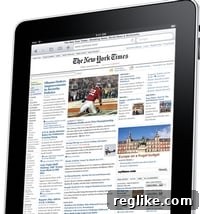
iPad Impressions: Navigating the Digital Divide Between Apps and the Open Web
The arrival of an iPad into my life, a thoughtful Father’s Day gift from my wife, sparked a fascinating journey into the nuances of modern digital consumption. Given her endearing inability to keep a secret, the device made its way into my hands almost immediately upon delivery, granting me several days to immerse myself in its capabilities. This initial period of exploration wasn’t just about enjoying a new gadget; it prompted a deeper reflection on the evolving interplay between dedicated mobile applications and the foundational architecture of the internet – domain names. How does a device hailed as a game-changer redefine how we access information and entertainment, and what does this mean for the principles of the open web?
The immediate experience with the iPad brought forth a critical observation regarding content access. Many companies, eager to establish a presence on this new platform, have developed corresponding apps for their existing websites. However, my early findings resonated strongly with the sentiments expressed by figures like Jason Fry: too often, these website-specific applications fall short of expectations. They frequently offer a subpar user experience compared to simply navigating to the actual website through the device’s browser. This often means less functionality, slower performance, or a clunkier interface. In essence, for many common tasks, direct web navigation via a familiar domain name proves superior and more efficient. This phenomenon strongly underscores the enduring value of domain names as primary gateways to online content, offering a frictionless and universally accessible experience that many dedicated apps struggle to replicate.
The Shifting Sands of Content Access: Apps vs. the Open Web
The debate between the utility of dedicated apps and the accessibility of the open web accessed via domain names is one of the most defining aspects of the mobile era. While apps offer the promise of tailored experiences, offline capabilities, and push notifications, they also introduce a walled garden approach. This often comes with a learning curve, requiring users to download, install, and update multiple applications, each with its own interface and permissions. Conversely, the open web, powered by domain names, offers instant access, universal compatibility, and a more fluid browsing experience without the need for additional software. The user’s ability to simply type a domain into a browser and instantly access information remains a powerful argument for the continued relevance and convenience of traditional web navigation. The initial scores, in my personal assessment, overwhelmingly favored the simplicity and robust functionality offered by direct domain name access on the iPad.
This isn’t to say that companies won’t vigorously attempt to redirect user traffic from their freely accessible websites to potentially monetized, paid applications. The strategy is clear: leverage the app store ecosystem to create new revenue streams. A particularly jarring instance highlighted this trend when I attempted to check a score update on Cardinals.com. Instead of the information I sought, I was met with an unskippable prompt urging me to download MLB’s official $15 iPad app. This tactic, which deliberately restricts access to easily obtainable information on the open web, represents a problematic “bastardization” of the internet experience. Moreover, this approach is exacerbated by Apple’s own rigid stance on web technologies, such as its decision to exclude Flash support, which historically rendered vast swathes of interactive web content inaccessible on its devices. While ostensibly driven by concerns over security and performance, such decisions inadvertently push users towards native applications, creating a less open and more controlled digital environment.
The consequences of such coercive strategies are multifaceted. For the user, it results in a fragmented and often frustrating experience. The expectation of free, instantaneous information, a cornerstone of the internet, is replaced by a paywall or a forced app download. For content creators, it presents a difficult dilemma: maintain an open, accessible web presence or attempt to monetize through an app store, potentially alienating a segment of their audience. This tension between immediate gratification on the open web and the curated, monetized experience of a native app underscores a fundamental challenge facing digital publishing and content distribution today. Ultimately, if I want to keep tabs on the Cardinals without succumbing to a $15 app purchase, I am driven to alternative, neutral platforms like ESPN.com, highlighting how aggressive app monetization can inadvertently benefit competitors.
The Unexpected Benefit: Curbing Typosquatting
While the proliferation of apps introduces certain challenges, it also brings an unexpected, albeit positive, side effect: a reduction in the efficacy of typosquatting. Typosquatting, the malicious practice of registering domain names that are slight variations or common misspellings of popular websites, thrives on user error. Its goal is to trick users into visiting fraudulent sites, often for phishing, malware distribution, or illicit advertising revenue. However, when users bypass web browsers entirely and navigate directly to content through a trusted, downloaded app, the opportunity for typosquatters to intercept traffic is significantly diminished. Apps are typically accessed directly from an app store or a home screen icon, eliminating the need to type in a domain name and thus removing the primary vector for these deceptive practices.
This shift in user behavior means that traffic that might otherwise be accidentally diverted to a typosquatter’s site is now routed directly to the legitimate brand’s application. For businesses, this offers an additional layer of brand protection and security, ensuring their users are accessing official content rather than falling victim to scams. While typosquatting remains a threat on the open web, the app ecosystem provides a somewhat walled-off, safer channel for brand interaction. This structural advantage, however, simultaneously reinforces the app-centric model, further consolidating power within the app stores and potentially reducing the discoverability of web-based content through traditional search engine optimization (SEO) reliant on domain names.
iPad as an eBook Reader: A Contender, Not a King
A significant question surrounding the iPad’s release was its potential to disrupt the nascent eBook reader market, dominated at the time by devices like the Amazon Kindle. After spending time with the device, it’s clear that while the iPad offers a capable platform for digital reading, it is by no means a “Kindle killer” for serious, long-form book consumption. The fundamental differences in display technology, form factor, and ergonomics create distinct user experiences that cater to different reading needs.
For reading full-length books, the iPad presents several considerable drawbacks. Firstly, its weight and size, while suitable for a tablet, are significantly greater than a dedicated e-reader. Holding it for extended periods can lead to wrist fatigue, a genuine concern for avid readers. More critically, the iPad’s vibrant LCD screen, while excellent for rich media, is a poor choice for text-heavy content over long durations. The backlit display can cause significant eye strain, especially in dimly lit environments, and becomes virtually unreadable in direct sunlight due – a severe limitation compared to the glare-free e-ink displays of devices like the Kindle. The Kindle’s e-ink technology mimics the appearance of paper, offering a reading experience that is much gentler on the eyes and perfectly legible in bright conditions, making it the undisputed champion for immersive book reading. The battery life difference is also stark, with e-readers lasting weeks on a single charge compared to the iPad’s hours.
However, the iPad shines brilliantly in another segment of digital publishing: news, magazines, and periodicals. Here, its full-color, high-resolution display and interactive capabilities offer a vastly superior experience compared to the monochromatic, static pages of an e-reader. Digital magazines come alive with interactive graphics, embedded videos, and dynamic layouts that are impossible to replicate on a Kindle. For news consumption, the ability to quickly browse visually rich articles, watch embedded reports, and navigate through sections with intuitive touch gestures makes the iPad an ideal device. This distinct advantage means the iPad could indeed carve out a significant share of revenue for periodical subscriptions, potentially impacting the market for digital newspapers and magazines that previously saw the Kindle as a viable, albeit limited, platform for text-only versions.
The iPad effectively bridges the gap between traditional print media and a dynamic digital format, offering a more engaging and visually appealing way to consume short-form, image-rich content. It caters to a different kind of reading – one that is more akin to browsing a physical magazine or newspaper, but with the added benefits of digital interactivity and instantaneous updates. Thus, while not supplanting the Kindle for its core purpose, the iPad successfully defines its own niche in the evolving landscape of digital reading, reinforcing the idea that different devices serve different aspects of our increasingly diverse content consumption habits.
Conclusion: A New Era of Digital Consumption
My initial days with the iPad have offered a profound glimpse into a rapidly evolving digital landscape. It’s a device that masterfully delivers rich, interactive experiences, particularly with multimedia and visually engaging content. Yet, its introduction has also illuminated the ongoing tension between the open, universal access provided by domain names on the web and the curated, sometimes restrictive, environments of proprietary apps. While the convenience and tailored functionalities of apps are undeniable, the push towards monetization and walled gardens raises important questions about the future of a free and accessible internet.
Furthermore, the iPad demonstrates that one device cannot be all things to all users. While it excels in certain areas of content consumption, such as vibrant periodicals and interactive media, it also highlights the continued relevance of specialized devices like the Kindle for specific tasks, such as dedicated long-form reading. The digital ecosystem is becoming increasingly diverse, with each platform and device carving out its own unique role. Understanding these distinctions is crucial for both content creators seeking to reach their audiences effectively and for consumers navigating the ever-expanding options for digital engagement. The iPad is more than just a tablet; it’s a powerful statement on the evolving nature of digital interaction, challenging us to consider the implications of where and how we choose to consume information in this brave new world.