
Unveiling Success: Why .Club Dominates the New gTLD Aftermarket
The digital landscape is constantly evolving, and with it, the art and science of securing a prime online identity. In the vast ocean of domain names, new top-level domains (gTLDs) have emerged as significant players, offering fresh opportunities for branding and digital presence. Among these innovative extensions, .Club has consistently proven itself as a top performer in aftermarket sales, a testament to its versatility and widespread appeal.
Understanding the Domain Aftermarket: A Critical Indicator of Value
The domain aftermarket is where previously registered domain names are resold. It’s a vibrant marketplace reflecting real-world demand, perceived value, and the speculative investment potential of digital assets. For new gTLDs, aftermarket sales data is particularly crucial, as it offers a tangible measure of adoption, investor confidence, and the practical utility of these newer extensions beyond initial registrations.
Recently, NameBio, a leading domain sales data platform, shed light on the performance of various new gTLDs in this competitive aftermarket. Their published details provided invaluable insights into which of these extensions are truly resonating with buyers and investors.
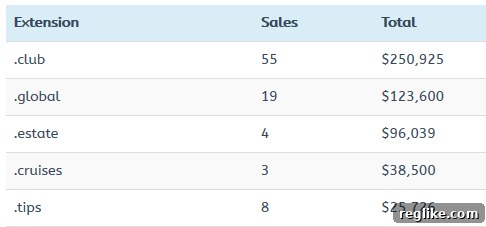
According to NameBio’s comprehensive analysis, based on publicly reported sales, the top new gTLDs by dollar volume painted a clear picture of market leaders. While the full chart is available directly on NameBio’s blog, the key takeaway was the undeniable strength of .Club. This particular domain extension has carved out a significant niche, demonstrating consistent demand and impressive sales figures that position it at the forefront of the new gTLD movement.
The Undeniable Appeal of .Club: More Than Just an Extension
The sustained success of .Club is not accidental. Its inherent meaning—a community, an association, a group with shared interests—makes it incredibly versatile and intuitive for a wide range of applications. From hobby groups and fan clubs to membership organizations and exclusive online communities, .Club offers an immediate sense of belonging and exclusivity. This intrinsic value proposition simplifies branding and marketing efforts, allowing businesses and individuals to immediately convey the purpose of their online space.
For instance, imagine a fitness studio using “strong.club” or a wine enthusiast group adopting “vintage.club”. These names are not just memorable; they are descriptive and emotionally resonant, fostering a stronger connection with their target audience. This adaptability is a core reason why .Club domains command premium prices and consistent interest in the aftermarket.
Strategic Partnerships and High-Value Sales Fueling Growth
.Club’s strategic approach to market penetration has also played a pivotal role in its aftermarket performance. Its exclusive deal with Sedo, one of the world’s largest domain marketplaces, ensures that .Club sales receive maximum exposure. This partnership not only facilitates transactions but also helps to establish and reinforce the perceived value of .Club domains within the domain investing community. Increased visibility often translates to higher bidding activity and, consequently, higher sales prices, creating a virtuous cycle of growth and investor confidence.
Furthermore, the sale of high-value .Club domains significantly impacts its overall market perception and dollar volume. The anticipated closing of a monumental sale like wine.club for $150,000 is a perfect example. Such marquee transactions grab headlines, demonstrate the serious investment potential of the extension, and elevate the average sale price, further cementing .Club’s position as a premium new gTLD. These landmark sales serve as powerful indicators of market demand and the potential for significant returns on investment for domainers.
Navigating the Nuances of Aftermarket Data: Caveats and Considerations
While NameBio’s data provides an invaluable snapshot, it’s essential to understand the inherent limitations and caveats, as highlighted by NameBio’s Michael Sumner. A key point is that NameBio’s database predominantly comprises public sales aggregated from marketplaces like Sedo, NameJet, and Flippa.
This means the data, while robust, doesn’t capture the entire market. For instance, the current absence of Afternic’s sales reports represents a significant blind spot. Afternic is a major player in the domain aftermarket, facilitating a vast number of transactions, especially for portfolio owners and quick sales. Without their contributions, the true scale and depth of the aftermarket, particularly for certain TLDs, may be understated. This underscores the fragmented nature of domain sales data and the challenges in obtaining a complete picture of market activity.
Beyond missing marketplaces, it’s also crucial to differentiate between various types of sales. Many registry-sold domains, particularly those considered “premium,” are offered at prices significantly higher than standard registration fees. These sales, while legitimate and indicative of a TLD’s overall value, are often direct transactions between the registrant and the registry. If these registry premium sales are reported on platforms like Sedo, they can inflate aftermarket figures without necessarily reflecting typical “domainer flips” – where an investor buys a domain and resells it for profit on the secondary market. Understanding this distinction is vital for accurate market analysis and investment strategies.
The inclusion of registry premium sales in aftermarket reports can, therefore, paint a rosier picture of secondary market liquidity than might genuinely exist for speculative investments. For investors focused on identifying profitable flip opportunities, it’s important to analyze whether the reported high sales volumes are driven by genuine secondary market demand or by initial premium offerings from the registry itself.
The Broader Impact of New gTLDs on the Digital Economy
The introduction of hundreds of new gTLDs by ICANN was a monumental shift designed to alleviate the scarcity of desirable domain names under traditional extensions like .com, .net, and .org. These new extensions opened up a world of possibilities, allowing businesses, brands, and individuals to create more specific, memorable, and contextually relevant online identities. From industry-specific options like .tech and .app to geographical TLDs like .london and .nyc, the domain name system has become richer and more diverse.
New gTLDs like .Club have fostered innovation in branding and digital strategy. They enable businesses to create unique brand positioning and reach niche audiences more effectively. For example, a company specializing in online education might prefer a .academy or .courses domain, instantly communicating their purpose. This expansion moves beyond the generic, offering a more tailored and impactful online presence.
While .com remains the undisputed king of domains, new gTLDs are steadily gaining traction, especially among forward-thinking companies and startups looking to differentiate themselves. The aftermarket for these extensions is a key barometer of their long-term viability and success. Strong aftermarket performance signals that these domains are not just being registered but are actively being traded and valued, indicating a healthy ecosystem and potential for future growth.
Investing in Domains: A Strategic Approach to Digital Assets
Domain investing, like real estate, involves identifying valuable assets and capitalizing on market demand. For new gTLDs, this means looking beyond initial registration costs to understand the potential for appreciation. Factors influencing domain value include keyword relevance, brandability, memorability, length, and the perceived authority or niche appeal of the TLD itself.
The aftermarket provides crucial liquidity for domain investors. Without a vibrant secondary market, investing in domains would be far riskier, as exit strategies would be limited. The ability to resell a domain, often at a significant profit, makes domain investing an attractive proposition for many. Data from sources like NameBio helps investors make informed decisions, identifying trending TLDs and understanding pricing benchmarks.
However, successful domain investing requires more than just following trends. It demands foresight, an understanding of market dynamics, and the ability to spot undervalued opportunities. It also involves continuous monitoring of registry policies, pricing structures, and evolving internet usage patterns.
The Future of Domain Names and Online Identity
As the internet continues to permeate every aspect of life, the importance of a strong, recognizable, and relevant online identity will only grow. New gTLDs like .Club are at the forefront of this evolution, offering creative and effective ways for individuals and organizations to establish their digital footprint.
The ongoing performance of .Club in the aftermarket suggests a promising trajectory, driven by its universal appeal and strategic market positioning. While data collection challenges persist, the insights gleaned from public sales reports are invaluable for understanding market sentiment and guiding future investment decisions. The domain market is a dynamic ecosystem, and the continued success of innovative TLDs like .Club underscores the endless possibilities in the quest for the perfect online address.
Ultimately, the story of .Club is a testament to the power of a well-conceived domain extension that meets a genuine need in the digital world. Its ability to foster community, enhance branding, and maintain strong aftermarket value positions it as a leader not just among new gTLDs, but in the broader domain industry.