
ICANN Labs: A Deep Dive into Domain Registration Practices and Why They Matter
ICANN, the Internet Corporation for Assigned Names and Numbers, stands as the global steward for coordinating the internet’s unique identifiers, including domain names. Its mission encompasses ensuring a stable, secure, and unified global internet. Given this monumental responsibility, one would naturally expect ICANN to exemplify the highest standards in all its digital endeavors, particularly concerning domain name registration. However, a recent look into the experimental projects spearheaded by ICANN Labs revealed practices that, while seemingly minor oversights, contradict the very best practices ICANN often advocates for.
ICANN Labs was established as an ambitious initiative to foster innovation across four crucial areas: discovery, conversation, communication, and education within the ICANN ecosystem. Partnering with the esteemed web developer and product design firm, Neo, ICANN Labs embarked on a journey to explore novel solutions and user experiences. The intention behind these experimental platforms is commendable, aiming to enrich community engagement and operational efficiency. Yet, the initial execution of domain name registration for these projects presented a striking paradox, raising questions about internal governance and adherence to fundamental digital asset management principles.
Understanding the Importance of Proper Domain Registration
For any organization, especially one as pivotal as ICANN, registering domain names correctly is not merely a bureaucratic formality; it’s a foundational element of digital security, legal ownership, and brand integrity. Best practices dictate that the registrant of a domain name should unequivocally be the organization itself, not an individual employee or a third-party contractor. This ensures clear ownership, facilitates seamless management, and mitigates a multitude of potential risks. Key elements of proper domain registration include:
- Organizational Registrant: The legal entity (e.g., “ICANN”) should be listed as the registrant organization.
- Corporate Contact Information: Official company addresses, phone numbers, and email addresses should be used for administrative, technical, and billing contacts.
- Centralized Management: Domains should be managed through a corporate account, not individual employee accounts.
- Legal Clarity: Proper registration prevents ownership disputes, especially if employees leave or relationships with contractors change.
- Security and Control: It ensures that control over critical digital assets remains with the organization, safeguarding against unauthorized transfers or hijacking.
- Brand Consistency: Reflects professionalism and reinforces the organization’s official presence online.
Diverging from these guidelines can expose an organization to significant vulnerabilities, ranging from reputational damage to severe legal and operational challenges. For ICANN, an entity that helps define and enforce standards for the global domain name system, such adherence is not just recommended; it’s expected.
The Curious Case of ICANN Labs’ Experimental Domains
ICANN Labs launched with two notable experimental applications, each with its own distinct web presence. These projects, designed to test innovative concepts, inadvertently brought to light an interesting lapse in domain registration oversight. It appears that no clear, centralized guidelines were initially established for how these crucial domain names should be registered, leading to a situation more akin to individual employees owning the domains rather than the organization or its designated partner.
Peer Advising Network: A Deeper Look
The first project, the Peer Advising Network, aims to create a platform where community members can seek and offer advice, fostering a collaborative learning environment. This commendable initiative was hosted at ICANNPeerLearning.org. A quick investigation into its WHOIS record, which publicly displays domain registration details, revealed a surprising registrant:
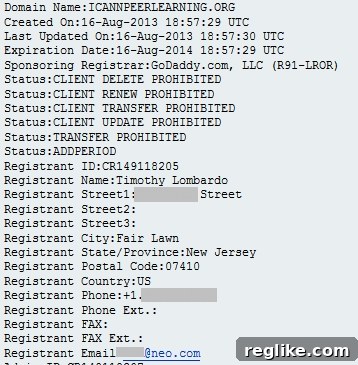
The domain was registered to Timothy Lombardo, an individual identified as a product manager on the ICANN Labs website. While Mr. Lombardo is clearly an integral part of the team, the domain’s registration did not list ICANN as the organizational registrant, nor did it attribute ownership to Neo, their development partner. More concerning was the use of what appeared to be Mr. Lombardo’s personal address and phone number in the WHOIS data. While credit is due for the use of a corporate email address, the personal contact details presented a clear deviation from standard organizational best practices.
Furthermore, the matching .com domain name was also registered by Mr. Lombardo, and similarly lacked a “registrant organization” field, leaving ambiguity regarding its official ownership. This scenario, where a critical digital asset for an organizational project is tied to an individual’s personal details, introduces an array of potential complications, including difficulties in transferring ownership, management issues if the individual leaves the organization, and potential legal disputes over intellectual property.
ICANN Roundtable: Another Instance of Individual Registration
The second experimental platform, ICANN Roundtable, located at ICANNRoundtable.org, aimed to facilitate discussions and collaborative exchanges within the ICANN community. The WHOIS information for this domain presented a similar pattern:
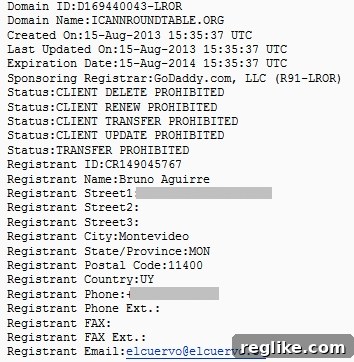
This domain was registered by Bruno Aguirre, a developer listed as part of the ICANN Labs team, presumably working with Neo. Echoing the previous case, the registration did not clearly indicate ICANN or Neo as the registrant organization. More significantly, Mr. Aguirre’s personal email address was listed, along with an address that did not correspond to Neo’s official Uruguay office. This further compounded the concerns raised by the Peer Advising Network’s registration. The absence of an organizational registrant in the WHOIS record for both the .org and its corresponding .com further emphasized the lack of centralized, corporate control over these vital digital assets.
The Broader Implications: Why This Matters for ICANN
While these might seem like minor oversights in the context of experimental projects, the implications are far-reaching, especially for an organization of ICANN’s stature and mission. ICANN’s role involves not only managing the internet’s naming system but also promoting best practices for registrars and registrants worldwide. When ICANN itself appears to deviate from these principles, it raises several critical questions:
- Credibility and Authority: How can ICANN effectively advocate for stringent domain management standards if its own projects do not adhere to them? This creates a perception of “do as I say, not as I do,” potentially undermining its authority and credibility.
- Legal and Ownership Risks: Tying organizational assets to individual employees creates a legal minefield. What happens if an employee leaves? Who retains legal control over the domain? Such situations can lead to costly disputes, loss of access, or even domain hijacking, jeopardizing the continuity of the project and the organization’s digital footprint.
- Security Vulnerabilities: Personal contact information in WHOIS records, even if redacted for public viewing in some cases, can make individuals more susceptible to social engineering attacks. More critically, individual ownership can bypass corporate security protocols, making domains more vulnerable to unauthorized transfers or compromises.
- Operational Inefficiency: Managing domains through individual accounts rather than a centralized corporate system can lead to inefficiencies, lack of oversight, and difficulties in renewing or transferring domains.
- Brand Perception: Professional organizations are expected to maintain a consistent and professional digital presence. Discrepancies in domain registration can reflect poorly on the organization’s internal processes and overall professionalism.
The situation mirrors the classic “web-design-firm-owns-the-domain” scenario, but with an added layer of complexity. Instead of a third-party vendor potentially holding a domain hostage over unpaid bills, here we see internal projects where the critical ownership rests with individual employees. This inherently introduces greater risk concerning internal transfers, departmental changes, or even simple forgetfulness when an employee moves on, all of which could disrupt access and control over valuable digital assets.
Lessons Learned and the Path Forward
It is important to acknowledge that the initial oversight, while significant, has since been addressed. As a crucial update indicates, the domains for both Peer Advising Network and ICANN Roundtable have been updated to reflect ICANN as the official registrant. This swift corrective action underscores ICANN’s commitment to rectifying errors and aligning with established best practices. However, the incident serves as a vital reminder for all organizations, including those at the forefront of internet governance:
- Establish Clear Policies: Comprehensive internal policies for domain name registration, management, and renewal are essential, applicable to all projects, experimental or otherwise.
- Centralized Oversight: A dedicated team or department should oversee all digital asset registrations, ensuring compliance with established policies.
- Employee Education: Employees involved in launching digital initiatives must be educated on the importance of adhering to corporate guidelines for domain registration.
- Regular Audits: Periodic audits of domain portfolios can help identify and rectify any inconsistencies or deviations from best practices proactively.
- Lead by Example: Organizations like ICANN, which play a crucial role in setting global standards, have an amplified responsibility to consistently demonstrate adherence to those very standards.
Conclusion: Setting the Standard for Digital Asset Management
The journey of ICANN Labs, from its innovative inception to the discovery and subsequent correction of its domain registration practices, offers a valuable case study. It highlights that even organizations with the most profound understanding of the internet’s infrastructure can face internal challenges in maintaining best practices for their own digital assets. The initial individual registration of domains for ICANN Labs’ experimental projects, while perhaps an oversight driven by the agile nature of experimental work, presented clear risks to ownership, security, and institutional credibility.
The subsequent update, confirming ICANN as the official registrant for these domains, is a positive development. It demonstrates an organizational commitment to rectify errors and uphold the standards it champions globally. This entire episode serves as a powerful testament to the enduring importance of robust domain name management strategies for any entity operating in the digital realm. For ICANN, it reinforces the critical message that leading by example is not just desirable, but absolutely essential in its unique role as a steward of the global internet.