
A landmark decision by a WIPO panel has shed light on critical aspects of domain name disputes, particularly finding that a prominent motorcycle manufacturer, through its CEO, resorted to a UDRP complaint after failing to secure a desired domain name through commercial negotiation. This case underscores the serious consequences of abusing the Uniform Domain-Name Dispute-Resolution Policy (UDRP) process.
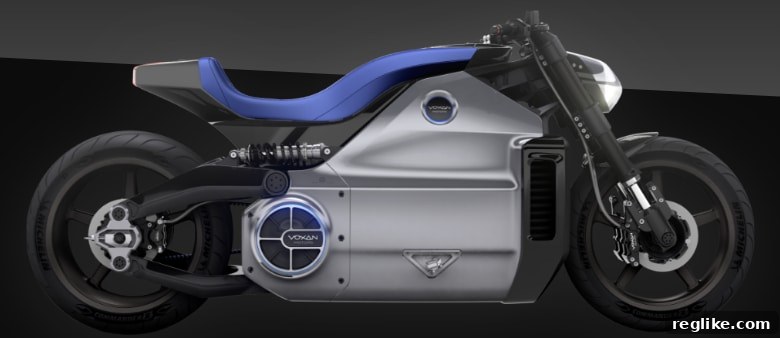
Navigating the Digital Frontier: An In-Depth Look at the Voxan.com Reverse Domain Name Hijacking Case
In the intricate world of domain name disputes, the case of Voxan.com stands out as a significant cautionary tale, illustrating the pitfalls of attempting to leverage intellectual property rights unfairly. Gildo Pallanca-Pastor, the esteemed CEO of Venturi Automobiles—a company renowned for its electric vehicles and the revival of the Voxan motorcycle brand—has been formally found to have engaged in what is known as Reverse Domain Name Hijacking (RDNH) concerning the domain name Voxan.com. This ruling, delivered by a World Intellectual Property Organization (WIPO) panel, serves as a stark reminder that the UDRP mechanism is designed for legitimate disputes against cybersquatting, not as a tool for forced domain acquisition after commercial negotiations falter.
Understanding the Mechanics of UDRP and the Gravity of Reverse Domain Name Hijacking
To fully grasp the implications of the Voxan.com decision, it’s essential to understand the framework within which such disputes are resolved. The Uniform Domain-Name Dispute-Resolution Policy (UDRP) was established to provide an efficient and cost-effective means for trademark holders to combat cybersquatting – the bad-faith registration of domain names corresponding to their trademarks. For a UDRP complaint to succeed, the complainant must prove three elements: (1) the domain name is identical or confusingly similar to a trademark in which the complainant has rights; (2) the registrant has no rights or legitimate interests in respect of the domain name; and (3) the domain name has been registered and is being used in bad faith.
However, the UDRP system is not without its safeguards. One crucial protection is the concept of Reverse Domain Name Hijacking (RDNH). RDNH occurs when a complainant attempts to use the UDRP process in bad faith to unjustly wrest a domain name from a legitimate registrant. This can happen when a complainant knows or should know that they cannot prove all three elements of a UDRP complaint, yet proceeds with the filing. Findings of RDNH are rare but carry significant weight, signaling an abuse of the administrative process and a disregard for the principles of fair play in online commerce. Such a finding not only discredits the complainant but can also lead to further legal repercussions, as seen in the aftermath of the Voxan.com case.
The Genesis of the Dispute: Voxan.com and Its Path to VirtualPoint
The core of this domain dispute revolves around Voxan.com, a domain that carries significant branding potential, especially for a company like Venturi Automobiles, which has been instrumental in revitalizing the Voxan motorcycle brand. VirtualPoint, a company that notably operates the UDRPSearch service – a valuable resource for tracking UDRP decisions – became the owner of the disputed domain name. VirtualPoint acquired Voxan.com through a legitimate and transparent process: an expired domain auction hosted by GoDaddy earlier in the year. The acquisition cost was a modest $1,026, a standard sum for domains acquired through such channels, reflecting a fair market value at the time of auction.
When Negotiations Fail: The Road to a UDRP Complaint
The journey to the UDRP filing began when the Complainant, representing the interests of the Voxan brand, expressed a desire to acquire the Voxan.com domain. Rather than directly approaching VirtualPoint, the Complainant initially engaged a third party to initiate negotiations. This indirect approach, while not inherently problematic, can sometimes add layers of complexity to commercial discussions. The objective for the Complainant was clear: to secure the domain name for its esteemed motorcycle brand, seamlessly integrating its digital presence with its corporate identity and product line.
However, the negotiations proved to be challenging and ultimately fruitless. The parties found themselves far apart in their valuation of the domain. Pallanca-Pastor, on behalf of the Complainant, extended an offer of $40,050 for Voxan.com. While this was a substantial sum, reflecting the perceived value of the domain for the Complainant’s brand, it was met with a significantly higher counter-request from VirtualPoint, who sought $144,800. This substantial divergence in price expectations created an insurmountable impasse, effectively terminating the commercial dialogue. It was precisely at this juncture, following the breakdown of these purchase negotiations, that the Complainant opted to escalate the matter by filing a cybersquatting dispute with WIPO, initiating the UDRP process.
The Panel’s Unwavering Scrutiny: A Detailed Analysis Leading to RDNH
The WIPO panel, presided over by the experienced Panelist Andrew Lothian, undertook a meticulous examination of the arguments and evidence presented by both parties. Lothian’s detailed analysis ultimately led to a firm conclusion: the Complainant had engaged in Reverse Domain Name Hijacking. This finding was not made lightly but was the result of identifying several critical deficiencies and misleading representations within the Complainant’s submission. Panelist Lothian explicitly stated that the Complainant’s conduct was misleading and could have, under different circumstances—specifically, had VirtualPoint not robustly responded to the dispute—resulted in an erroneous panel decision, underscoring the severity of the Complainant’s approach.
The Deceptive Nature of Misleading Information
A significant factor contributing to the RDNH finding was the Complainant’s submission of inaccurate and misleading information regarding the domain’s history and VirtualPoint’s ownership. For instance, the Complainant erroneously asserted that VirtualPoint had owned Voxan.com since 2016 and had, at some point, directed the domain to a motorcycle-related website. Such claims, if left unchallenged, could paint a picture of bad-faith registration or use by the Respondent. However, a straightforward and easily accessible Whois history search would have immediately contradicted these assertions, revealing that VirtualPoint acquired the domain much more recently, in 2020, through a legitimate expired domain auction. This glaring discrepancy indicated either a severe lack of due diligence on the Complainant’s part or a deliberate attempt to present a distorted narrative.
Furthermore, the Complainant’s apparent oversight in examining only the registry’s Whois record, rather than the more comprehensive registrar’s record, when attempting to ascertain the domain’s ownership, was another point of contention. Relying on incomplete information, or at least basing the complaint on it, demonstrated either incompetence in preparing the case or a strategic omission designed to obfuscate the true facts. Such actions undermine the integrity of the UDRP process, which relies on accurate and verifiable information from all parties.
The Critical Omission of Key Negotiation Details
Beyond the factual inaccuracies regarding domain ownership, Panelist Lothian also admonished the Complainant for deliberately omitting crucial details concerning the prior commercial negotiations. The Complainant stated that VirtualPoint had offered the domain for sale for an exorbitant sum of $290,000, presenting this as evidence of bad faith on the part of the Respondent. While VirtualPoint did indeed make an initial, high counter-offer during the very nascent stages of the anonymous overture to purchase the domain, the Complainant failed to disclose that negotiations subsequently continued, leading to a much lower, more realistic asking price of $144,800 from VirtualPoint and the Complainant’s own final offer of $40,050.
This selective presentation of facts—highlighting an initial, high asking price while concealing the subsequent, more evolved negotiation figures—was deemed highly misleading. It created a false impression of price gouging without providing the full context of the commercial exchanges. This leads to a profoundly important point emphasized by Panelist Lothian:
That the Complainant might have been aware that its position was weak is suggested by the fact that, before abandoning negotiations, it made a final offer of the sum of USD 40,050 to purchase the disputed domain name.
This statement encapsulates a fundamental principle in domain disputes. It is highly improbable, indeed logically inconsistent, for a company that genuinely believes it possesses an indisputable and strong intellectual property right in a domain name to offer a substantial sum, such as over $40,000, to purchase it. Such an offer strongly indicates an underlying awareness of a weak legal position, implying that the Complainant understood the UDRP case was not a guaranteed win and that a commercial resolution was a more pragmatic path. Resorting to UDRP after making such a significant offer suggests an attempt to bypass fair commercial value through an administrative process, which is a hallmark of RDNH.
The Ripple Effect: VirtualPoint’s Legal Recourse
The consequences of the RDNH finding extended beyond the UDRP decision itself. Upon receiving the UDRP complaint, VirtualPoint did not merely defend its position; it took assertive legal action. VirtualPoint initiated a lawsuit against Venturi, the entity associated with the Complainant, in response to what it perceived as an unfounded and harassing UDRP action. This lawsuit, which remains active, represents a significant escalation, transitioning the dispute from an administrative panel to the courts. Such legal actions are a direct consequence of abusive UDRP filings and serve as a powerful deterrent against future attempts at Reverse Domain Name Hijacking. They underscore the financial and reputational risks involved for complainants who pursue UDRP cases without legitimate grounds.
The ongoing legal battle highlights the importance of due diligence and good faith in all aspects of domain acquisition and dispute resolution. For trademark holders, it emphasizes the need for a thorough assessment of the strength of their case before filing a UDRP. For domain registrants, it demonstrates that vigorous defense against unsubstantiated claims and, if necessary, counter-litigation, can protect their digital assets and uphold their rights.
Key Takeaways and Lessons Learned from the Voxan.com Case
The Voxan.com case offers invaluable lessons for all stakeholders in the domain name ecosystem:
- For Trademark Holders: Before initiating a UDRP complaint, conduct exhaustive due diligence. Ensure all facts are accurate, complete, and presented transparently. Understand that the UDRP is not a mechanism to acquire desired domains at below-market rates after commercial negotiations fail. A strong intellectual property right does not automatically entitle one to a domain name without adhering to the UDRP’s stringent criteria for bad faith registration and use.
- For Domain Registrants: Legitimate domain ownership, even if acquired through an expired domain auction, is defensible. Maintaining clear Whois records, documenting acquisition processes, and retaining records of commercial negotiation attempts can be crucial in defending against UDRP claims. Responding comprehensively and accurately to UDRP complaints is paramount.
- On the Integrity of the UDRP System: The WIPO panel’s finding of RDNH in this case reinforces the integrity of the UDRP. It demonstrates that panels are vigilant in identifying and penalizing abuses of the policy, ensuring that it remains a fair and balanced tool for resolving genuine cybersquatting disputes, rather than a weapon for aggressive domain grabs.
- Transparency in Negotiations: The case highlights the critical importance of full disclosure in dispute resolution. Omitting or misrepresenting negotiation details can severely undermine a complainant’s credibility and case.
Conclusion: Upholding Integrity in the Digital Realm
The Voxan.com Reverse Domain Name Hijacking case serves as a compelling narrative in the ongoing saga of intellectual property rights and domain name ownership in the digital age. It underscores the importance of adhering to ethical practices and procedural fairness within the UDRP framework. Gildo Pallanca-Pastor and Venturi Automobiles learned a costly lesson about the boundaries of domain acquisition strategies. The decision by Panelist Andrew Lothian reaffirms that the UDRP system is robust and capable of discerning legitimate grievances from opportunistic attempts to bypass fair commercial processes. As the digital landscape continues to evolve, cases like Voxan.com remind us that integrity, transparency, and respect for established legal mechanisms are fundamental to maintaining a just and equitable online environment for all.
BBLM Avocats represented Pallanca-Pastor and the Complainant in the UDRP proceedings. On the other side, diligently representing VirtualPoint and defending its domain ownership, were the legal experts from Lewis & Lin. The active lawsuit initiated by VirtualPoint against Venturi further emphasizes the profound and lasting impact of such UDRP findings on corporate reputation and legal standing.