
Tucows Charts a New Course: NASDAQ Listing and Strategic Reverse Stock Split Unpacked
In a significant strategic development poised to redefine its market presence, Tucows Inc. (TSX: TCX) is preparing for a dual listing on the esteemed NASDAQ Stock Market. This move, accompanied by a calculated 1-for-4 reverse stock split, signals the company’s ambition to broaden its investor base, enhance market visibility, and solidify its standing within the global internet services landscape. For long-term shareholders and new investors alike, this transition represents a pivotal moment, reflecting Tucows’ sustained growth and forward-looking strategy.
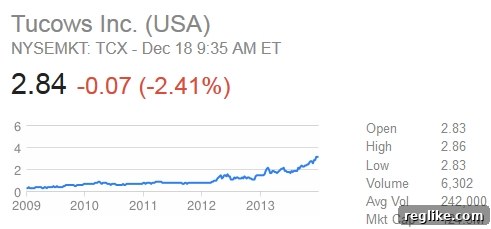
Over the past few years, Tucows’ stock performance has been a testament to its robust operational success and prudent financial management. The company has demonstrated remarkable resilience and growth, seeing its share price climb from under $1 to nearly $3, propelling its market capitalization to an impressive $125 million. This upward trajectory is not merely a market anomaly but a direct reflection of Tucows’ fundamental strengths and strategic initiatives.
The Foundation of Growth: How Tucows Built Momentum
Tucows’ journey to its current market position is rooted in a combination of organic growth and smart capital allocation. The company has consistently focused on building profitable business segments and generating strong cash flow, a time-honored approach to increasing shareholder value.
Sustainable Profitability and Diverse Business Segments
At its core, Tucows operates a diverse portfolio of internet services, primarily focusing on domain name registration and telecommunications. Key business units like OpenSRS and Hover are stalwarts in the domain wholesale and retail sectors, respectively, providing essential infrastructure for millions of websites globally. These segments are characterized by recurring revenue streams, offering stability and predictable growth. Furthermore, Tucows’ expansion into telecommunications with Ting Internet and Ting Mobile has positioned it as an innovative player in the ISP and mobile virtual network operator (MVNO) markets. Ting Internet, in particular, with its focus on fiber-to-the-home services, represents a high-growth area, capitalizing on the increasing demand for faster, more reliable internet connectivity. These ventures collectively underscore Tucows’ ability to generate substantial revenue and consistent profits, fueling its market capitalization growth.
Strategic Share Buybacks: Enhancing Shareholder Value
Beyond organic expansion, Tucows has actively engaged in share buyback programs. Share buybacks are a common corporate strategy where a company repurchases its own stock from the open market. This action reduces the number of outstanding shares, which in turn can increase earnings per share (EPS) and often the share price, assuming the company’s valuation remains constant or improves. For Tucows, these buybacks have been a clear signal of management’s confidence in the company’s intrinsic value and a commitment to returning value to shareholders, contributing significantly to the stock’s appreciation and market cap milestone.
The Strategic Rationale: Why NASDAQ Now?
The decision to list on NASDAQ marks a critical juncture for Tucows, promising a myriad of benefits that extend beyond mere financial metrics. While the Toronto Stock Exchange (TSX) has served as a valuable home, the NASDAQ offers a unique platform for technology and internet-focused companies seeking broader exposure and deeper capital markets access.
Enhanced Global Visibility and Market Exposure
Listing on NASDAQ, one of the world’s most prominent stock exchanges, provides Tucows with unparalleled visibility. It exposes the company to a vast, global pool of institutional investors, hedge funds, and retail traders who might not actively track companies solely listed on the TSX. This increased exposure is crucial for a company operating in the globally interconnected internet services sector, allowing Tucows to elevate its international profile and brand recognition significantly.
Access to Deeper Capital Pools and Liquidity
The NASDAQ market boasts considerably higher trading volumes and greater liquidity compared to many other exchanges. For Tucows, this means potentially easier access to capital for future growth initiatives, acquisitions, or research and development. Higher liquidity also benefits existing shareholders by facilitating smoother trading and potentially tighter bid-ask spreads, making it easier to buy and sell shares without significantly impacting the stock price.
Attracting Top-Tier Analyst Coverage
One of the most compelling reasons for the NASDAQ listing, as highlighted by the company, is the potential to attract more comprehensive analyst coverage. Many institutional investors and brokerage firms have policies that prevent their analysts from covering “penny stocks” – shares trading below a certain price threshold, often in the single digits. By moving to NASDAQ and concurrently boosting its share price through a reverse split, Tucows positions itself squarely within the radar of these influential analysts. Enhanced analyst coverage brings increased scrutiny, but more importantly, it provides investors with detailed research, financial models, and valuation reports, which can significantly influence investor sentiment and attract more sophisticated capital. It’s a common, if sometimes puzzling, reality that share price, rather than market capitalization, often dictates analyst interest, and Tucows is strategically addressing this dynamic.
Understanding the 1-for-4 Reverse Stock Split
To complement its NASDAQ listing, Tucows will execute a 1-for-4 reverse stock split. This corporate action, while often misunderstood, is a tactical move designed to achieve specific objectives, particularly in conjunction with a major exchange listing.
Mechanics of a Reverse Split
In a 1-for-4 reverse stock split, for every four shares an investor currently owns, they will receive one new share. Simultaneously, the price per share is adjusted upwards proportionally. For instance, if Tucows stock was trading at $2.50 per share before the split, after a 1-for-4 reverse split, its theoretical price would become $10.00 per share (4 x $2.50). It’s crucial to understand that while the number of shares decreases and the price per share increases, the total market capitalization of the company and the total value of an individual’s holding remain unchanged immediately after the split. An investor holding 400 shares at $2.50 (total value $1000) would, after the split, hold 100 shares at $10.00 (total value $1000).
Key Objectives: Meeting Requirements and Perceptual Benefits
The primary objective for Tucows’ reverse split is to boost its share price into a double-digit range. This is often a requirement for listing on major exchanges like NASDAQ, which may have minimum bid price rules to ensure the quality and stability of listed securities. Beyond compliance, a higher share price carries several perceptual advantages:
- Attracting Institutional Investors: Many institutional funds and mutual funds have mandates that prohibit or discourage investments in stocks trading below a certain price, often to avoid perceived “penny stock” volatility. A double-digit share price makes Tucows more appealing to these large-scale investors.
- Analyst Engagement: As previously discussed, a higher share price directly facilitates analyst coverage, leading to more informed market analysis and potentially a broader investor base.
- Enhanced Perceived Credibility: While purely psychological, a higher share price can sometimes be associated with greater company maturity and stability in the eyes of some investors, even though market cap is the true measure of a company’s size.
- Reduced Volatility (Potentially): Stocks trading at very low prices can sometimes exhibit higher percentage volatility with small absolute price changes. A higher nominal price might lead to a perception of reduced “chop” in trading.
The company expects trading on the NASDAQ to commence on December 30, under its existing ticker symbol, TCX. This strategic timing ensures a seamless transition into the new year with a refreshed market posture.
Broader Implications: Elevating the Domain Name Business
Tucows’ move to NASDAQ and its enhanced profile are expected to have a ripple effect, bringing more attention not just to the company itself but also to the broader domain name business. This often-overlooked yet critical segment of the internet infrastructure plays an indispensable role in the global digital economy.
The Unseen Backbone of the Internet
The domain name business, encompassing registration, management, and related services, is the fundamental addressing system of the internet. Every website, email address, and online service relies on this intricate system. Companies like Tucows, through their OpenSRS and Hover platforms, are at the forefront of providing these essential services to businesses and individuals worldwide. Increased spotlight on a prominent player like Tucows can highlight the stability, growth, and indispensable nature of this sector.
Validation for the Industry
As Tucows gains more recognition on a global platform like NASDAQ, it serves as a validation for the entire domain name industry. It underscores the financial viability and strategic importance of companies that facilitate online presence. This could lead to greater investment interest in other publicly traded domain registrars and related service providers, fostering innovation and competition within the ecosystem.
Future Outlook for Tucows and the Digital Landscape
With its dual listing and strategically adjusted share price, Tucows is well-positioned for future growth. The enhanced market visibility and access to deeper capital pools will empower the company to pursue new opportunities, whether through organic expansion of its Ting fiber network, strategic acquisitions in the domain space, or further innovation in internet services. This move reinforces Tucows’ commitment to long-term value creation and its role as a key enabler of the digital world.
Conclusion: A Bold Step Towards Global Leadership
Tucows’ decision to list on NASDAQ and undertake a reverse stock split represents a calculated and ambitious step forward. It is a clear indication of a company that has matured, found its footing, and is now ready to compete on a grander stage. By leveraging its proven business model, enhancing its market appeal, and drawing increased attention to the vital domain name and internet services industry, Tucows is not just changing its listing venue; it is fundamentally elevating its strategic trajectory. Investors and industry observers will undoubtedly watch with keen interest as TCX embarks on this exciting new chapter, poised for greater exposure, deeper analyst engagement, and sustained growth in the dynamic digital economy.