
Decoding the Silence: How a CEO’s Tweet Volume Can Signal an Impending IPO
In the fast-paced world of startups and tech innovation, a CEO’s social media activity often serves as a direct line to their company’s pulse. From candid insights into product development to celebratory announcements about new milestones, a CEO’s tweets can offer invaluable glimpses into their strategic thinking and corporate trajectory. However, when the typically effusive stream of updates suddenly slows to a trickle, it might just be the most telling sign of all: the company is preparing for an Initial Public Offering (IPO).
This intriguing phenomenon, where a decline in a CEO’s tweet volume precedes a major corporate event, gained notable attention in the case of Demand Media. Richard Rosenblatt, the company’s CEO, experienced a significant reduction in his online activity in the months leading up to Demand Media’s S-1 filing to go public. This wasn’t merely a personal choice; it was a strategic move dictated by the intricate and stringent demands of the IPO process.
The Case of Richard Rosenblatt and Demand Media
Richard Rosenblatt, known for his active presence on social media, particularly on Twitter, often shared insights into business deals and corporate happenings. His personal handle, @DemandRichard, was a vibrant hub for discussions surrounding Demand Media’s ventures. However, a noticeable shift occurred as the company geared up for its IPO. His tweets became less frequent, and the content often gravitated towards retweeting others’ comments rather than initiating new business-focused discussions.
On August 8, shortly after Demand Media officially filed its S-1 with the U.S. Securities and Exchange Commission (SEC), Rosenblatt openly acknowledged his reduced online engagement. He tweeted, “Sorry that my tweeting volume has dropped so much over the past months but I hope every now understands why.” This candid admission perfectly encapsulated the subtle yet deliberate change in his communication strategy, offering a clear explanation for what many observers might have initially perceived as simple online quietude.
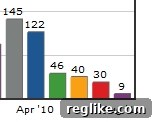
Visual data from services like TweetStats.com at the time illustrated this trend vividly, showing a palpable decline in his tweet volume over the crucial pre-IPO months. While the specific image from the original post is illustrative, the implication is clear: a noticeable pattern emerged where an active CEO strategically scaled back their public commentary.
Why CEOs Go Quiet: Understanding the Pre-IPO Landscape
The reasons behind a CEO’s reduced public activity in the run-up to an IPO are multifaceted, stemming from both practical demands and strict regulatory compliance. Preparing to go public is arguably one of the most complex and time-consuming endeavors a company can undertake, requiring immense focus and discretion.
1. The Demands of the S-1 Filing
The S-1 registration statement is the foundational document required by the SEC for companies seeking to go public. It’s a comprehensive and meticulously detailed disclosure that provides potential investors with all material information about the company. This includes:
- Detailed Financial Statements: Audited financials for several years, often requiring significant effort from finance and accounting teams.
- Business Description: An extensive overview of the company’s operations, products, services, market, and competitive landscape.
- Risk Factors: A thorough listing and explanation of all potential risks associated with investing in the company, from market competition to regulatory changes.
- Management’s Discussion & Analysis: An explanation of the company’s financial condition and results of operations.
- Use of Proceeds: How the company intends to use the capital raised from the IPO.
- Legal Disclosures: Information on legal proceedings, executive compensation, and ownership structures.
Compiling, auditing, and refining this document is an all-consuming task involving numerous internal teams (legal, finance, operations, marketing) as well as external advisors (investment bankers, lawyers, auditors). A CEO’s time during this period is predominantly absorbed by reviewing drafts, attending countless meetings, making critical decisions, and ensuring every word in the S-1 is accurate and legally compliant. This intense workload naturally leaves little room for casual social media engagement.
2. Navigating Regulatory Waters: The “Pre-Quiet Period”
While the official “quiet period” legally commences once the S-1 is filed and typically lasts until 25 days after the IPO’s effective date, a “pre-quiet period” or a period of heightened caution often precedes this formal phase. During this time, companies and their executives become exceptionally careful about what they disclose publicly. The primary goal is to avoid any communication that could be construed as:
- Unregistered Offerings: Statements that could be seen as an attempt to solicit investments before the S-1 is effective.
- Forward-Looking Statements: Predictions or projections about future performance that are not carefully qualified and presented in the S-1.
- Selective Disclosure: Releasing material non-public information to a limited audience, which violates SEC’s Regulation FD (Fair Disclosure).
Every public statement, including social media posts, can be scrutinized by the SEC, potential investors, and even competitors. An ill-advised tweet, an overly enthusiastic projection, or an unscheduled disclosure of a business deal could potentially delay the IPO, incur legal penalties, or negatively impact investor perception. Therefore, CEOs often adopt a “less is more” approach, limiting their commentary to avoid any missteps that could jeopardize the multi-million dollar (or even multi-billion dollar) offering.
Beyond the CEO: Broader Implications for Startups and Communication Strategy
The observation of a CEO’s slowing tweet volume is more than just an anecdotal curiosity; it reflects a fundamental shift in a company’s communication strategy as it transitions from a private entity to a public one. For hot startups, where founders and CEOs are often the public face and chief evangelists, this shift is particularly pronounced.
The Evolution of Public Relations
In their early stages, startups thrive on transparency, direct engagement, and often, the charismatic personality of their founders. Social media is a powerful tool for brand building, talent acquisition, and direct customer feedback. However, as the company matures and approaches an IPO, the communication paradigm transforms. The focus shifts from fostering a community to adhering to stringent legal and financial disclosures.
The informal, often spontaneous nature of social media becomes a potential liability. PR and legal teams work exhaustively to ensure all public communications are vetted, consistent, and compliant with regulatory requirements. This necessitates a more formal, centralized approach to messaging, which often means individual executive social media accounts are either scaled back or brought under tighter corporate guidelines.
What to Look For: A New Indicator?
For investors, market watchers, and aspiring entrepreneurs, a CEO’s tweet volume might emerge as an unconventional yet insightful leading indicator. While not a definitive signal on its own, when combined with other subtle clues—such as an increased number of job postings for investor relations professionals, a sudden lack of specific business updates, or a general shift towards more generic corporate messaging—a CEO’s digital silence can form part of a compelling picture. It suggests that significant internal work is underway, likely related to an IPO or another major financial event.
Best Practices for Social Media During Pre-IPO and Quiet Periods
Companies approaching an IPO should develop a comprehensive social media strategy that accounts for the unique challenges and regulations of the quiet period. Key elements include:
- Clear Policies: Establish strict internal guidelines for all employees, especially executives, regarding what can and cannot be discussed on social media.
- Legal Review: Ensure all public statements, including those on social media, are reviewed by legal counsel for compliance.
- Consistent Messaging: Develop core messages that are aligned with the S-1 filing and approved by all relevant stakeholders.
- Focus on Non-Material Information: If executives choose to remain active, they should focus on general industry trends, company culture, or previously disclosed public information, carefully avoiding any forward-looking statements or new material disclosures.
- Training: Educate executives and relevant employees on the rules and risks associated with public communication during the pre-IPO and quiet periods.
Conclusion: The Art of Strategic Silence
The story of Richard Rosenblatt and Demand Media serves as a fascinating reminder that in the corporate world, even silence can speak volumes. A CEO’s strategic reduction in tweet volume leading up to an IPO is not a sign of disengagement, but rather a testament to the immense pressures, meticulous preparation, and stringent regulatory compliance required to take a company public. It’s a calculated move to protect the company’s interests and ensure a smooth transition to the public markets.
So, the next time you notice a normally outspoken CEO of a promising startup suddenly go quiet on their social channels, it might be more than just a break from their screen. It could very well be a subtle, yet powerful, signal that they are immersed in the arduous process of preparing their company for its grand debut on the stock exchange. It’s a cue for astute observers to ask: Are they getting ready to go public?