
The .REALTOR Top-Level Domain: A Landmark Case for Trademarking Dot-Brands Under Evolving USPTO Guidelines
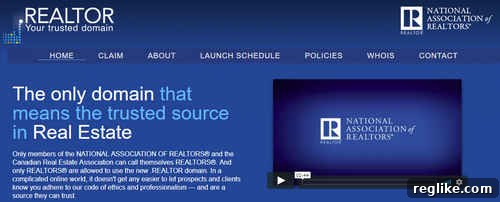
In an increasingly digital world, a strong online presence is paramount for any brand. This often extends beyond a simple website address to the very architecture of the internet itself – top-level domain names (TLDs). The National Association of REALTORS (NAR), a prominent voice in the real estate industry, has taken a significant step by filing a trademark application for “.REALTOR”. This move is particularly noteworthy because, for a long time, the U.S. Patent and Trademark Office (USPTO) maintained a strict stance against trademarking generic top-level domain names. However, recent updates to USPTO guidelines have created a pathway for what are known as “dot-brands,” and the .REALTOR case appears poised to qualify under these new regulations, marking a pivotal moment in intellectual property law.
The Evolving Landscape of Top-Level Domains and Trademarks
For decades, the internet’s domain name system was relatively static, dominated by a handful of generic TLDs like .com, .org, and .net, alongside country-code TLDs such as .uk or .de. The landscape began to shift dramatically with the introduction of new generic TLDs (gTLDs) by the Internet Corporation for Assigned Names and Numbers (ICANN). This expansion opened up a vast new frontier for branding, allowing companies and organizations to apply for and operate their own branded TLDs, such as .BRAND or .CORPORATION. These “dot-brands” offer unparalleled control over a segment of the internet’s namespace, promising enhanced brand recognition, trust, and security.
Yet, the journey to secure trademark protection for these novel domain names has been fraught with challenges. Traditional trademark law often views domain names as merely addresses or technical identifiers rather than source indicators of goods or services. The USPTO, in particular, has historically resisted granting trademarks for TLDs, arguing that they lack the distinctiveness required to function as a mark. This created a conundrum for brand owners who had invested heavily in launching their own gTLDs, leaving them without full intellectual property protection for these crucial digital assets. Recognizing the need to adapt to the realities of modern branding, the USPTO reevaluated its position, leading to the crucial updates in its examination guidelines that now allow for the trademarking of certain “dot-brands” under specific circumstances. This evolution acknowledges the growing importance of gTLDs as powerful brand identifiers in the digital economy.
USPTO’s Updated Guidelines: A Closer Look at “Dot-Brand” Trademarks
The updated USPTO guidelines provide a framework for evaluating trademark applications for dot-brands. For a top-level domain name to be eligible for trademark registration, applicants must successfully meet four primary criteria. The National Association of REALTORS’ application for .REALTOR serves as an excellent test case, demonstrating how a well-established brand can navigate these new requirements.
1. Prior Registration of the Same Mark in the Same Field of Use
This foundational guideline stipulates that the brand owner must already possess a prior registration of the identical mark for the same field of use. This is a critical safeguard, ensuring that only legitimate brand extensions are granted TLD trademarks, preventing speculative registrations or conflicts with existing intellectual property. In the case of NAR, they hold a long-standing and robust trademark for “Realtor.” This mark is not merely a name; it signifies a specific set of professional standards and services associated with real estate professionals who are members of the association. The existing trademark for “Realtor” is intrinsically linked to the provision of real estate services, education, and professional development.
Crucially, the guidelines also mandate that the field of use identified in the new TLD trademark application must be precisely limited to the same fields covered by the existing trademark. This prevents a brand from attempting to expand its trademark protection into unrelated industries through the backdoor of a TLD registration. For instance, the .REALTOR trademark application cannot seek to cover services such as “providing domain registry services for automotive dealerships” if the underlying “Realtor” mark is solely associated with real estate. This strict alignment ensures consistency and prevents overreach.
However, a specific challenge arises with applications that generically identify services as “domain registry services” or “domain-name registry operator and registrar services.” The USPTO guidelines explicitly disallow such broad descriptions because these are typically considered too generic and functional to indicate the source of specific goods or services in a trademark sense. NAR’s initial application did, in fact, list “domain registry services.” It is highly probable that the examining attorney at the USPTO will require an amendment to this identification of services. To comply, NAR will likely need to refine its description to clearly articulate how the .REALTOR TLD specifically facilitates or enhances its existing real estate-related services, making it distinct from a generic domain registration provider.
2. Additional Proof that the Mark Used as a gTLD Will Be Perceived as a Mark
Beyond existing registrations, applicants must furnish “Additional Proof that the Mark Used as a gTLD Will Be Perceived as a Mark.” This guideline addresses the core principle of trademark law: a mark must function as an identifier of source for goods or services. For “dot-brands,” this often means demonstrating that the TLD itself, when encountered by consumers, evokes the specific brand or organization rather than being seen merely as a technical address or a descriptive term. This hurdle can be particularly challenging for terms that border on being generic, such as “Realtor.”
NAR has historically, and continues to, strenuously defend against the notion that “Realtor” is a generic term for any real estate agent, asserting instead that it is a proprietary certification mark denoting membership in their association and adherence to a strict code of ethics. To satisfy this USPTO requirement, NAR would need to present compelling evidence of public recognition and association of “.REALTOR” with their specific organization and its services. This could involve extensive marketing materials featuring the .REALTOR domain, consumer surveys demonstrating brand association, media coverage, and evidence of significant usage by their members. Given the extensive branding efforts and public recognition of the REALTOR® designation, NAR is likely in a strong position to provide such proof, albeit with diligent preparation and documentation.
3. Contract with ICANN for the TLD
A straightforward, yet indispensable, requirement is the necessity for the applicant to hold a contract with ICANN (the Internet Corporation for Assigned Names and Numbers) for the top-level domain in question. This serves as irrefutable proof that the applicant is the legitimate, authorized operator of the gTLD. ICANN is the global multi-stakeholder organization responsible for coordinating the maintenance and procedures of several databases related to the namespaces and numerical spaces of the Internet, ensuring its stable and secure operation. Obtaining a contract with ICANN to operate a gTLD involves a rigorous application process, significant financial investment, and demonstrating technical and operational capability. The fact that NAR has successfully secured this contract for .REALTOR means they have met the stringent technical and administrative requirements to manage and oversee the domain’s registry. This essential step has already been completed by NAR, satisfying this particular guideline.
4. Legitimate Service for the Benefit of Others
The final and perhaps most nuanced guideline requires that the dot-brand TLD must offer a “legitimate service for the benefit of others.” This criterion is designed to distinguish between TLDs that are merely self-serving marketing vehicles for a single entity and those that provide a genuine service platform benefiting a wider community. If a brand intends to use its top-level domain exclusively for its own internal marketing or informational websites, with no provision for others to register domains under it, the trademark application will generally be disallowed. The USPTO’s rationale here is that such usage doesn’t typically meet the “service” aspect required for trademark protection.
However, if the TLD allows for registrations by other individuals or entities, such as distributors, franchisees, or members, it significantly strengthens the argument for a legitimate service. This is precisely the scenario with .REALTOR. Members of the National Association of REALTORS – the “Realtors” themselves – are eligible to register and use .REALTOR domain names. In this context, these members function akin to distributors or authorized agents of the NAR brand and its associated services. By enabling its members to secure personalized .REALTOR domains, NAR provides a valuable service: empowering its professionals with a distinct, trusted, and branded online identity that immediately signals their affiliation and adherence to professional standards. This structure demonstrably benefits others (the members) by enhancing their credibility and visibility in the marketplace, thus fulfilling this crucial fourth guideline.
The .REALTOR Case: A Model for Professional Organizations?
Considering the detailed requirements of the updated USPTO guidelines, it appears highly probable that the National Association of REALTORS will ultimately succeed in trademarking “.REALTOR”. While they will undoubtedly need to amend the description of services in their application to be more specific than generic “domain registry services” and may need to provide additional compelling documentation to the examining attorney regarding the “perceived as a mark” criterion, the underlying strength of the “Realtor” brand and the structure of the .REALTOR TLD for the benefit of its members align well with the new framework. This case sets a significant precedent and could serve as a valuable blueprint for other professional associations, franchises, or large organizations looking to leverage a “dot-brand” TLD to solidify their digital identity and provide tangible value to their constituents.
The .realestate Conundrum: A Clear Distinction
It is important to note the contrast between “.REALTOR” and another forthcoming domain name associated with NAR: “.realestate.” While NAR is also involved with the .realestate domain name, it will not be able to trademark “.realestate” for registry services in the same manner as “.REALTOR.” The key difference lies in the generic nature of the term “real estate.” Unlike “Realtor,” which NAR has meticulously protected as a proprietary certification mark, “real estate” is a common, descriptive term for an industry. Generic terms cannot typically be trademarked, especially for core registry services, as they fail to function as a source identifier for a specific brand. This distinction highlights the critical importance of a mark’s inherent distinctiveness and a brand owner’s diligent protection efforts in securing intellectual property rights for top-level domains.
Conclusion: Navigating the Future of Digital Brand Identity
The USPTO’s updated guidelines for trademarking “dot-brands” represent a pragmatic and necessary adaptation of intellectual property law to the realities of the modern digital landscape. The case of the National Association of REALTORS seeking to trademark “.REALTOR” is a pioneering example of how established brands can extend their protection into the very structure of the internet. This shift not only provides greater security for brand owners but also recognizes the evolving role of TLDs as powerful identifiers of origin and quality in an increasingly crowded online environment.
While the path to securing these trademarks requires careful adherence to the new guidelines – particularly regarding the specificity of services and proving brand perception – the framework is now in place. For organizations with strong, non-generic brands and a clear service model for their gTLDs, the opportunity to trademark their “dot-brands” offers a compelling advantage in maintaining brand integrity and trust online. As the digital world continues to evolve, understanding and leveraging these nuanced intellectual property protections will be paramount for any brand seeking to establish a robust and secure online presence.
You can read the full USPTO guidelines for .brands-as-trademarks here for a comprehensive understanding of the legal framework.