
Exploring the Expanding Universe of Top-Level Domains
In the ever-evolving digital landscape, domain names serve as the cornerstone of online identity. They’re the addresses that lead users to websites, the foundation upon which online businesses and personal brands are built. Understanding domain names, particularly the different types available, is crucial for anyone looking to establish a presence on the internet. This guide delves into the world of top-level domains (TLDs), focusing on the exciting emergence of new TLDs and their potential impact on the online experience.
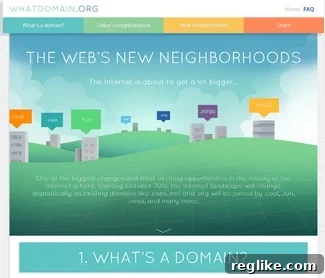
The Domain Name Association (DNA), a dedicated non-profit organization, plays a vital role in advocating for the domain name industry. Representing various stakeholders, including domain name registries, registrars, resellers, and registry service providers, the DNA works to promote understanding and innovation within the domain name ecosystem. One of their key initiatives is the WhatDomain.org website, a valuable resource designed to educate the public about domain names and the changing landscape of TLDs.
What is a Domain Name?
Before diving into the specifics of new TLDs, it’s important to understand the basics of domain names. A domain name is essentially a human-readable address for a website. It allows users to access online resources without having to memorize complex IP addresses. Think of it as a street address for your online home.
A domain name consists of two main parts: the second-level domain (SLD) and the top-level domain (TLD). For example, in the domain name “example.com,” “example” is the SLD, and “com” is the TLD. The SLD is the unique name you choose for your website, while the TLD is a suffix that categorizes the domain.
The Current State of Top-Level Domains
Traditionally, TLDs were limited to a relatively small set of options, such as “.com,” “.org,” and “.net.” These were primarily generic TLDs (gTLDs) intended for commercial entities, non-profit organizations, and network infrastructure, respectively. Country code TLDs (ccTLDs), such as “.us” for the United States and “.uk” for the United Kingdom, were also established to represent specific countries or territories.
However, the internet has grown exponentially since those early days, and the demand for more diverse and descriptive TLDs has increased significantly. This led to the introduction of a new wave of TLDs, designed to offer greater flexibility and relevance for website owners.
The Emergence of New Top-Level Domains
The expansion of the TLD landscape represents a significant shift in how domain names are structured and utilized. New TLDs offer businesses and individuals the opportunity to choose domain names that are more specific, memorable, and relevant to their brand or industry. This can lead to improved brand recognition, enhanced search engine optimization (SEO), and a more targeted online presence.
These new TLDs cover a wide range of categories, including:
- Industry-Specific TLDs: These TLDs cater to specific industries or professions, such as “.lawyer,” “.doctor,” “.photography,” and “.marketing.” They allow businesses to clearly identify their area of expertise and attract a more targeted audience.
- Geographic TLDs: These TLDs represent specific cities or regions, such as “.nyc,” “.london,” and “.berlin.” They are ideal for businesses that primarily serve a local customer base and want to emphasize their geographic connection.
- Brand TLDs: Some large companies have even created their own branded TLDs, such as “.google” and “.amazon.” This allows them to control their online brand identity and create a more consistent and recognizable online presence.
Benefits of Using New TLDs
There are several potential advantages to using a new TLD for your website:
- Improved Brand Recognition: A relevant and descriptive TLD can help your website stand out from the competition and reinforce your brand identity. For example, a photography studio using the “.photography” TLD immediately conveys its area of expertise to potential customers.
- Enhanced SEO: While the direct impact of TLDs on SEO is debated, a relevant TLD can indirectly improve your search engine rankings by making your website more relevant to specific search queries. A website using the “.restaurant” TLD is likely to rank higher for searches related to restaurants in its area.
- Increased Availability: With the limited availability of desirable domain names in traditional TLDs like “.com,” new TLDs offer a wider range of options. You’re more likely to find the perfect domain name that matches your brand and is easy to remember.
- Targeted Marketing: New TLDs can help you target a specific audience or geographic region. A website using the “.nyc” TLD, for example, is clearly targeting customers in New York City.
The Role of the Domain Name Association (DNA)
The Domain Name Association (DNA) plays a crucial role in promoting the adoption and understanding of new TLDs. Through initiatives like WhatDomain.org, the DNA provides valuable resources and education to help businesses and individuals make informed decisions about their domain name choices.
The DNA also advocates for policies that support innovation and competition within the domain name industry. By representing the interests of domain name registries, registrars, and other stakeholders, the DNA helps to ensure a healthy and vibrant domain name ecosystem.
Google’s Involvement and Key Players
It’s worth noting that Google is one of the organizations behind the DNA, highlighting the importance of new TLDs in the broader technology landscape. Other prominent companies involved in the DNA include Demand Media, Momentous, Donuts, and Fairwinds Partners, all of which are actively involved in the development and management of new TLDs.
Conclusion: Embracing the Future of Domain Names
The introduction of new top-level domains represents a significant step forward in the evolution of the internet. By offering greater flexibility, relevance, and choice, new TLDs empower businesses and individuals to create more meaningful and impactful online experiences. As the internet continues to grow and evolve, understanding and embracing the potential of new TLDs will be essential for anyone looking to succeed in the digital world.
Whether you’re starting a new business, launching a personal blog, or simply looking to enhance your online presence, exploring the possibilities of new TLDs is a worthwhile endeavor. Take the time to research the different options available and choose a domain name that truly reflects your brand and resonates with your target audience.