
The Looming .org Price Hike: Understanding the Potential Impact on Nonprofits
The potential acquisition of the Public Interest Registry (PIR), the entity responsible for managing the .org domain, by Ethos Capital has sparked considerable debate and concern within the non-profit community and the broader internet ecosystem. One of the primary anxieties revolves around the prospect of significant price increases for .org domain names. While Ethos Capital has stated its intention to adhere to “historic practices” regarding pricing, its stated plan to potentially raise prices by up to 10% annually warrants a closer examination. This seemingly modest percentage, when compounded over time, could have substantial financial implications for organizations relying on .org domains.
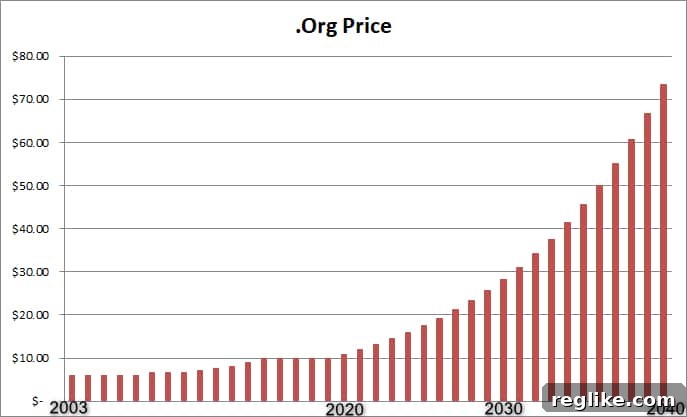
Ethos Capital’s acquisition plan hinges on its ability to generate revenue and ensure the long-term sustainability of the .org registry. The proposed price increases are presented as a necessary measure to achieve these goals. However, critics argue that such increases could disproportionately burden smaller non-profits and organizations with limited financial resources, potentially hindering their ability to maintain their online presence and pursue their missions effectively.
The reference point for the proposed 10% annual price increase is the 2006 agreement between ICANN (the Internet Corporation for Assigned Names and Numbers) and PIR. This agreement permitted PIR to raise prices by up to 10% per year, starting in 2007. However, it is crucial to note that PIR rarely exercised this option to its full extent.
An analysis of PIR’s pricing history reveals a more nuanced picture. Over the 13 years following the 2006 agreement, PIR implemented only seven price increases. While three of these increases reached the 10% threshold, the remaining four were lower. The overall effect has been a more gradual price increase than the maximum allowed under the ICANN agreement.
From 2007 to the present, the wholesale price of a .org domain has risen from $6.00 to $9.93. This represents an average annual increase of approximately 4%. While this is a non-trivial increase, it is significantly lower than the 10% annual increase that Ethos Capital might implement.
Consider the hypothetical scenario where PIR had consistently raised prices by 10% annually since 2007. In this scenario, the wholesale price of a .org domain today would be approximately $20.71, more than double the current cost. This illustrates the potent effect of compounding interest over time.
The “Hockey Stick” Effect: Projecting Future .org Domain Prices
The primary concern surrounding Ethos Capital’s proposal stems from the potential for a “hockey stick” effect. This term describes a scenario where an initially gradual increase accelerates rapidly over time, resulting in a dramatic upward spike. If Ethos Capital were to implement 10% annual price increases consistently, the cost of .org domains could skyrocket in the coming years.
As the chart above clearly demonstrates, the wholesale price of a .org domain could increase from $9.93 today to an estimated $28.33 by 2030. Looking further ahead, by 2040, the price could reach $73.48. This projection does not even include the markup applied by individual domain registrars, meaning that the final cost to organizations could be significantly higher.
The potential consequences of such price increases are far-reaching. Many non-profit organizations operate on tight budgets and rely heavily on their online presence to connect with supporters, raise awareness, and deliver services. A substantial increase in the cost of .org domains could force these organizations to make difficult choices, potentially diverting resources away from their core missions. Some smaller organizations might even be forced to abandon their .org domains altogether, losing valuable online identity and recognition.
The Removal of Price Caps: An Uncertain Future for .org Domains
The situation is further complicated by ICANN’s decision to remove all price caps on .org domain names in 2019. While the 2006 agreement imposed a limit on annual price increases, this restriction no longer applies. In theory, Ethos Capital could raise prices by more than 10% per year, potentially accelerating the “hockey stick” effect and exacerbating the financial burden on non-profit organizations.
The removal of price caps has fueled concerns about the future of the .org domain. Some critics argue that this decision could pave the way for predatory pricing practices, allowing private equity firms to extract maximum profit from the registry at the expense of the non-profit community. Others maintain that the market will regulate prices and that excessive increases would be unsustainable in the long run.
Navigating the Uncertainty: Strategies for Non-Profit Organizations
Given the uncertainty surrounding the future pricing of .org domains, non-profit organizations should take proactive steps to mitigate potential risks. These strategies might include:
- Budgeting for potential price increases: Organizations should incorporate projected .org domain price increases into their financial planning to avoid unexpected budget shortfalls.
- Exploring alternative domain extensions: While .org remains the preferred domain extension for non-profits, organizations could consider registering alternative domains (e.g., .net, .info) as a backup or for specific purposes.
- Negotiating with domain registrars: Organizations may be able to negotiate favorable pricing with domain registrars, particularly if they register multiple domains or commit to long-term contracts.
- Advocating for affordable .org domains: Non-profit organizations should collectively advocate for policies that ensure the affordability and accessibility of .org domains for the non-profit community.
The potential acquisition of PIR by Ethos Capital and the prospect of significant .org domain price increases present a complex challenge for non-profit organizations. By understanding the potential impact and implementing proactive strategies, organizations can navigate this uncertainty and protect their online presence.
Conclusion: A Call for Transparency and Collaboration
The future of .org domain pricing remains uncertain. What is clear is that the issue has significant implications for the non-profit community and the broader internet ecosystem. Transparency, open communication, and collaboration among all stakeholders are essential to ensure that the .org domain continues to serve its intended purpose: to support and empower organizations dedicated to serving the public interest. As the situation unfolds, non-profit organizations must remain vigilant, informed, and proactive in protecting their online presence and advocating for policies that promote affordability and accessibility.